Skip to content


Are Zebra Shades Worth It? The Pros and Cons


Zebra shades sit in the middle of the window treatment world: more flexible than a basic roller shade, but usually more budget-friendly than layered drapery or some custom options. Whether they feel “worth it” depends on what you expect from light control, privacy, style, and long-term use.
Key Takeaways
- Alternating sheer and opaque bands enable adjustable light control and daytime privacy in one window treatment.
- Simple horizontal band design and compact headrail create a clean, modern look for many rooms.
- Operation is straightforward with chain, cordless, or motorized options offering convenience and automation.
- They usually cost more than basic roller shades and can allow light leaks and fabric dust buildup.
This guide walks through the real-world pros and cons of zebra blinds so you can decide where they shine, where they fall short, and when another option might be a better fit.
The Pros of zebra shades
From a practical point of view, zebra blinds have a few clear strengths. These are the reasons many homeowners decide they are worth paying more than a basic roller shade.
Versatile light control and privacy in one product
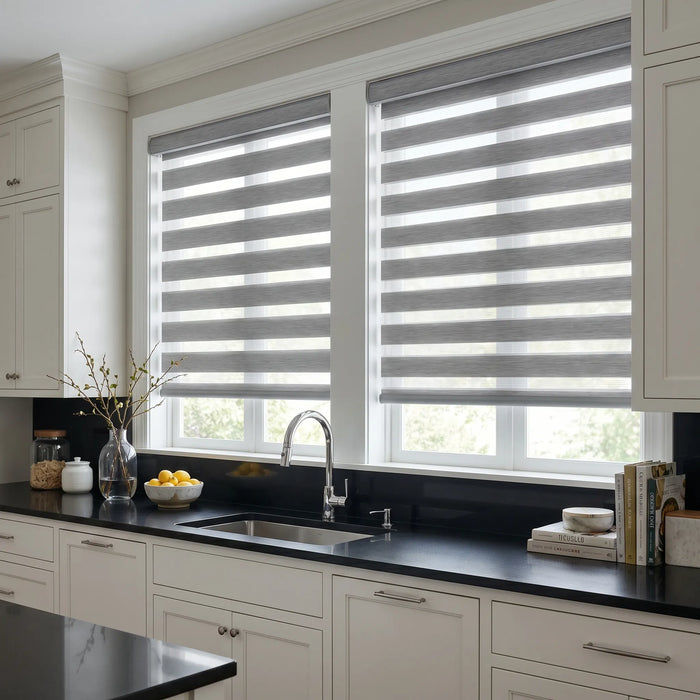
The biggest benefit is flexible light control and privacy in a single window treatment. By shifting the bands, you can:
- Let in soft, filtered light when you want the room bright but not harsh.
- Tighten the opaque bands for more privacy in the evening.
- Raise the shade fully when you want an open window.
You do not have to choose between a sheer curtain for daytime and a heavier shade for night. Zebra shades cover that range by adjusting how the sheer and opaque bands overlap. In living rooms, offices, and open-plan spaces, that combination is often the main reason people say zebra shades are worth it.
A clean, modern look that works in many rooms
Zebra shades have a simple, horizontal band pattern and a compact headrail, which gives a clean, modern look. They work well in:
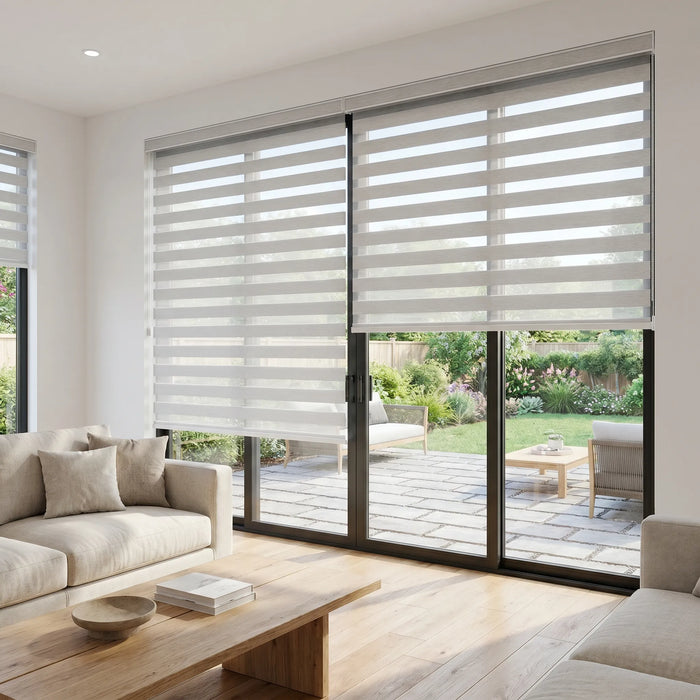
- Living rooms and family rooms where you want a neat, uncluttered finish.
- Home offices where glare control matters but you still want daylight.
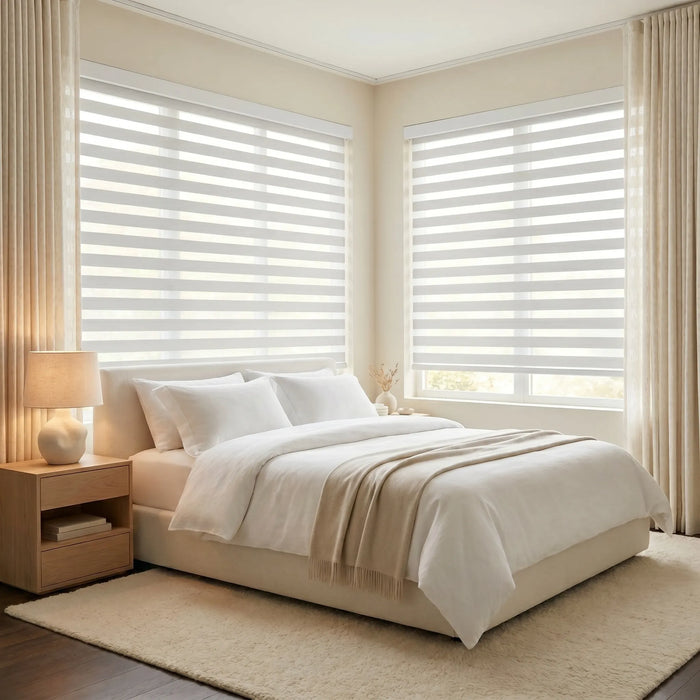
- Bedrooms where you prefer a softer look than slats or heavy drapes.
If you like straight lines and a streamlined profile, zebra shades can feel more up to date than some traditional blinds, without pulling focus away from your furniture or décor.
Straightforward daily operation
For most people, the day-to-day experience is simple. You rotate the tube to adjust the fabric bands and raise or lower the shade as needed. With cordless and motorized options, that can feel even easier:
- Chain or manual lift: lowest cost and familiar to use.
- Cordless: cleaner look and no dangling cords, which many families prefer for child and pet safety.
- Motorization: one-touch control and the ability to automate routines, which is helpful for tall or hard-to-reach windows.
If you open and close your shades several times a day, especially in bedrooms or main living areas, that ease of use can be a meaningful part of the value.
Mid-range pricing compared with other custom treatments
Zebra shades are rarely the cheapest option on the market, but they are also not at the top of the price spectrum. Compared to other custom window treatments, they usually sit in a mid-range position:
- More expensive than the most basic roller shades or mini blinds.
- Often more affordable than layered drapes, some roman shades, or complex motorized systems.
You get more control over light and privacy than a single-layer roller shade, without moving straight into high-end, multi-layer treatments. For many homeowners, that balance between features and price is exactly why zebra shades feel worth the investment.
If you want specific ranges and a breakdown by size, fabric, and upgrades, our full price breakdown walks through real-world cost drivers.
The Cons of Zebra Blinds
Every window treatment has trade-offs. Being clear about the disadvantages helps you decide if any of these are deal-breakers for your rooms.
Limited blackout performance without extra steps
Even with a blackout fabric, zebra shades are not always a true blackout solution. The fabric can block most light where it covers the glass, but you may still see:
- Small light gaps at the sides of the window.
- A glow around the headrail, especially on an inside mount.
For light sleepers or media rooms, that can be frustrating if you are expecting complete darkness. You can improve results with:
- An outside mount that overlaps the frame.
- A cassette or valance that covers more of the top.
- Layering with curtains or side panels.
If your top priority is near-total darkness with almost no light leak, a dedicated blackout roller shade with side channels or a different system may be a better fit than zebra shades alone.
Nighttime privacy depends on how you use them
During the day, zebra shades in a light-filtering fabric usually provide good privacy because it is brighter outside than inside. At night, things change. When your interior lights are on and the bands are in a more open position, silhouettes can be visible through the sheer sections.
To maintain privacy after dark you need to:
- Align the opaque bands so they overlap more fully.
- Choose room-darkening or blackout fabric for bedrooms and street-facing windows.
If you prefer to leave shades partly open at night while lights are on, or you want maximum privacy with very little effort, you may find this a limitation.
Fabric gaps and maintenance
Because zebra shades use fabric bands that roll on a tube, there is more surface area for dust than on a simple roller shade. Over time you may notice:
- Dust buildup on the fabric if shades are not cleaned regularly.
- Minor wear in high-traffic areas if shades are pulled multiple times a day.
Routine maintenance is straightforward: a soft duster or a vacuum with a brush attachment is usually enough. Spot cleaning depends on the fabric. If you are looking for the lowest-maintenance option possible, however, a plain roller shade with less surface detail may require even less attention than a banded fabric.
Higher cost than the most basic alternatives
Compared to basic blinds or entry-level roller shades, zebra shades cost more per window. You are paying for:
- The dual-layer, alternating sheer and opaque design.
- A cleaner, more modern appearance.
- Additional options like cordless lifts, upgraded hardware, or motorization.
If your project involves a large number of windows and budget is extremely tight, a simpler treatment may help you stay within your price range. Zebra shades make more sense when you value light control, style, and convenience enough to justify paying beyond the bare minimum.
FAQS
Are zebra shades any good for privacy and light?
For many homes, yes. Zebra shades are especially good at handling daytime light and privacy:
- In living rooms and offices, light-filtering zebra shades soften glare while keeping the room bright.
- In bedrooms, room-darkening or blackout fabrics improve sleep while still giving you flexible control during the day.
They are less ideal if you want to leave shades in a sheer position at night and still expect near-total privacy. In those cases, you will want either darker fabrics, a more closed band position after dark, or a second layer such as curtains.
How long do zebra shades last?
With normal use and basic care, quality zebra shades are designed to last for years. Factors that affect lifespan include:
- How often you operate them each day.
- Sun exposure on the fabric over time.
- Whether you choose a cordless or motorized system and how well it is maintained.
Custom zebra shades made with durable fabrics and solid hardware tend to outlast cheaper ready-made versions. Treat them like any other mid-range window treatment: a purchase you expect to live with for a long stretch, not a throwaway accessory.
Will zebra shades go out of style?
Trends always shift, but zebra shades are built around a simple idea: horizontal bands, neutral fabrics, and a clean, structured look. That makes them less trend-dependent than loud patterns or very specific color palettes.
To keep them feeling current for longer:
- Choose neutral colors and simple textures.
- Focus on opacity and function first, style second.
That way even if window fashion trends move, your shades still read as a practical, modern window treatment rather than a short-lived fad.
Are zebra shades worth the cost compared with other options?
When you compare zebra shades to other solutions, it helps to think about what you value most.
- If you care most about flexible light control and privacy with a single product, zebra shades are usually worth it.
- If you care most about absolute darkness, a dedicated blackout system may be a better value.
- If you care most about lowest possible cost, basic roller shades or simple blinds will almost always be cheaper.
Zebra shades tend to be a smart choice for homeowners who are already comfortable with the price range. If you have read through a full zebra shades cost breakdown and the numbers feel reasonable for your project, the added function and cleaner look are often worth what you pay.
How zebra shades fit into your next steps
If this guide helped you decide that zebra shades are worth it for your home, your next step is to move from evaluation to planning:
- For a full, step-by-step walkthrough of style, fabric, opacity, and mounting options, use our complete buying guide for zebra shades.
- If you want to compare actual styles, fabrics, and light-filtering levels, start browsing our zebra shades collection and note which options match your rooms.
- If you are leaning toward a popular light-filtering option that keeps rooms bright while still giving you privacy, our zebra light-filtering roller shades are a useful reference point.