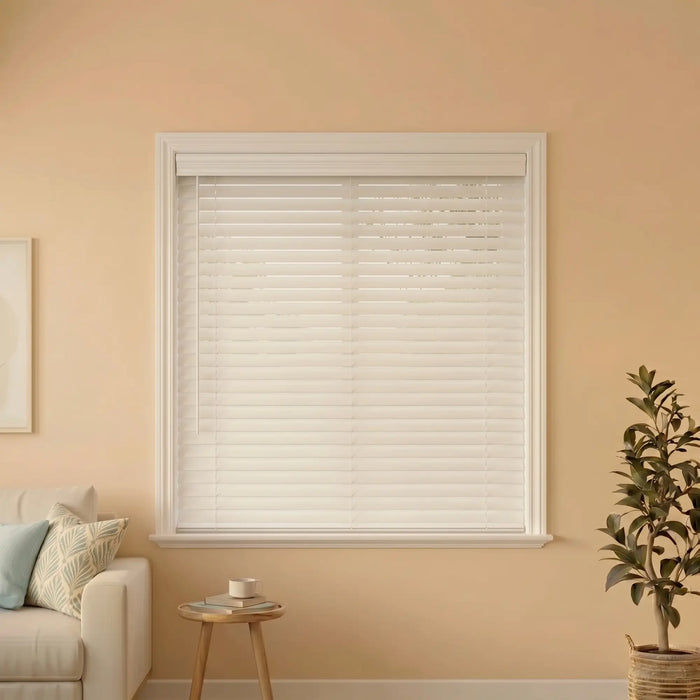
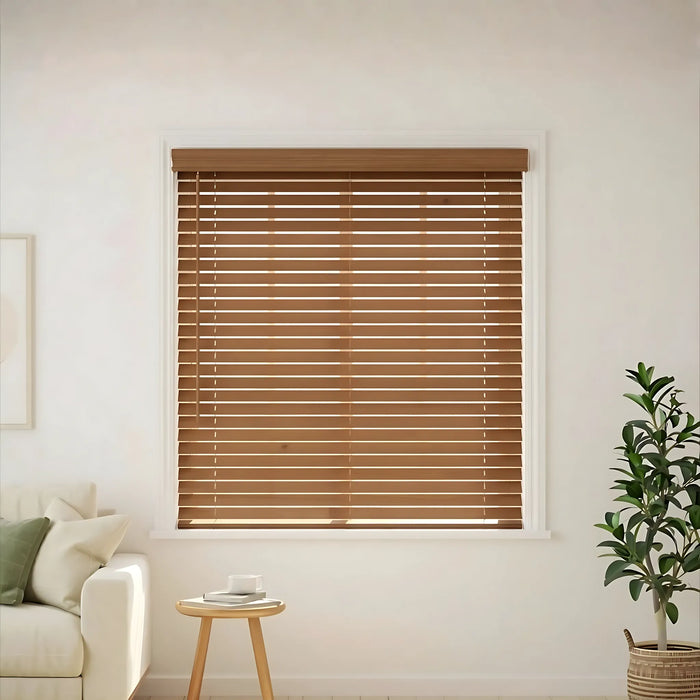
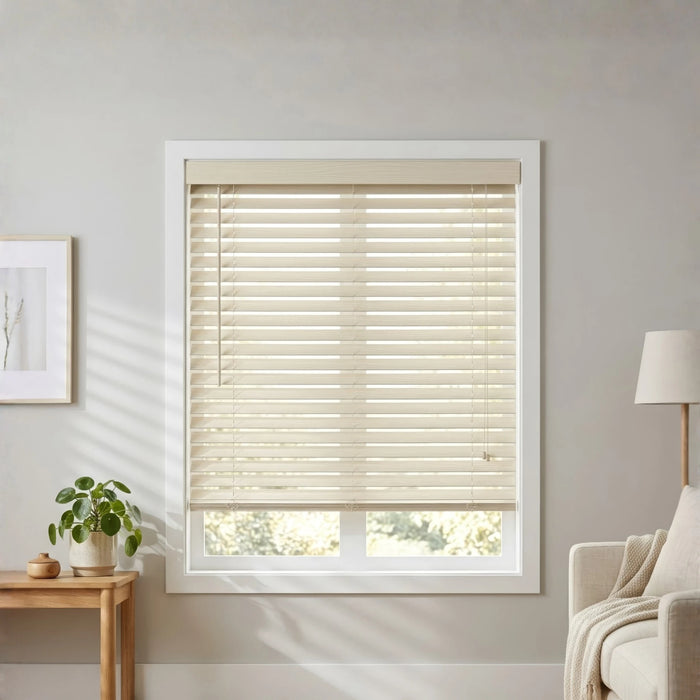
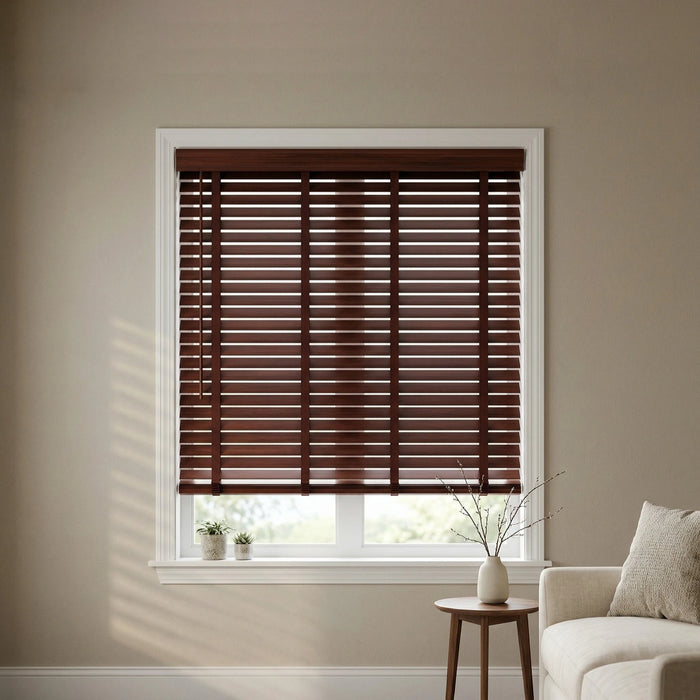
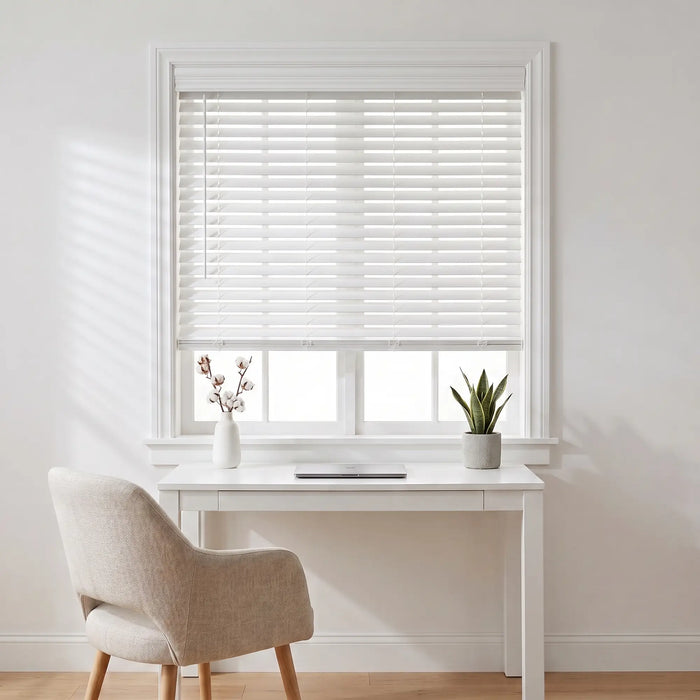
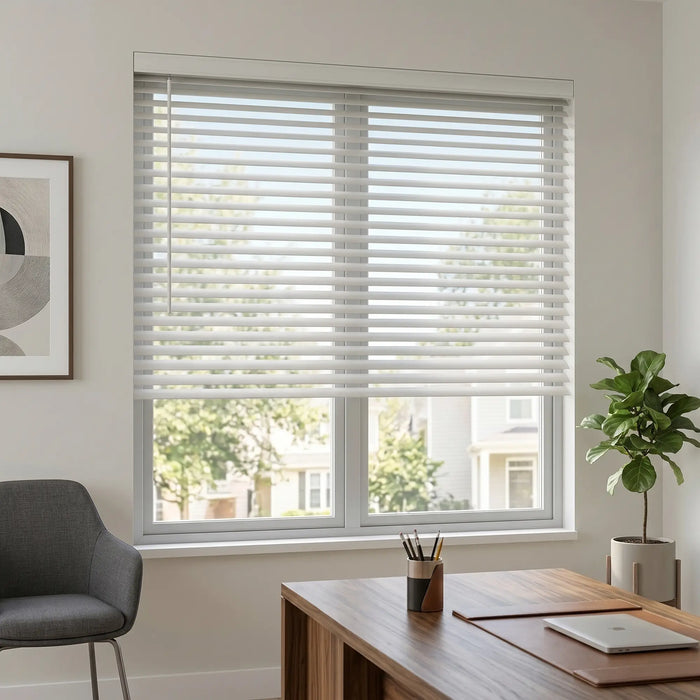
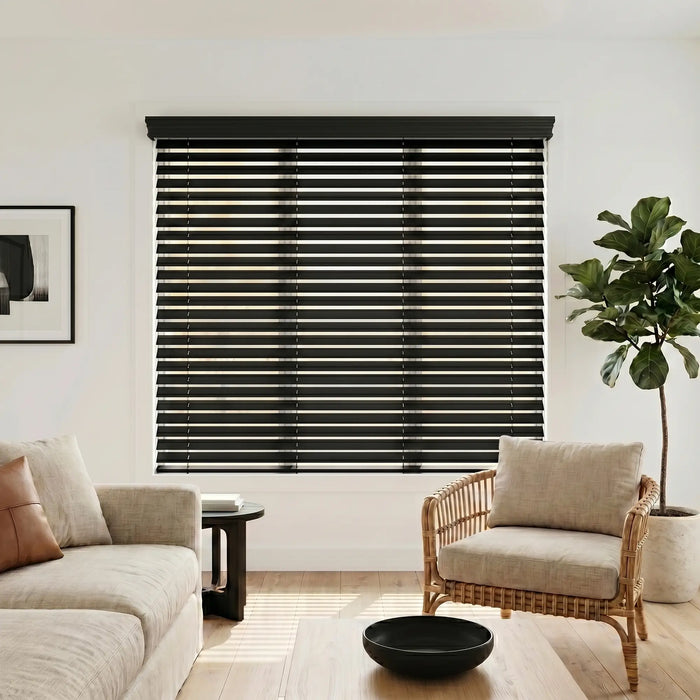
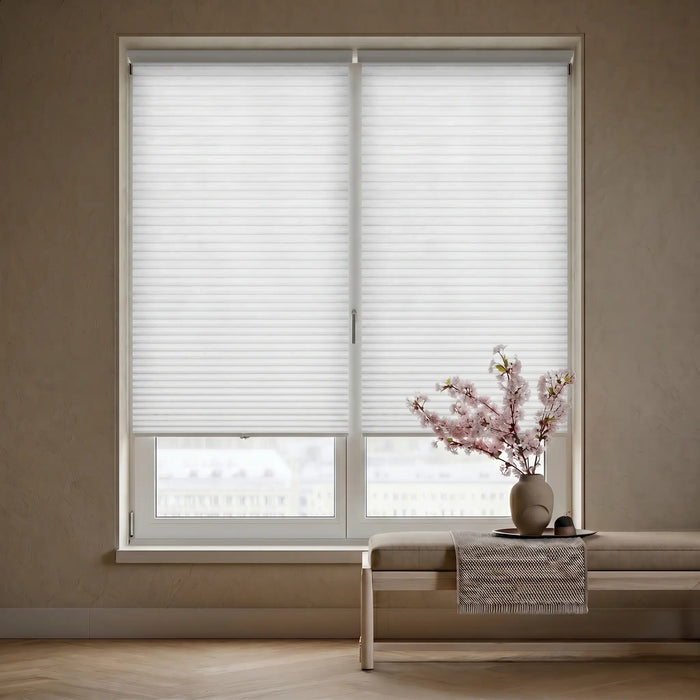
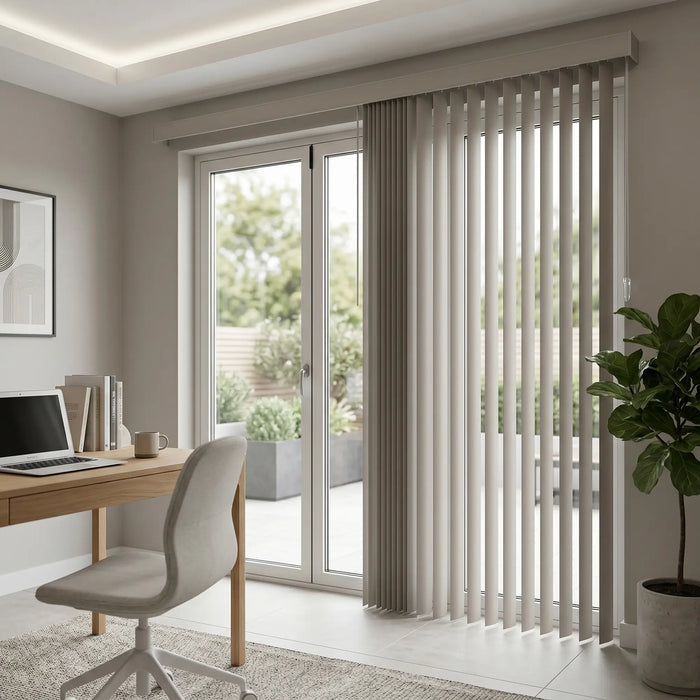
These blinds feature tilting horizontal slats that allow you to control how much light is let into the room. You can pull them up using a cord or tilt them to various angles with a wand to adjust for privacy and light. Depending on your interior design, you can choose wooden, synthetic, PVC, or metal options in various colors.
Also referred to as horizontal blinds, these window treatments offer timeless elegance that makes them a top choice for any room. They are the most versatile and adaptable option available today.
Why Choose Venetian Blinds?
Unlike roller shades for windows which are either up or down, venetian blinds' horizontal slats allow you to tilt the angle of the light. This gives you the unique ability to direct sunlight onto the ceiling, lighting the room without glare, while preventing outsiders from seeing in.
These blinds let you adjust slats to maintain privacy while still getting natural light. This precise light control is perfect for rooms where you need flexibility throughout the day. The classic, elegant look suits both modern and traditional homes.
Simple cord or wand mechanisms make raising, lowering, and tilting effortless. Available in wood, synthetic, aluminum, and vinyl, these blinds work well in any room.
Material Options
Real Wood Blinds
Real wood options add warmth and rich texture to any space. Their lightweight nature makes them ideal for larger windows. These options offer natural appearance perfect for dining rooms, living rooms, bedrooms, or home offices.
Real wood may not do well in damp, high humidity areas. For humid climates, synthetic materials are recommended to prevent warping and damage over time.
Faux Wood Blinds
Faux wood window blinds are perfect for kitchen or bathroom where moisture is common. They offer the look of wood but resist warping and fading. More durable than real wood options, these won't swell, fade, or crack over time.
Mini Blinds (Aluminum)
Aluminum mini blinds are cost-effective, durable options offering a streamlined look perfect for offices or narrow windows. These aluminum mini window blinds are lightweight and easy to operate. Available in many colors and finishes, mini blinds work well for doors or shallow windows where space is limited.
Vinyl Blinds
Vinyl blinds provide budget-friendly options for everyday use. They're moisture-resistant and easy to clean, making them ideal for high-humidity areas. Simple and effective, they offer basic light control at an affordable price.
Control Options
Cordless Lift
Cordless window blinds remove unsightly cords and are safer for children and pets. A spring-loaded mechanism allows smooth operation. Simply push or pull the bottom rail to raise or lower your blinds.
Motorized
Motorized options offer effortless operation using remote control or smart automation. They're perfect for hard-to-reach windows or adding luxury. You can schedule automatic opening and closing with smart home integration.
Wand Tilt
A simple wand mechanism rotates slats to adjust light. This standard feature lets you fine-tune privacy levels throughout the day.
Where Do Venetian Blinds Work Best?
These blinds work well in almost any room of your home. Wood options are ideal for living rooms and bedrooms where you want natural warmth. Moisture-resistant materials work well in bathroom or kitchen.
In home offices, they provide clean, professional appearance with precise light adjustment. Dining rooms benefit from elegant appearance that complements formal spaces.
Installation and Care
These blinds can be mounted inside the frame for a built-in look or outside to make the window appear larger. Custom sizing ensures perfect fit. Measure carefully before ordering.
Most can be easily installed with basic tools. Follow installation instructions included with your new blinds. You may need to drill holes, fit plugs, and attach with screws.
Cleaning and Maintenance
Easy to clean with a dry dust cloth or feather duster. Wipe with a damp cloth to keep them looking sharp. Dust regularly with soft cloth or vacuum brush attachment.
Spot clean with mild soap and warm water when needed. Avoid harsh chemicals that could damage materials. Most are designed for low-maintenance daily use.
 Skip to content