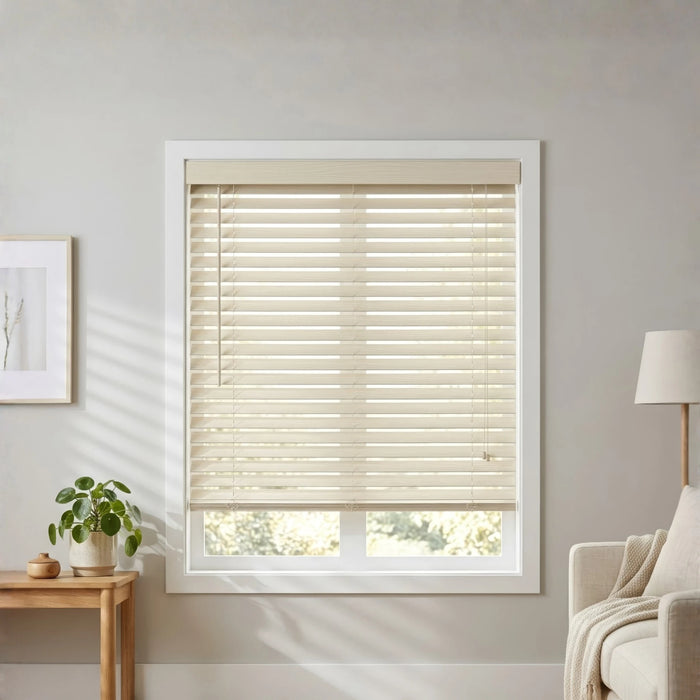
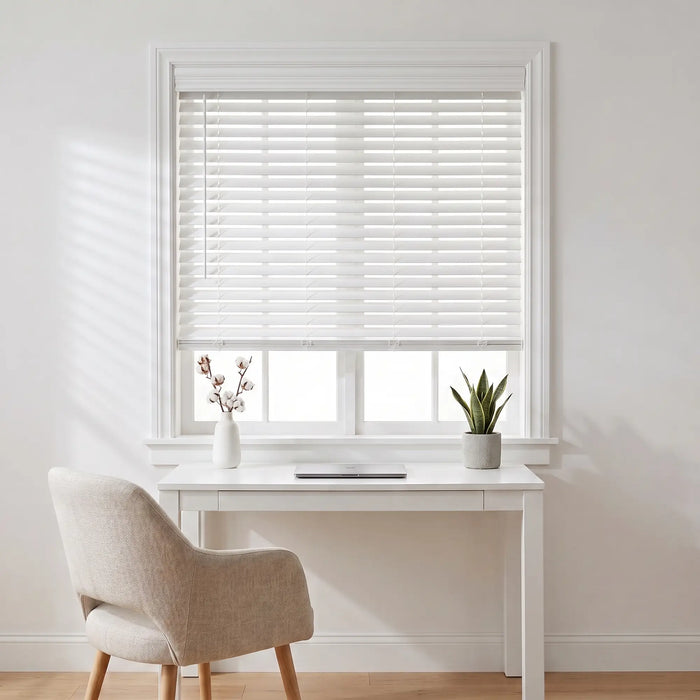
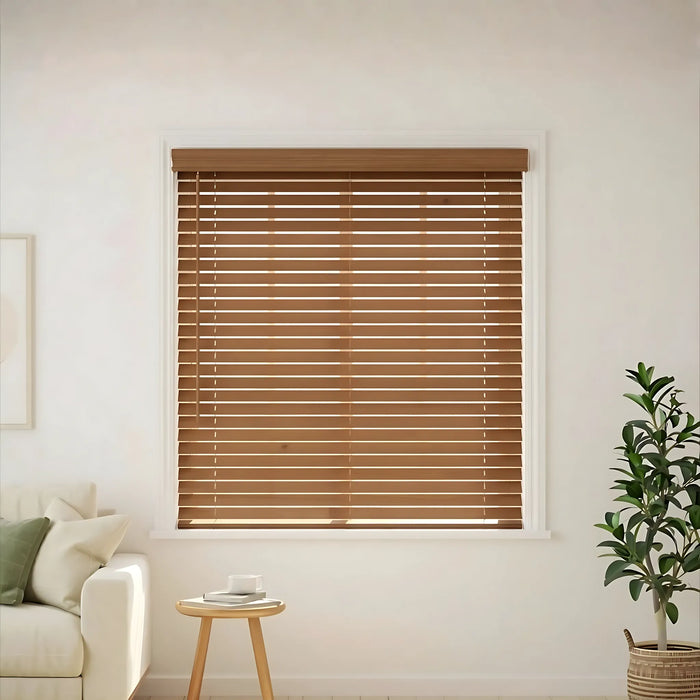
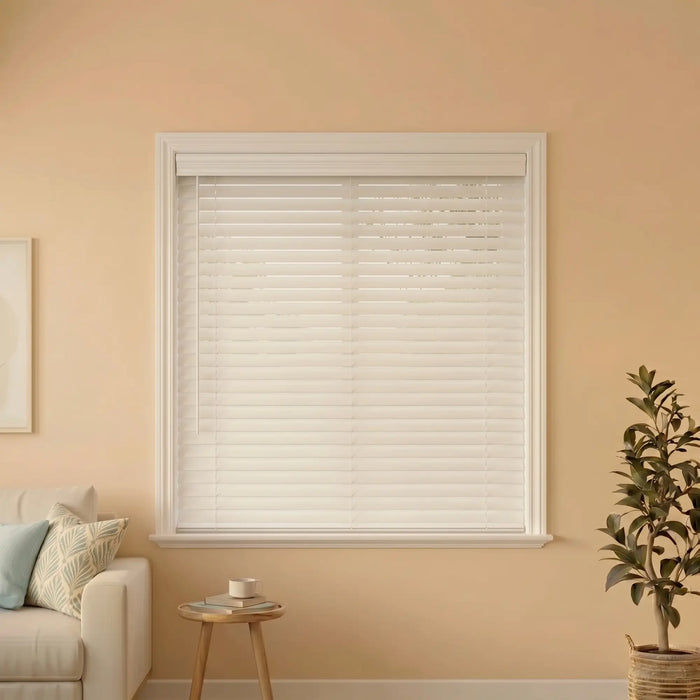
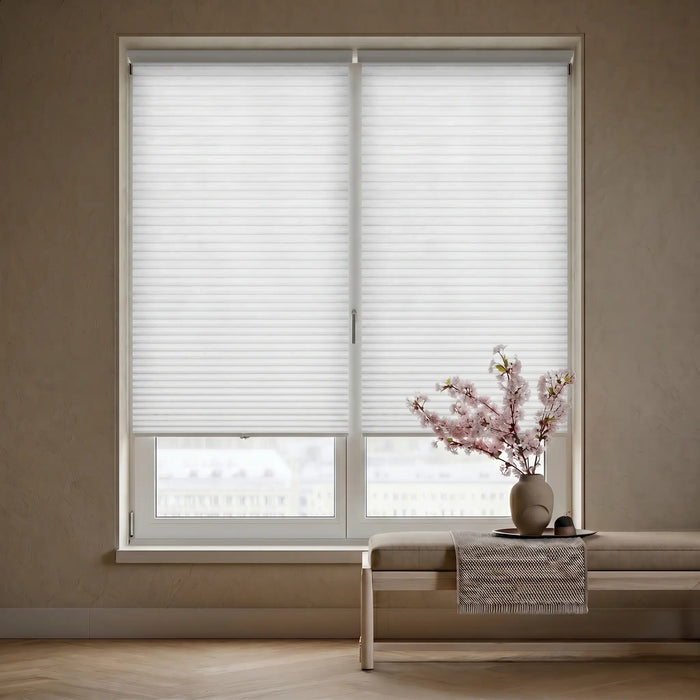
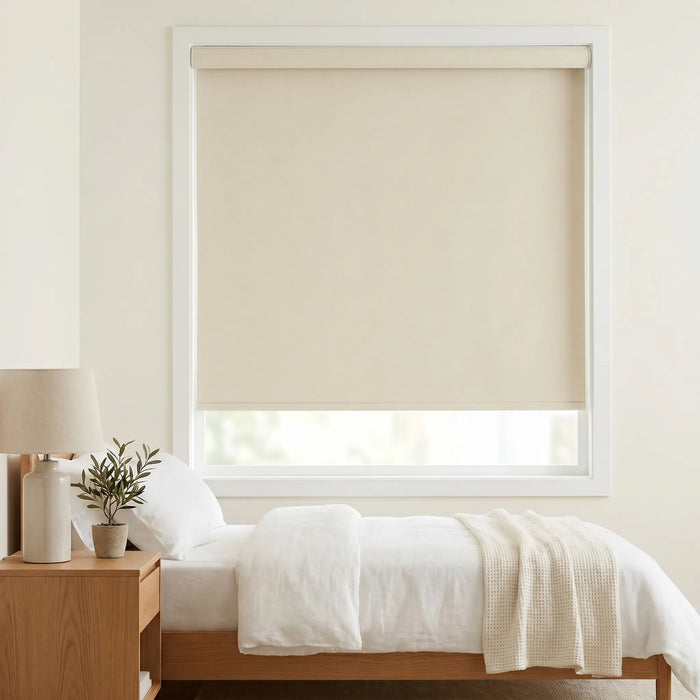
What sets them apart from a shade is the tilt. With the blind fully down, you can open the slats flat for the view, close them for privacy, or angle them to bounce daylight up onto the ceiling while blocking the sightline from outside. A shade is either up or down; a blind lets you fine-tune the light without moving it.
Every horizontal blind we make has cordless lift: raise or lower it by the bottom rail. On our faux wood, hardwood and 2-inch aluminum blinds, the slats tilt with a wand. Our Window Blinds page covers the full blind range, including vertical blinds for sliding doors.
Faux Wood, Hardwood or Aluminum
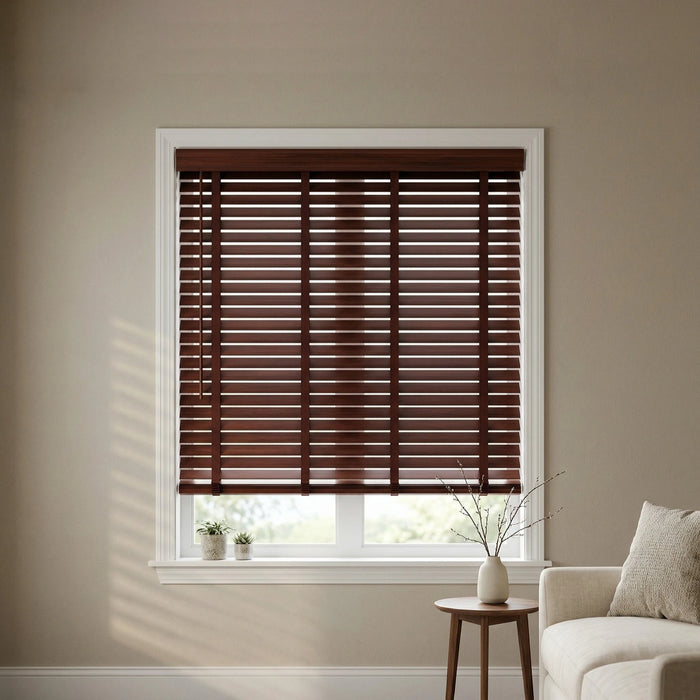
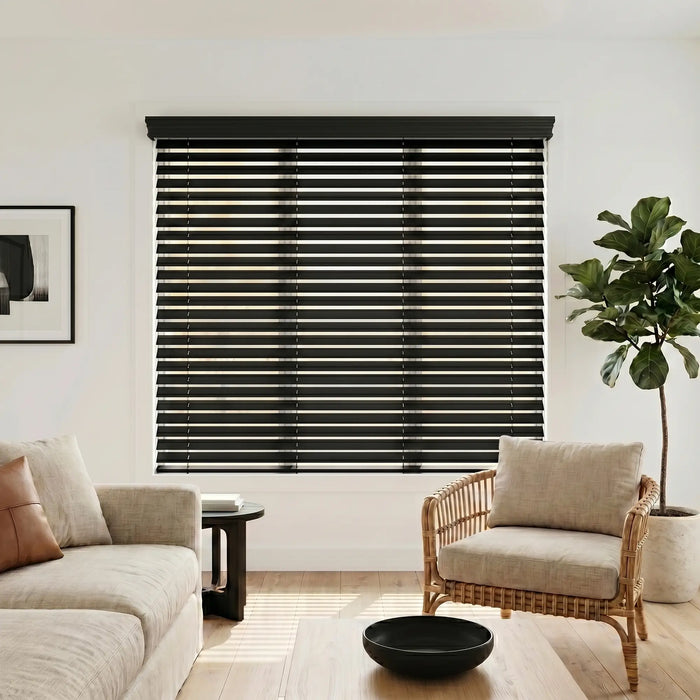
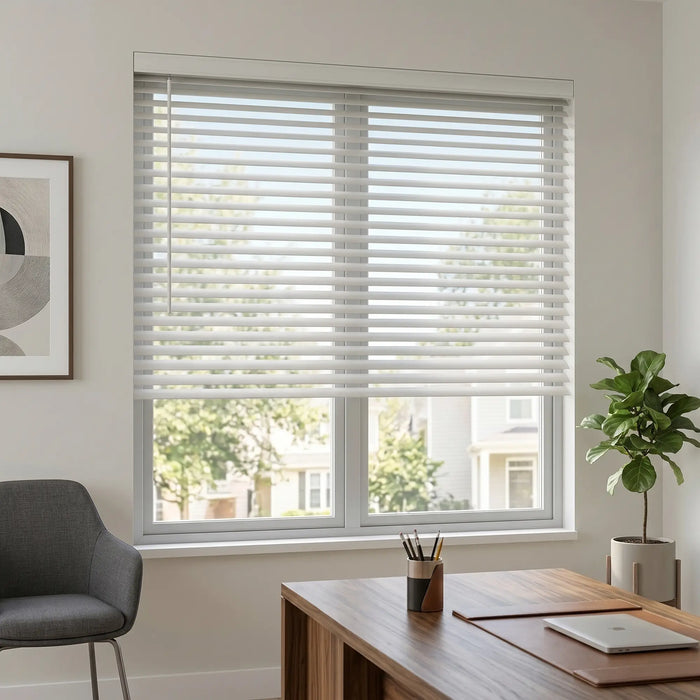
Faux wood blinds are the most popular horizontal blind, with 2-inch slats that look like painted or stained wood. They are made to resist moisture, so they suit kitchens, bathrooms and sunny windows. We offer:
-
Essential – a smooth white 2-inch slat with a crown valance included, our most affordable blind.
-
Classic White and Classic Woodtone – smooth, sandblasted and woodgrain finishes with a 3 1/4-inch crown valance.
-
Premier – twelve colors in smooth or sandblasted finishes, with a choice of valance style and position and the wand on either side.
-
Signature Woodtone – ten woodgrain colors with the same valance choices as Premier.
Hardwood blinds are 100% genuine hardwood in seventeen finishes, with a matching hardwood valance. Real wood is significantly lighter than faux wood, which makes these easier to raise and better suited to large windows. The trade-off is moisture: real wood can warp in steam and damp, so keep it out of bathrooms.
Aluminum blinds come in two slat sizes. The 1-inch Classic mini blind offers 29 colors and the slimmest profile; the 2-inch Classic uses a heavier 8-gauge aluminum slat. Aluminum is light, resists bending and will not swell, and suits rentals, offices and shallow window frames.
1-Inch or 2-Inch Slats
Slat width changes how a window looks more than how it works. A 2-inch slat is the standard for a full-size window: fewer slats across the glass, a wider view when tilted open, and a look that reads as wood blinds rather than office blinds. A 1-inch aluminum slat gives the slimmest stack and the finest light control, and it fits small windows and shallow frames. All our faux wood and hardwood horizontal blinds use 2-inch slats; aluminum comes in both.
Light and Privacy: What Horizontal Blinds Do Well
Horizontal blinds are built for light control, not total darkness. The ladder cords pass through small route holes in each slat, so even with the slats closed, pinpoints of light come through. For a bedroom that needs real darkness, pair a blind with a blackout shade or drapery.
Privacy depends on the angle. During the day, angling the slats upward blocks the sightline from the street while still letting light bounce in off the ceiling. At night, with lights on inside, close the slats fully: partly open slats show the room to anyone outside.
Choosing by Room
-
Kitchens and bathrooms: faux wood or aluminum, which resist moisture and wipe clean. Our kitchen and bathroom collections bring together the options that suit each room.
-
Living and dining rooms: hardwood for the depth of a real wood finish, or faux wood for the same look in a sunny or humid room.
-
Home offices: tilt the slats to lift daylight off the screen; 1-inch aluminum suits a crisp, modern office.
-
Bedrooms: blinds handle glare and privacy well; add a blackout shade if you need a dark room.
Large Windows and Sizes
Each line has its own limits. Our Classic, Premier and Signature faux wood blinds reach 96 inches wide and 72 inches high; the Essential line goes to 72 inches wide. Hardwood goes to 84 inches wide and 86 inches high, and the 2-inch aluminum blind to 84 inches each way. Our aluminum blinds start at 42 inches tall, so for a short window choose faux wood or hardwood.
A very wide horizontal blind is heavy to lift, especially in faux wood. For a wide window, hardwood is the lighter choice, our 1-inch aluminum mini blind goes widest of all, and our hardwood and aluminum blinds can be built as two blinds on one headrail: one clean line across the window, with each half raised on its own. For a sliding glass door, vertical blinds are the better fit, because they draw to the side instead of stacking in front of the glass.
Mounting and Valances
Every blind can be mounted inside the window frame or outside it. An inside mount needs enough frame depth for the headrail, and the figure varies by line, so check the product page before you order; an outside mount has no depth requirement and covers more of the frame. Faux wood and hardwood blinds come with a valance that hides the headrail. On Premier and Signature you can choose the valance style, and on Premier, Signature and hardwood whether it sits recessed in the frame or outside it. Optional hold-down brackets, available on Premier, Signature and aluminum blinds, keep the bottom rail steady on doors and busy windows.
Measuring and Ordering
Measure the opening in three places for width and height and give us the narrowest width – for an inside mount, we take the deduction. Our blind measuring guide and installation guide cover both mount types. Order free samples to see a slat and its finish in your own light. Shipping is free on most orders, and you can add our optional MeasureSafe™ Guarantee in case a measurement goes wrong.
 Skip to content