Skip to content


Zebra Shades Buying Guide: How to Choose the Right Style, Fabric, and Size


Shopping for zebra shades is exciting right up until you hit decision overload. Light-filtering or blackout? Inside mount or outside mount? Cordless or motorized? This buying guide breaks it down in a practical order so you can choose zebra blinds that fit your room, your budget, and the way you live.
Key Takeaways
- Zebra shades alternate sheer and opaque bands to let filtered light or privacy without changing coverings.
- Opacity options range from light-filtering to blackout, affecting daytime brightness, nighttime privacy, and glare control.
- Mount type and headrail details influence light gaps and overall darkness more than fabric color.
- Motorized and cordless systems add convenience and safety, while manual options stay simpler and lower cost.
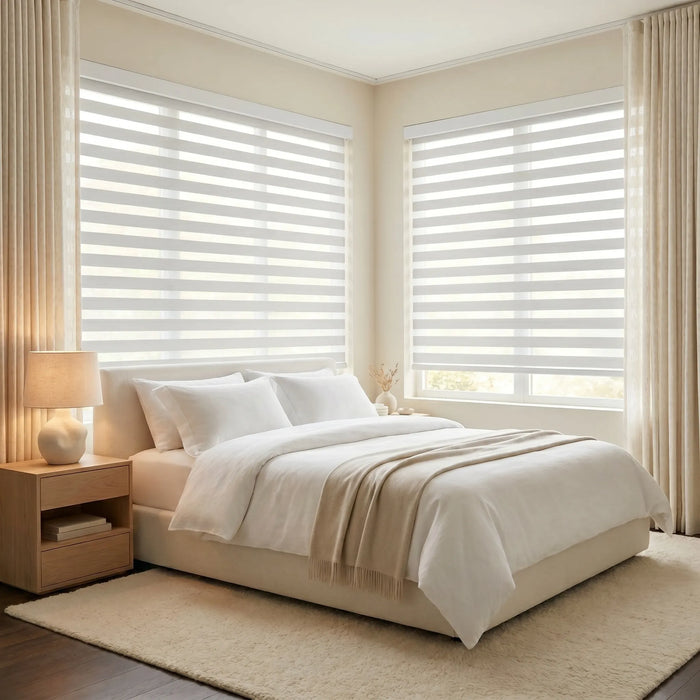
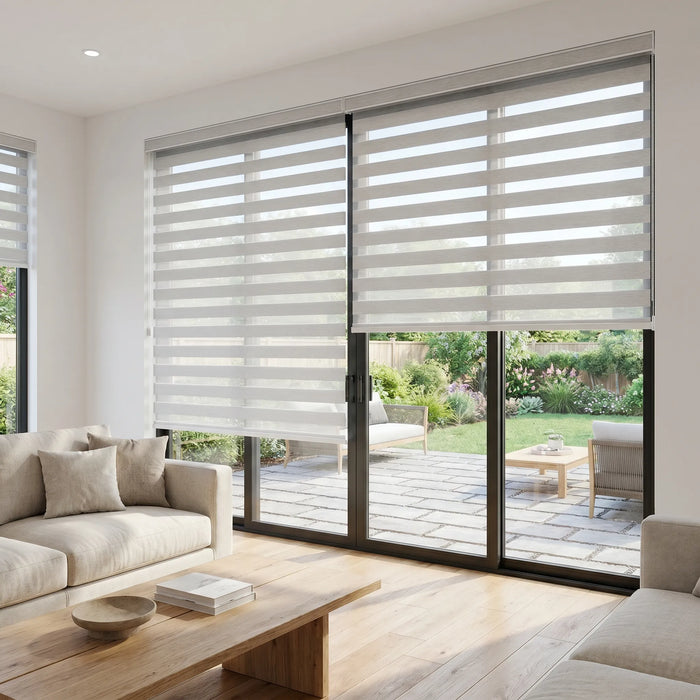
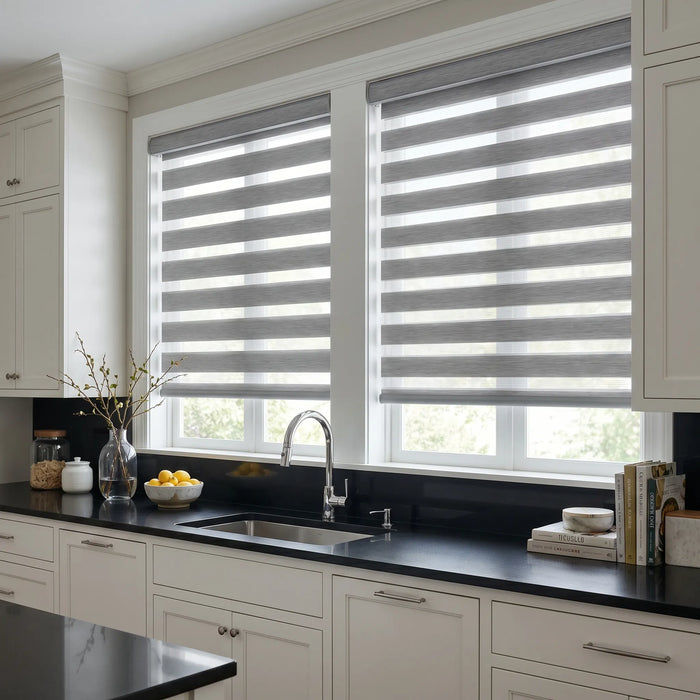
If you are still learning the basics, zebra shades are a window treatment with sheer and opaque bands that alternate as the fabric rolls. That “sheer and opaque” design is the reason zebra shades can shift between filtered light and more privacy without switching to a different window covering. This guide picks up at the buying stage and helps you choose the right zebra shade setup.
7 Things to Look for When Buying Zebra Shades
Use this as your quick checklist before you order. If you can answer these seven items, you are in good shape.
-
Fabric opacity (light-filtering, room darkening, or blackout).
Start here. Opacity determines how much natural light comes in, how much glare you cut, and how private the room feels at night. -
Operation type (manual chain, cordless, or motorized).
Cordless options are popular for children and pets. Motorization is great for hard-to-reach windows, consistent light control, and smart home routines. -
Mount type (inside mount or outside mount).
An inside mount sits within the window frame for a clean, built-in look. An outside mount covers the frame and can help with light gaps and privacy. -
Safety and daily convenience.
If this is a bedroom or a space you use every day, think about how often you will raise or lower the shade. A smooth, simple system matters more than you think. -
Build details that affect performance.
Look at the headrail style, whether a cassette is available, and how the fabric layers move. These details affect light control and privacy more than color does. -
Warranty and support.
A solid warranty is a good sign of long-term quality. It also matters if you are investing in motorization. -
Custom vs ready-made and price-per-square-foot.
Custom zebra blinds give you a more precise fit and more options. Ready-made can work for standard windows and tighter timelines, but sizing is less forgiving.
Best Fabrics for Zebra Shades
Most zebra shade fabrics are polyester-based because they hold their shape, clean easily, and resist fading. What changes from one fabric to another is weave density, texture, and how much light passes through the bands.
In simple terms, zebra shades work because the bands alternate between sheer sections and more opaque sections. When the bands line up, you get filtered light. When the opaque bands overlap, you get more privacy. The fabric you choose determines how strong that shift feels.
If you want a deeper breakdown of opacity choices and how sheer shades compare, see our dedicated sheer versus blackout comparison. For now, here is a practical way to compare common fabric types.
Zebra shade fabric comparison table
| Fabric type | Best for | Opacity range | Texture | Durability | Notes |
|---|---|---|---|---|---|
| Smooth polyester | Most rooms, especially living rooms and home offices | Light-filtering to blackout fabrics | Clean, even | High | A dependable “default” that fits modern interior décor. |
| Linen-look (poly blend) | Spaces where you want softness without fuss | Usually light-filtering to room-darkening fabrics | Textured, woven | High | Adds warmth while still offering a modern look. |
| Technical / solar-inspired weaves | Sunny windows, glare control, UV concerns | Mostly light-filtering | Subtle weave | High | Prioritizes glare reduction and filtered light, not full blackout. |
| Blackout-backed fabrics | Bedrooms, nurseries, home theaters | Blackout | Smooth to slight texture | High | Helps block light, but side and top gaps can still matter. |
Are Zebra Shades Good for Privacy?
Zebra shades can be great for privacy, but it depends on two things: the opacity you choose and how you set the bands.
Daytime vs nighttime privacy (the honest version)
- Daytime: In most homes, zebra shades provide strong daytime privacy even in light-filtering fabrics, because it is brighter outside than inside. You can still enjoy filtered light while keeping the room comfortable.
- Nighttime: At night, privacy is harder. When interior lights are on, silhouettes can show through sheer bands. This is where room-darkening fabrics or blackout fabrics usually feel worth it.
How to adjust zebra shades for maximum daytime privacy
If your goal is privacy without turning the room dark, try this:
- Align the opaque bands just enough to block direct sightlines. You often do not need to fully “close” the shade. Small adjustments can keep light while improving privacy.
- Use an outside mount when privacy is a priority. Covering more of the window frame helps reduce side gaps.
- Choose a slightly denser light-filtering fabric for street-facing rooms. You still get natural light, but with less see-through effect.
If your room needs privacy after dark, you will usually be happier with room-darkening fabrics, blackout fabrics, or an added layer like curtains.
How Much Light Do Zebra Shades Block?
Zebra shades are often described as “best of both worlds” because they control light in a more flexible way than traditional blinds or a basic roller shade. Still, no zebra shade blocks light the same way in every room. Use these three categories to set expectations.
Light-filtering vs room darkening vs blackout
- Light-filtering: Softens daylight and reduces glare. Good for living rooms, kitchens, and home offices where you want light control without making the room dim.
- Room darkening: Cuts down a significant amount of light. A strong option for bedrooms when you want a darker room, but not necessarily total blackout.
- Blackout: Blocks most light through the fabric itself. Great for sleep, nurseries, and media rooms, but keep in mind the “light gap” issue around the headrail and sides.
Light gaps and the cassette valance solution
Even with blackout fabric, light can leak around the edges. That is not a defect. It is a reality of how any shade mounts to a window frame. If you need near-total blackout:
- Choose an outside mount for more coverage.
- Look for a cassette valance that wraps the top of the shade to reduce light from above.
- Consider layering with curtains if the room is extremely light-sensitive.
Opacity level comparison table (use cases)
| Opacity | How it feels | Best rooms | Privacy at night | Notes |
|---|---|---|---|---|
| Light-filtering | Bright with softened light | Living rooms, kitchen, home offices | Fair to good (depends on lighting) | Great for filtered light and glare control. |
| Room darkening | Noticeably dimmer | Bedroom, TV rooms | Good | A balanced option if you want darker rooms without full blackout. |
| Blackout | Very dark, especially with a cassette | Bedroom, nursery, home theaters | Very good | Best at blocking light, but side gaps can still show. |
Sizing and Fit: Getting the Right Measurements
Zebra shades look best when they fit the window frame cleanly. For an inside mount, you need enough depth in the frame so the headrail does not stick out too far. For an outside mount, you want enough overlap around the frame to cover light gaps and improve privacy.
If you want the step-by-step process, use our guide on how to measure your windows accurately. It walks you through inside mount and outside mount measurements so you can order with confidence.
Installation: What to Expect After You Order
Most homeowners can install zebra shades with basic tools. The process is similar to installing roller blinds: you mount brackets, click the headrail into place, then test the shade and level it.
If you want a clear walkthrough, our step-by-step installation guide covers tools, bracket placement, and tips to avoid common mistakes.
Manual vs Motorized Zebra Shades: Which Should You Choose?
Manual zebra shades are a solid choice when you want simple operation and a lower upfront cost. You get reliable light control, and it is easy to adjust the bands throughout the day.
Motorized zebra shades make the biggest difference in rooms where you open and close the shade constantly, or when windows are hard to reach. They also help you keep light control consistent, which matters in bedrooms and home theaters. If you use a smart home system, motorization can be a practical upgrade because you can schedule shades to open in the morning and close at night. When you compare options, think about how often you will actually use the shade and whether convenience is worth the added cost.
Cleaning and Maintenance
Zebra shades are not hard to maintain, but they do last longer when you keep dust from building up on the fabric layers. For routine cleaning, a duster or a vacuum with a brush attachment is usually enough. If you have a kitchen window where grease can collect, you may want to wipe the headrail more often and choose fabrics that are easy to spot clean.
Avoid soaking the fabric or scrubbing aggressively. If you are unsure, test a small hidden area first. The goal is to keep the bands looking even so the zebra stripe pattern stays crisp and the shade continues to alternate smoothly between sheer and more opaque positions.
Pricing: What Drives the Cost Up or Down?
Pricing varies mostly by size, fabric, and lift system. Motorization and larger widths are usually the biggest upgrades. Custom sizing costs more than ready-made, but it can save you frustration when windows are slightly off standard.
If you want a detailed breakdown by size and options, see our full zebra shades cost breakdown. It is the fastest way to sanity-check your budget before you order.
Are Zebra Shades Worth It?
Zebra shades are often worth it if you want flexible light control and privacy without switching between sheer curtains and heavier window coverings. They also offer a modern look that works in a lot of spaces, from living rooms to bedrooms.
That said, they are not perfect. If your top priority is true blackout with minimal light gaps, a dedicated blackout roller shade with side channels may be a better fit.
Summary
- If you want to browse options by opacity and style, start with the zebra shades collection.
- If you want a popular light-filtering option that keeps rooms bright, consider zebra light-filtering roller shades.
- If you are prioritizing motorization, cordless safety, or smart home control, build your plan around how you will use the room day to day.