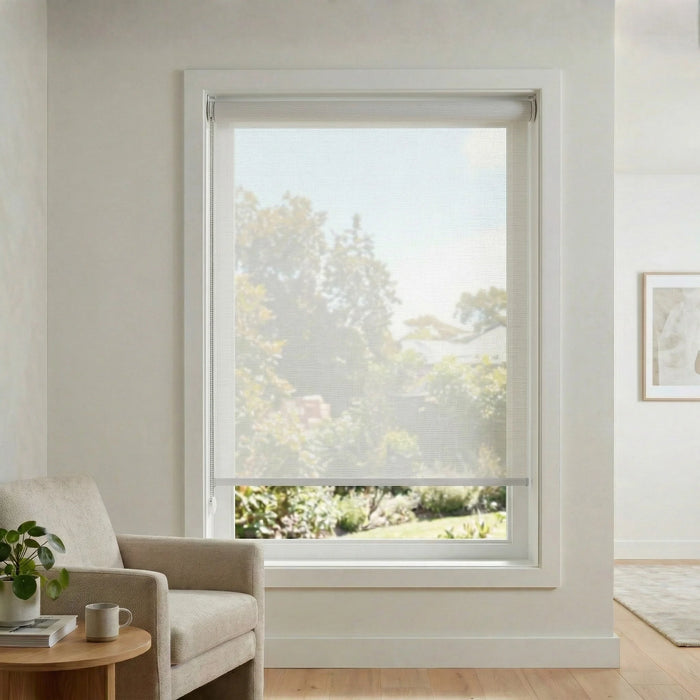
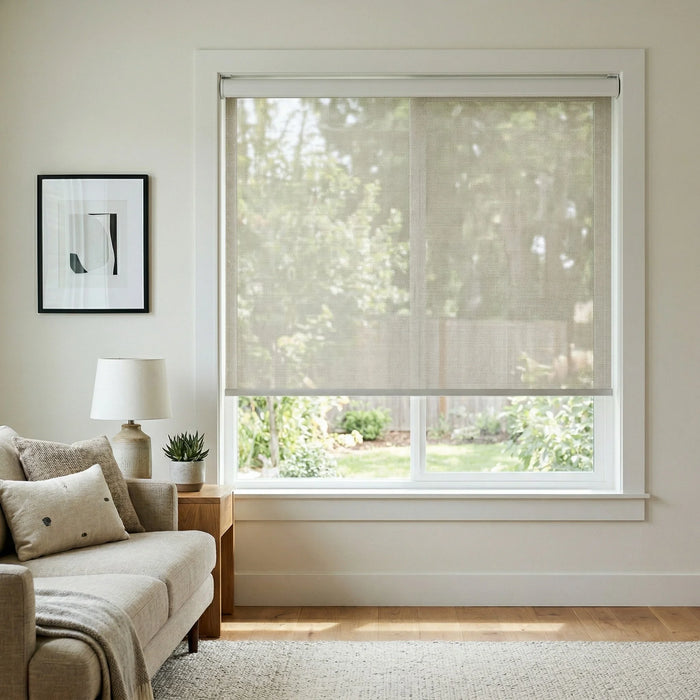
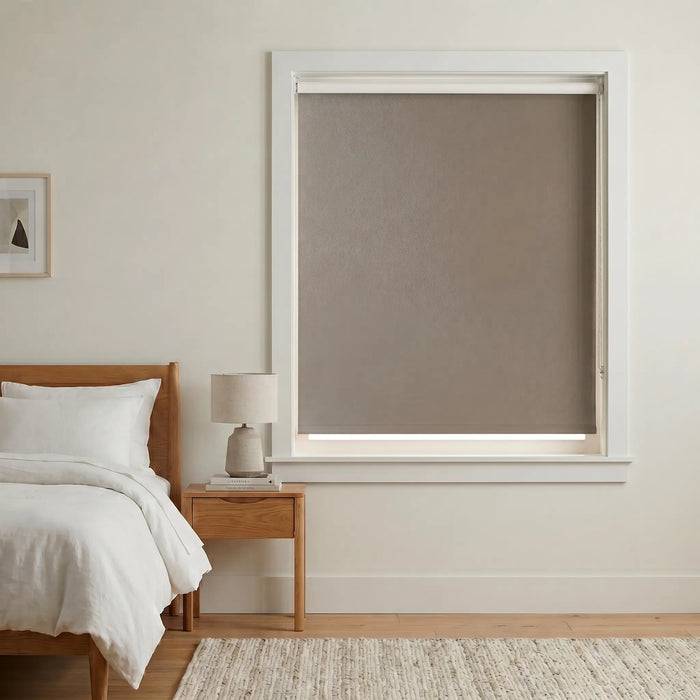
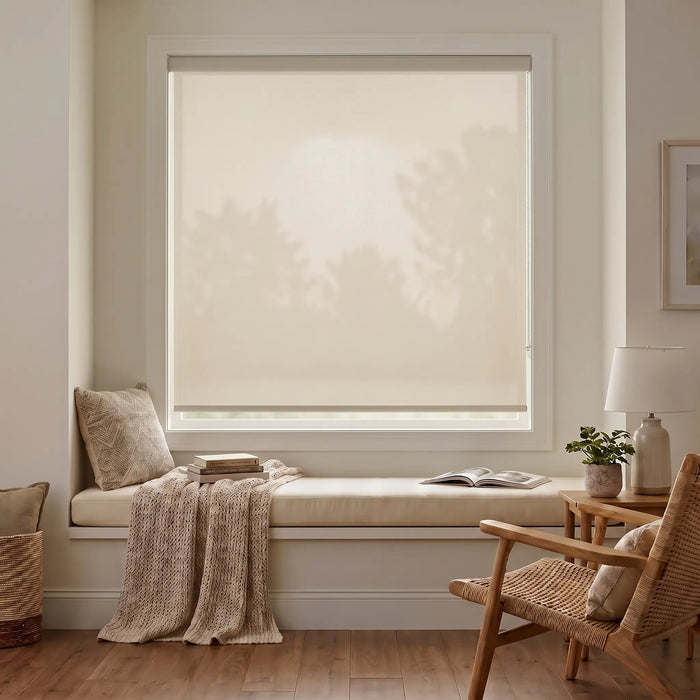
The right choice depends on which of those matters most at your window: glare, fading, privacy or style.
Glare at the Table
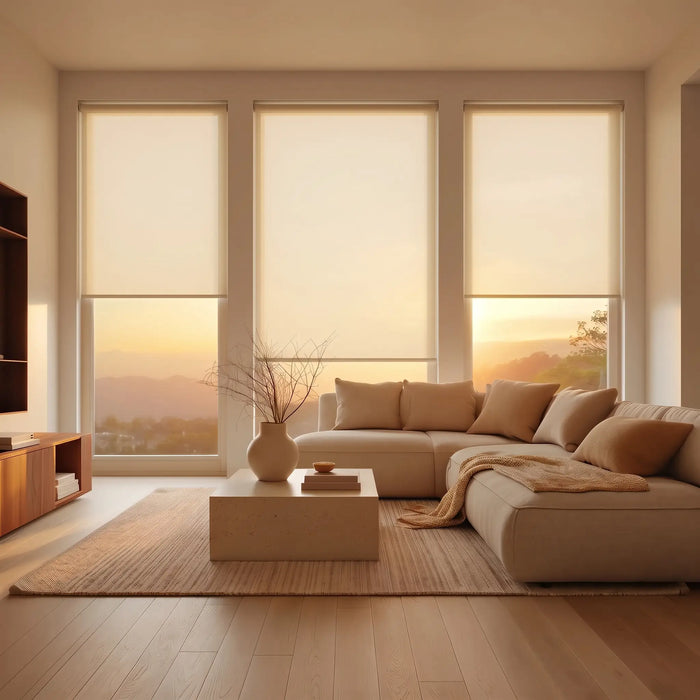
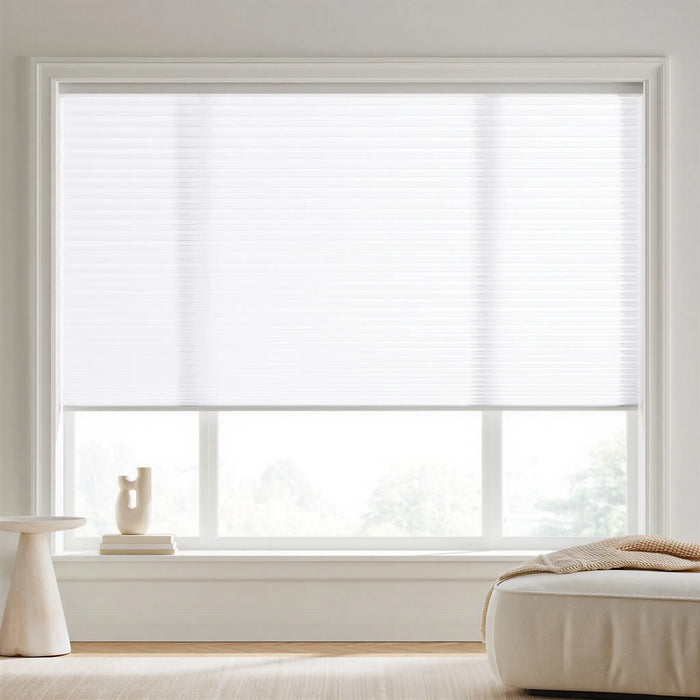
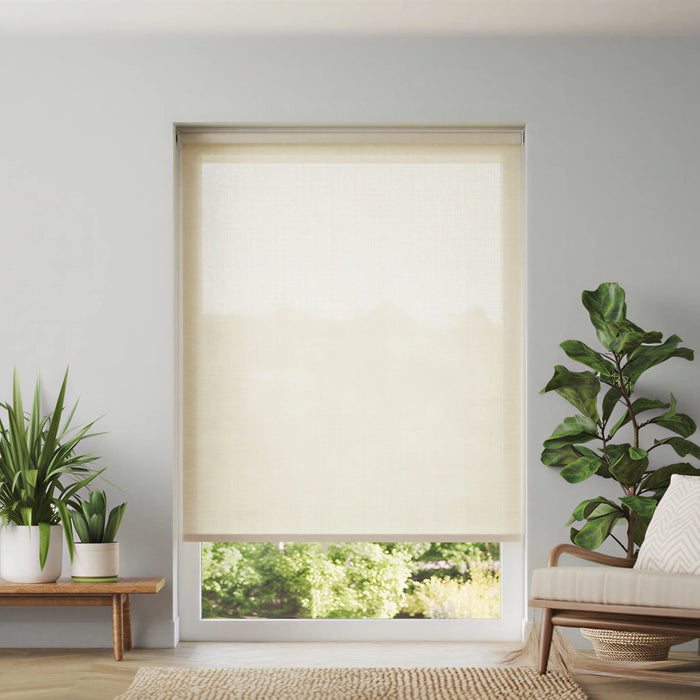
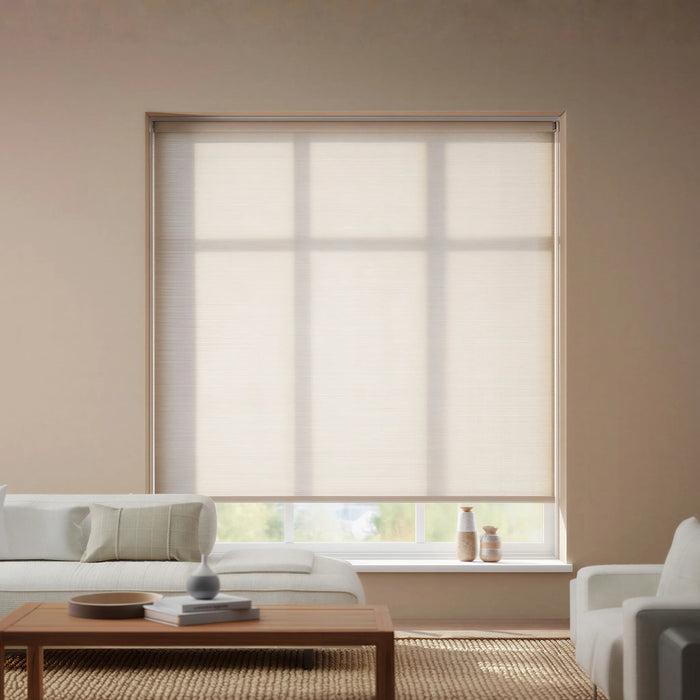
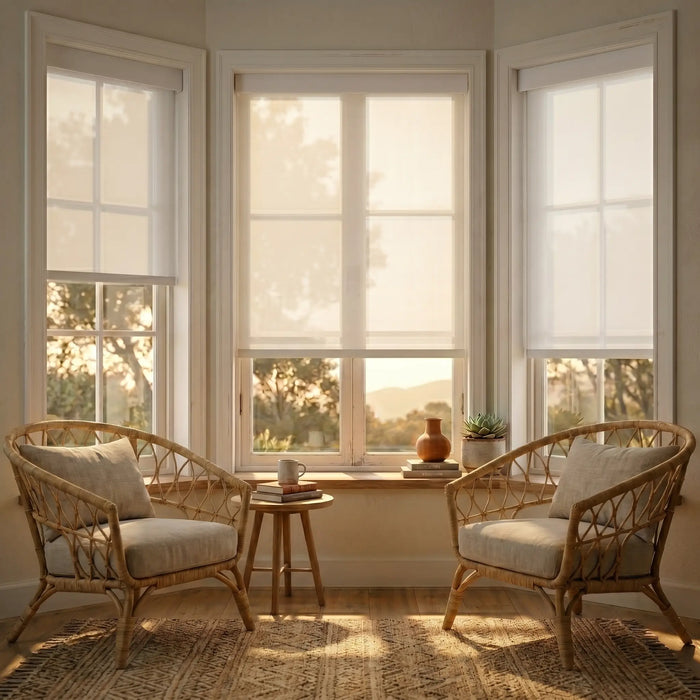
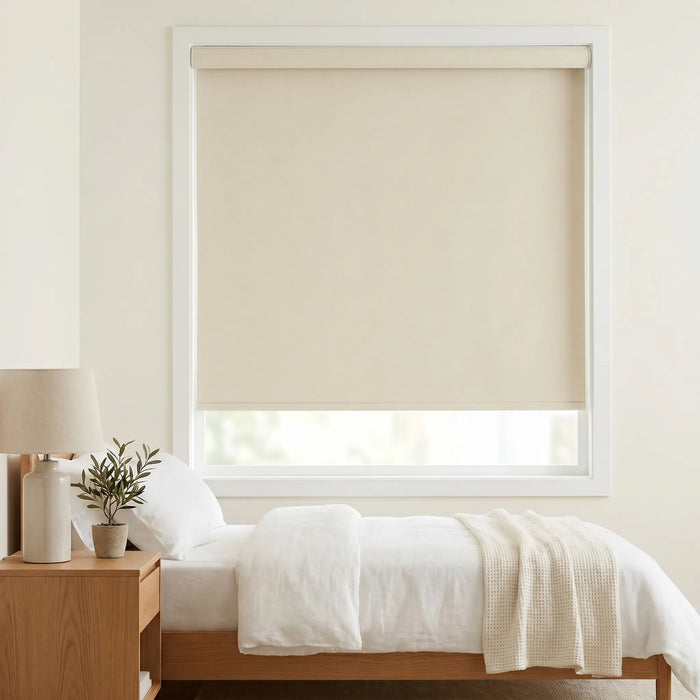
Low evening sun is the dining room's biggest complaint. Solar shades are the best answer when you want to keep the view: a 1% openness Signature Solar shade is our recommendation for south- and west-facing windows with intense afternoon sun, while 3% and 5% fabrics keep more of the view. A light-filtering roller shade softens harsh afternoon sun while keeping the room bright and welcoming.
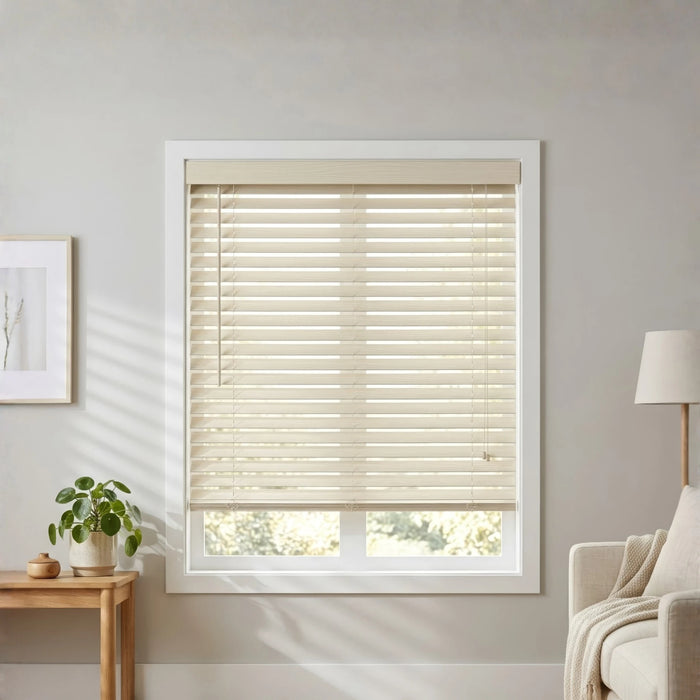
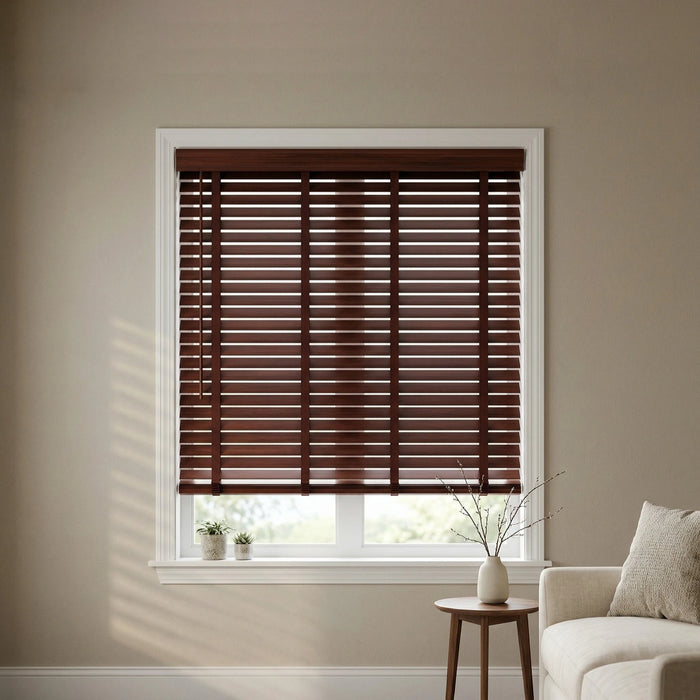
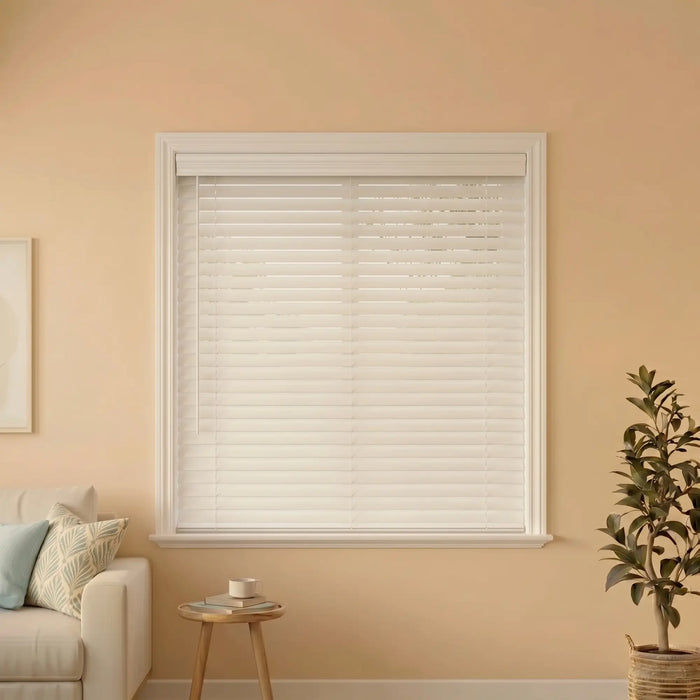
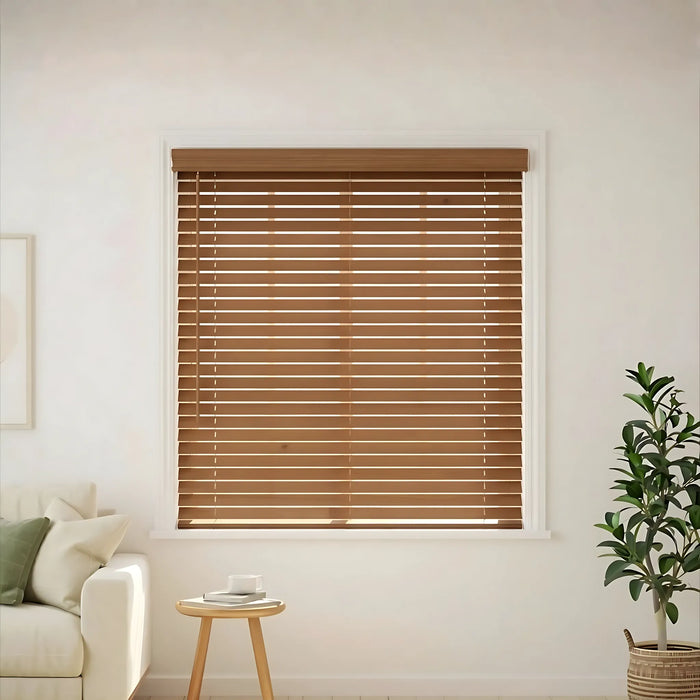
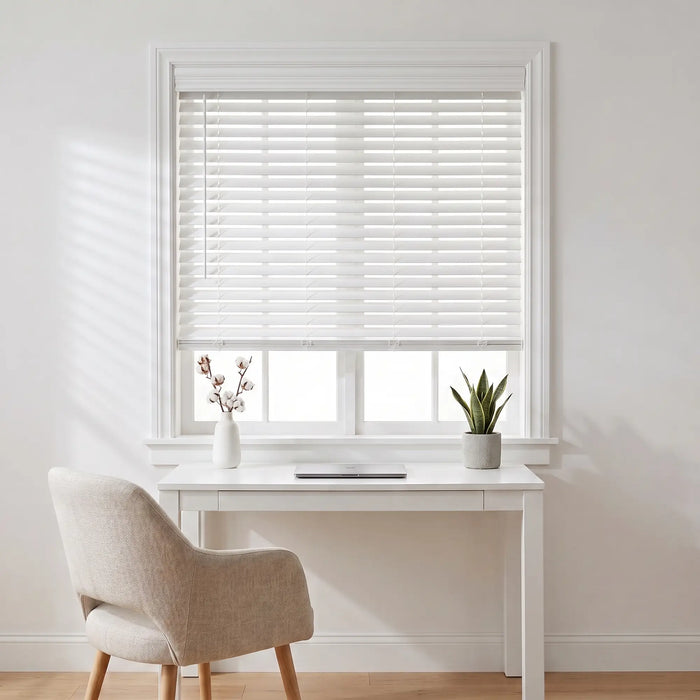
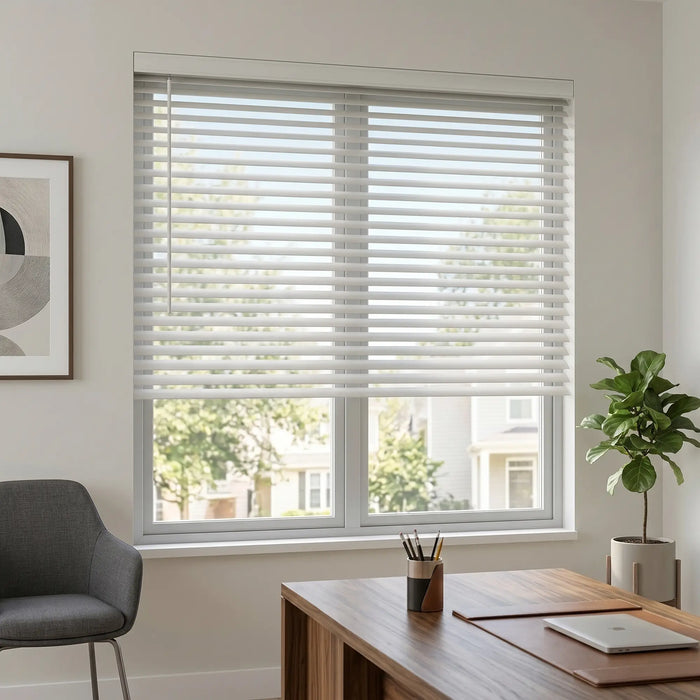
Faux wood blinds handle glare differently: tilt the slats to angle the sun off the table without raising the blind, then close them as the light drops.
Protecting the Table and Chairs
Sunlight fades wood finishes, upholstery and rugs, and a dining table usually sits right in its path. Our Signature Solar shades block up to 99% of harmful UV rays at 1% openness and 97% at 3%, and Luxe Decorative Solar shades block up to 96%. Our Roman shades are lined as standard, and the lining protects the face fabric from sun damage too.
If you keep the shades lowered through the brightest part of the day, the table and chairs are spared most of the direct sun.
Privacy for Evening Meals
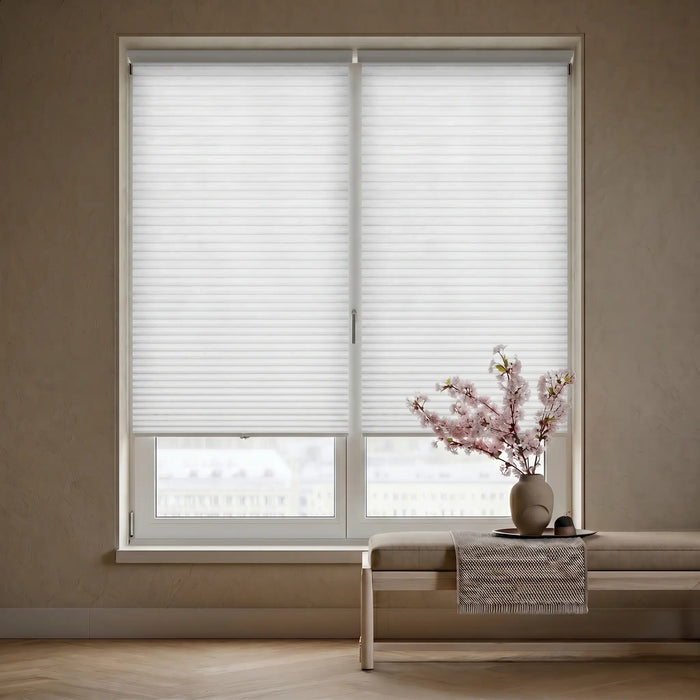
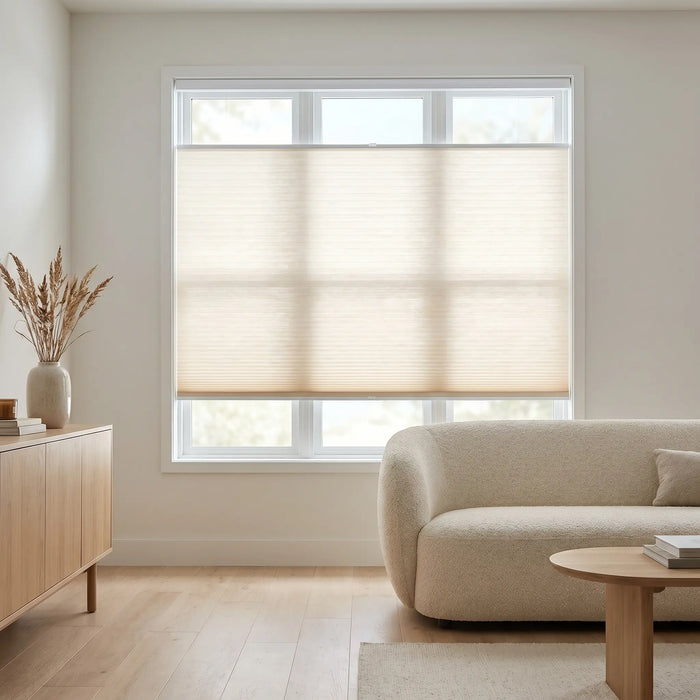
Solar shades do not offer nighttime privacy: once the lights are on inside, the room is visible from outside, so on a street-facing window pair them with drapery or a second treatment. Light-filtering cellular and roller fabrics give only partial privacy after dark: shapes and silhouettes show once the lights are on.
For privacy at dinner, choose something that closes fully:
-
Faux wood blinds tilt shut for privacy with the blind still down.
-
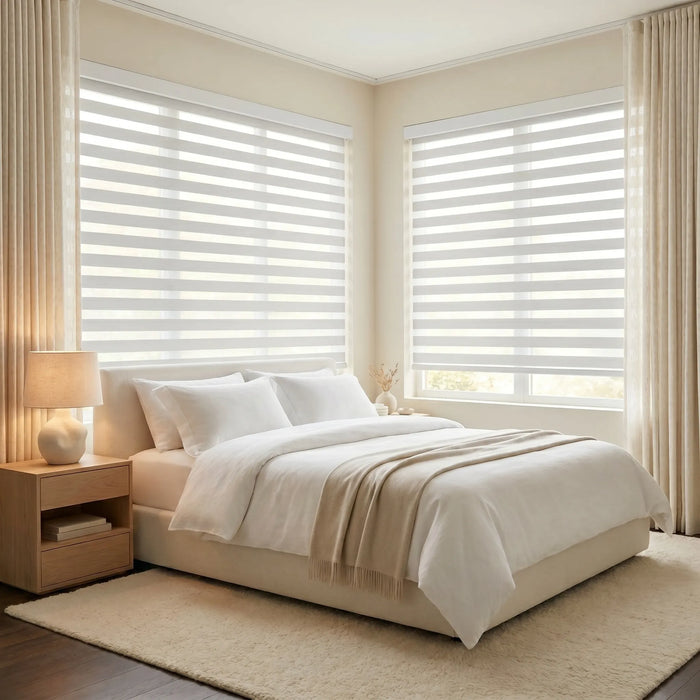
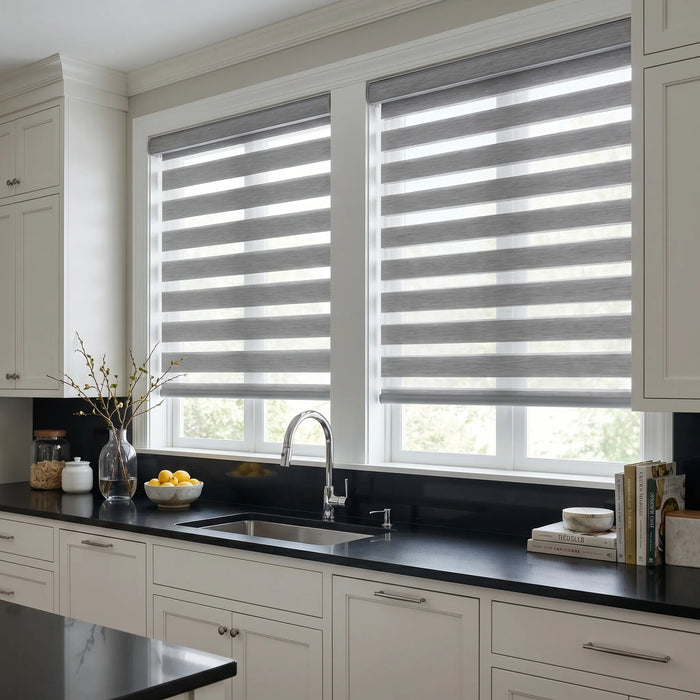
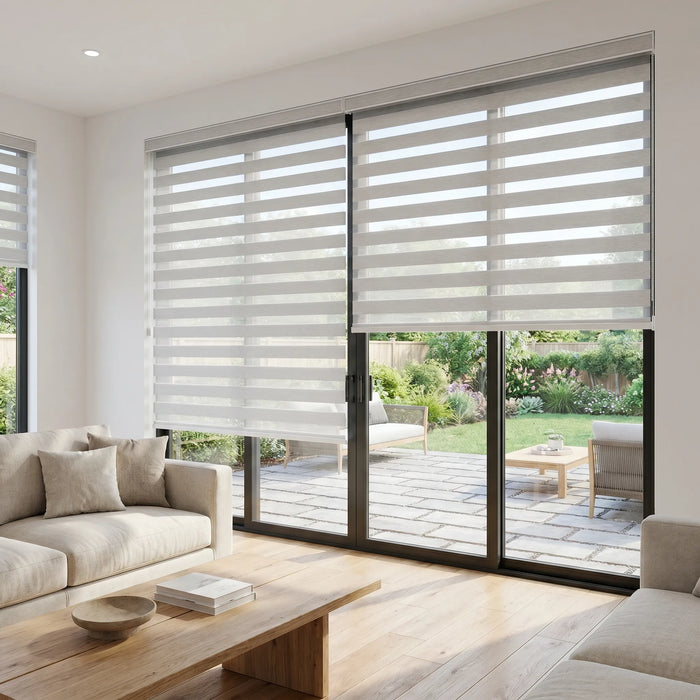
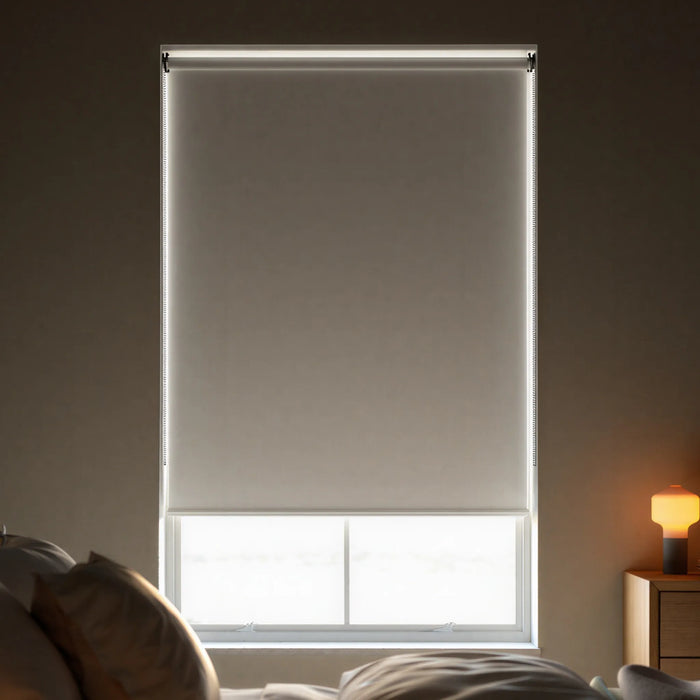
Zebra shades in room-darkening fabric suit street-facing windows, shifting from an open view to solid bands.
-
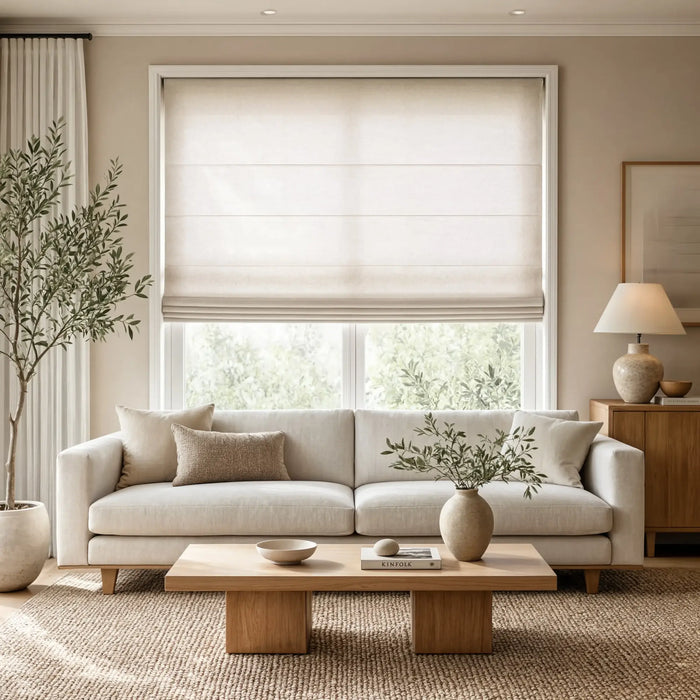
Roman shades with a thermal sateen or premium blackout liner.
-
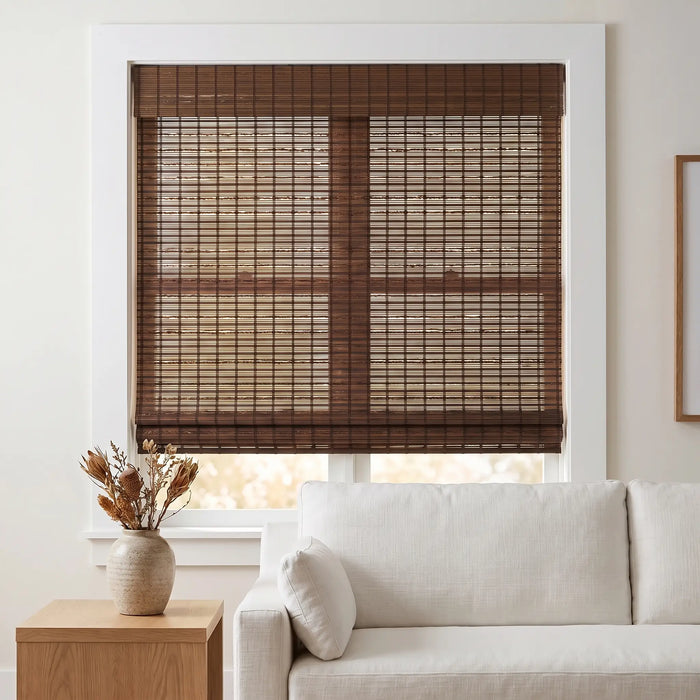
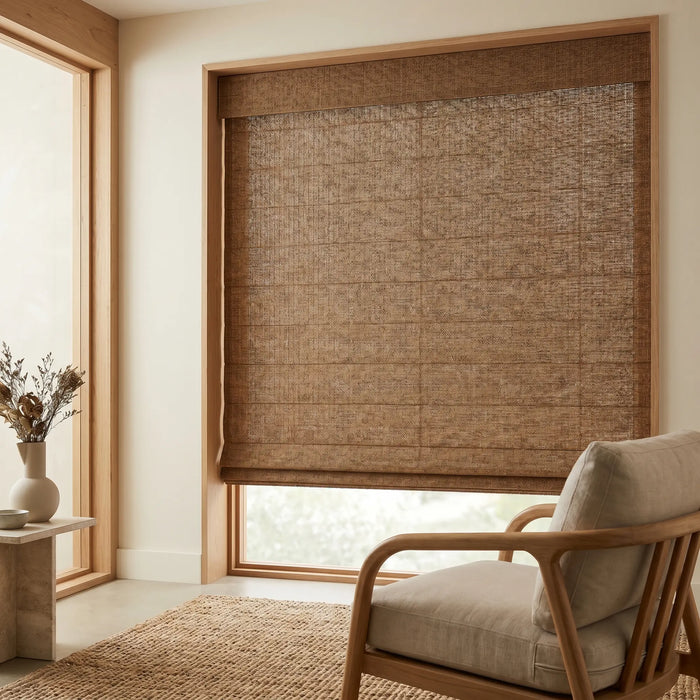
Signature Cordless Woven Wood Shades with a privacy liner, which reduces you to a silhouette from the street, or a room-darkening liner for more cover.
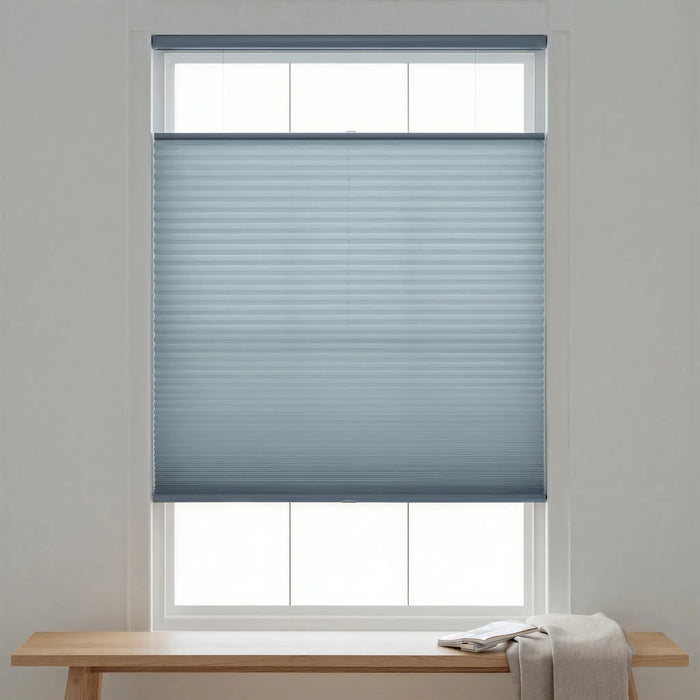
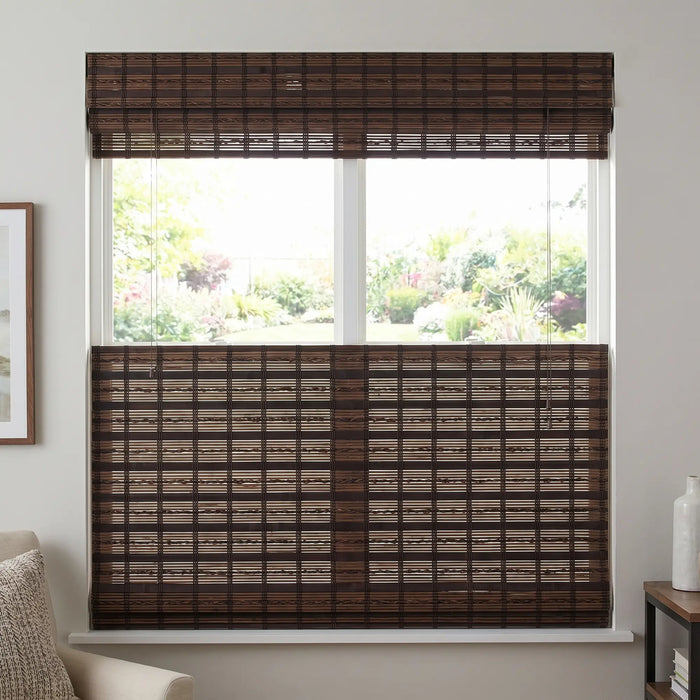
A top-down/bottom-up shade is another option: lower the top for evening light while the bottom stays closed at table height.
Formal or Casual
The window sets the tone of a dining room as much as the table does.
-
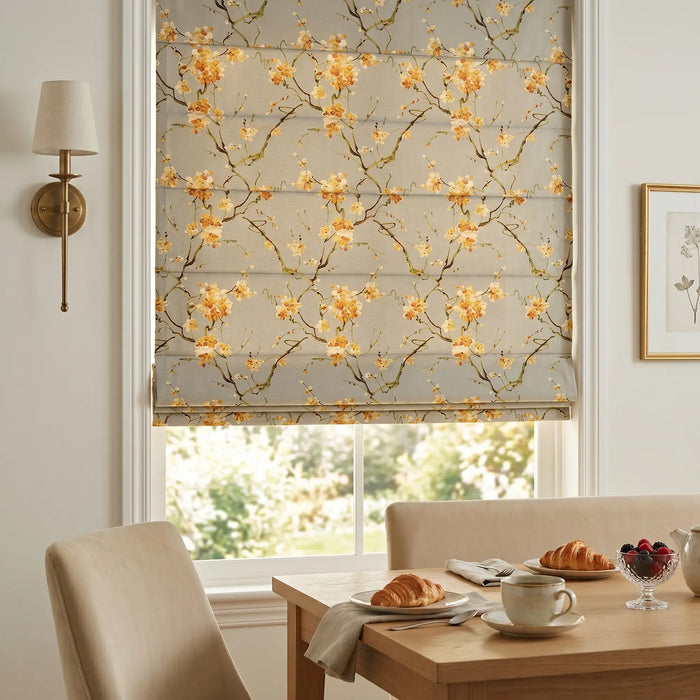
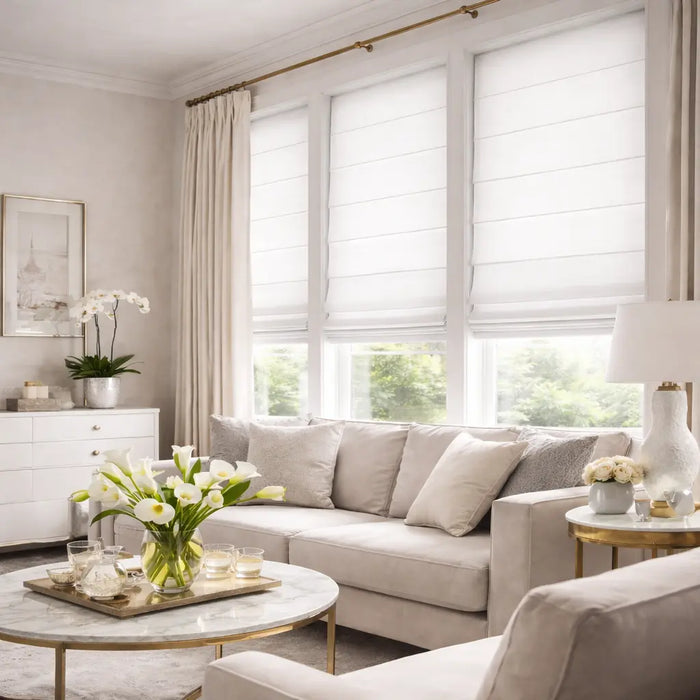
Roman shades are the formal choice, in plain, flat and soft fold styles, lined as standard, with liners from light filtering through thermal sateen to premium blackout. In a dining room, heavy cloth also absorbs sound and softens a room full of hard surfaces.
-
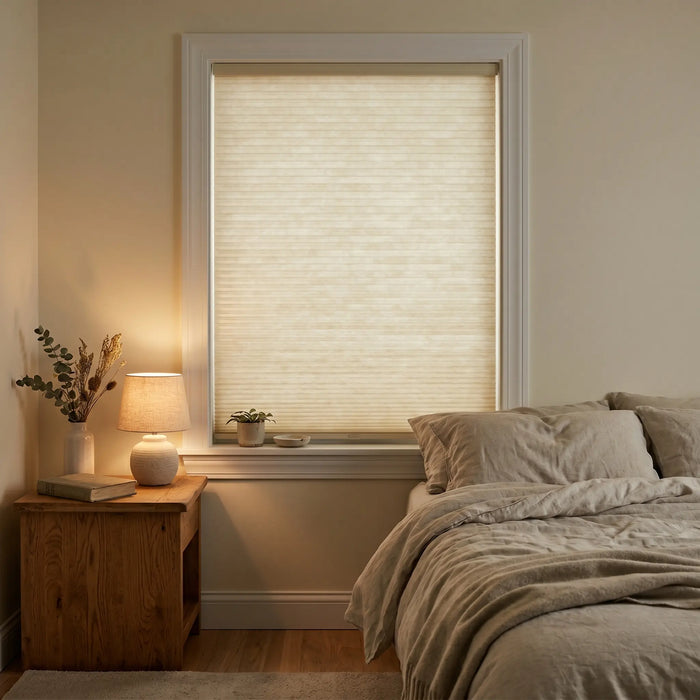
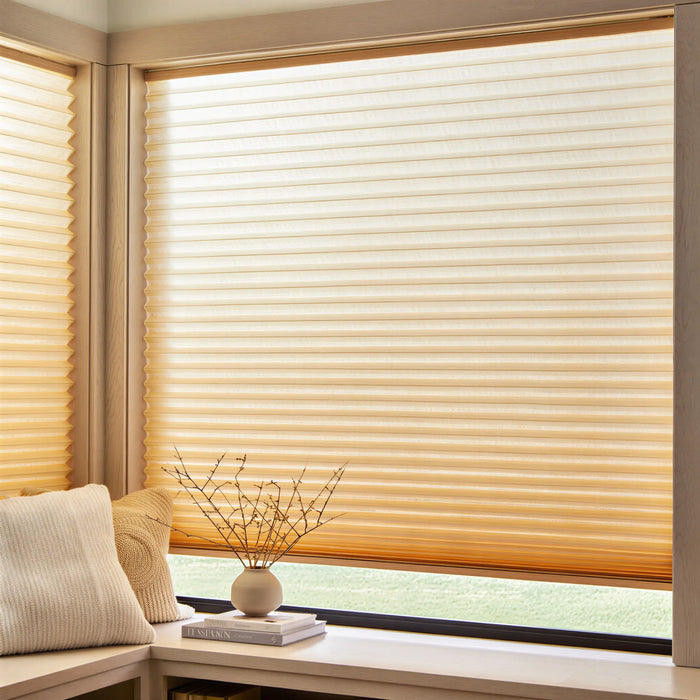
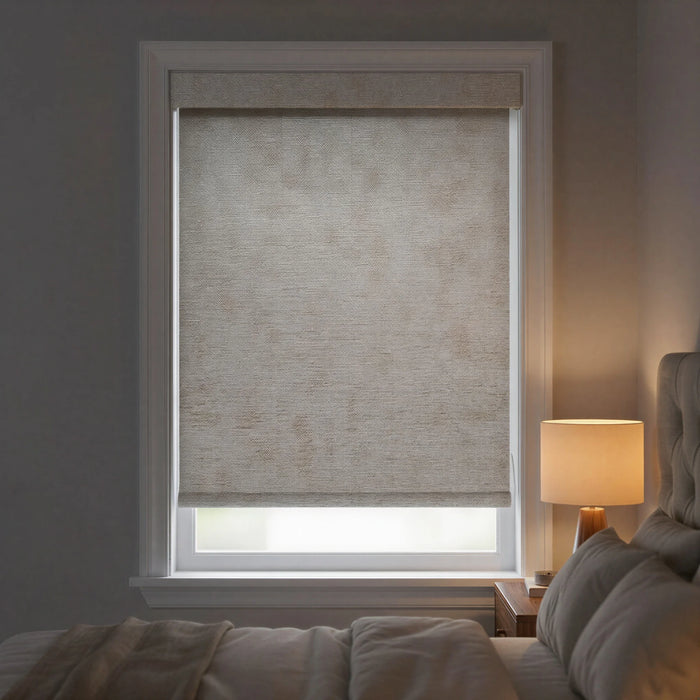
Luxe Natural light filtering roller shades give daytime privacy with a soft, warm glow and a textured, natural weave.
-
Faux wood blinds read as classic, with a traditional crown valance or a clean-lined urban valance on our Premier and Signature lines.
-
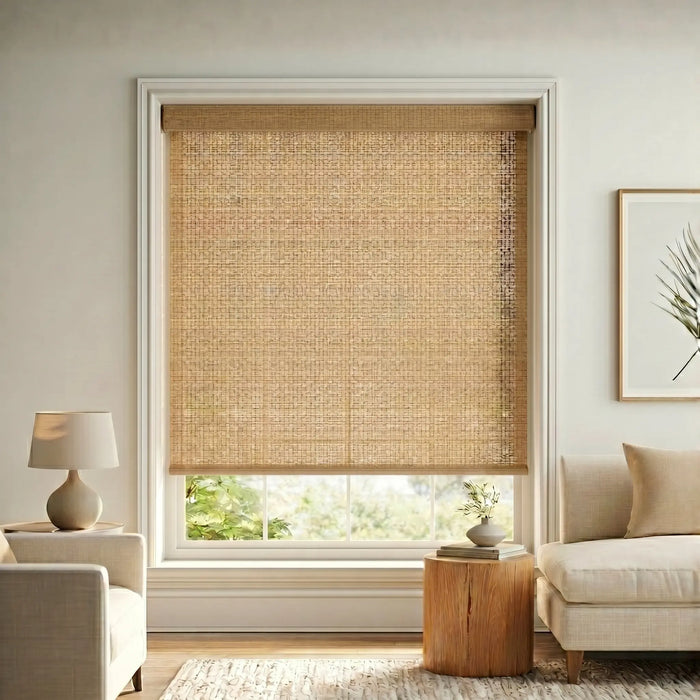
Woven wood shades bring natural texture and a relaxed feel – best in a casual or transitional dining room rather than a very formal one.
-
Zebra and solar shades suit a modern, minimal space.
Open Plan: Matching the Living Room
When the dining area shares a space with the living room or kitchen, the windows read as one wall. Use the same type and color on every window you see together; you can change the fabric's opacity window by window without breaking the look. On a run of several windows, matched shades look best when they move together, which is where motorized shades on one remote earn their place. Our living room and kitchen collections cover the rest of an open-plan space.
Bay Windows and Doors
Bay windows look best with a separate shade on each window section, all in the same fabric and mounted the same way, so they read as one. Roman, cellular and roller shades all work well; inside-mount each window if the frames are deep enough, and check the mounting depth before ordering.
French doors need a treatment that stays put when the door swings. Our Signature and Premier faux wood blinds offer optional hold-down brackets that secure the bottom rail on French doors and high-traffic spots.
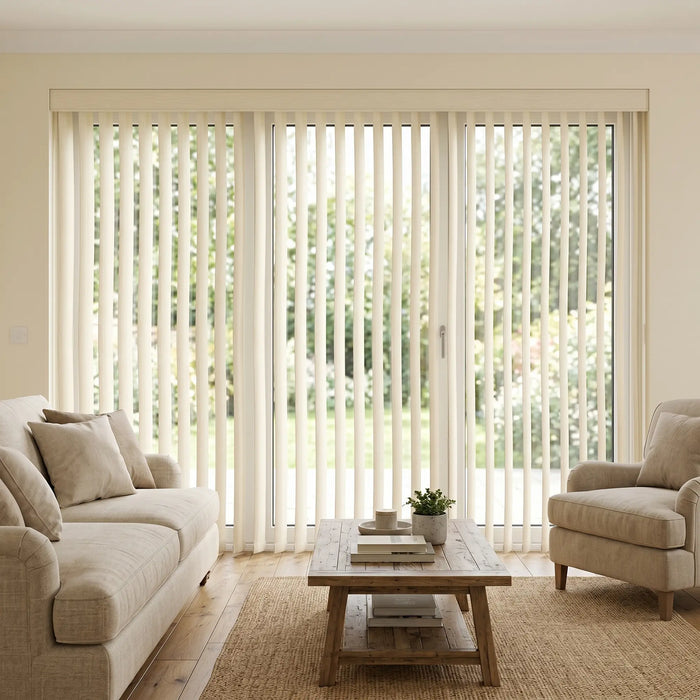
Sliding patio doors off the dining room suit vertical blinds, which draw to the side and reach 192 inches wide, or a wide roller or solar shade if you prefer a cleaner look.
Easy to Keep Clean
A dining room sits next to the kitchen and sees its share of spills. Faux wood blinds and vinyl blackout roller shades are the easiest to keep clean: most wipe clean with a damp cloth. Fabric Roman and cellular shades should be dusted and spot-cleaned gently.
Measuring and Ordering
Measure the opening in three places for width and height and give us the narrowest width – for an inside mount, we take the deduction. Our measuring guide covers both mount types. Order free samples and look at them at dinner time, in evening light and lamplight, before you commit. Shipping is free within the 48 contiguous states, and you can add our optional MeasureSafe™ Guarantee in case a measurement goes wrong.
 Skip to content