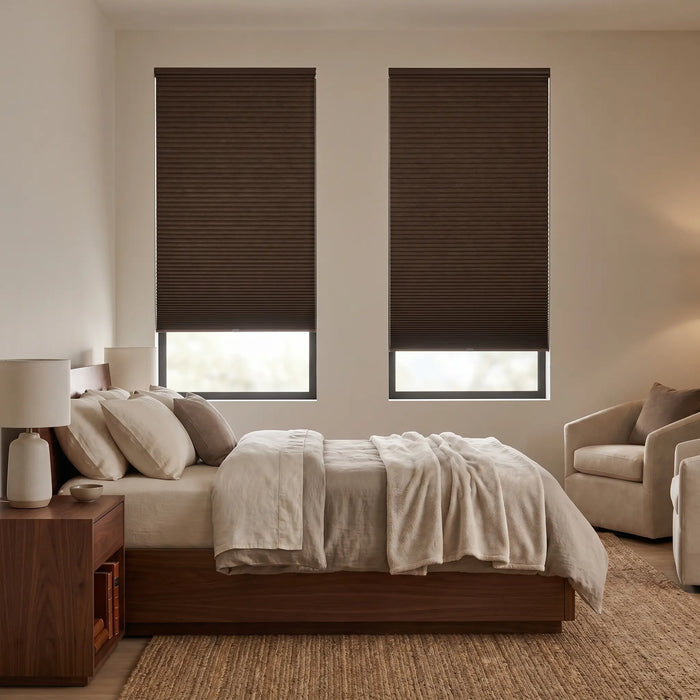
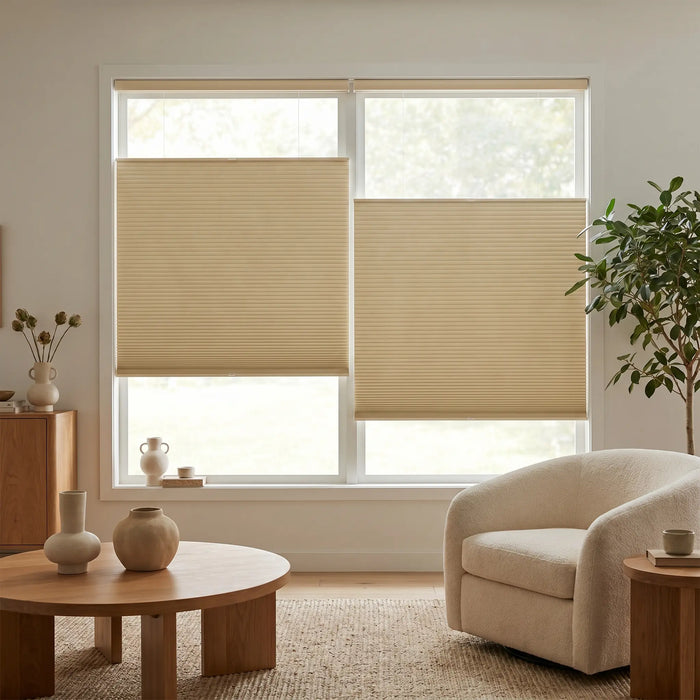
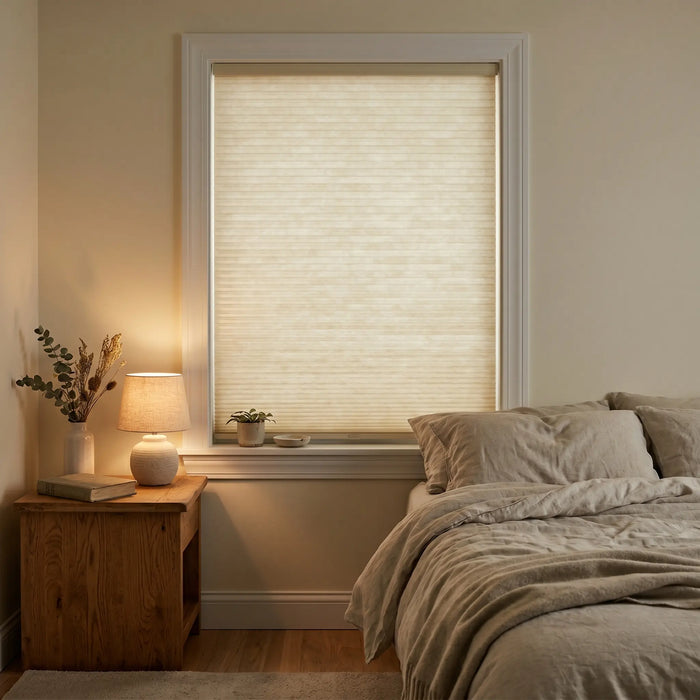
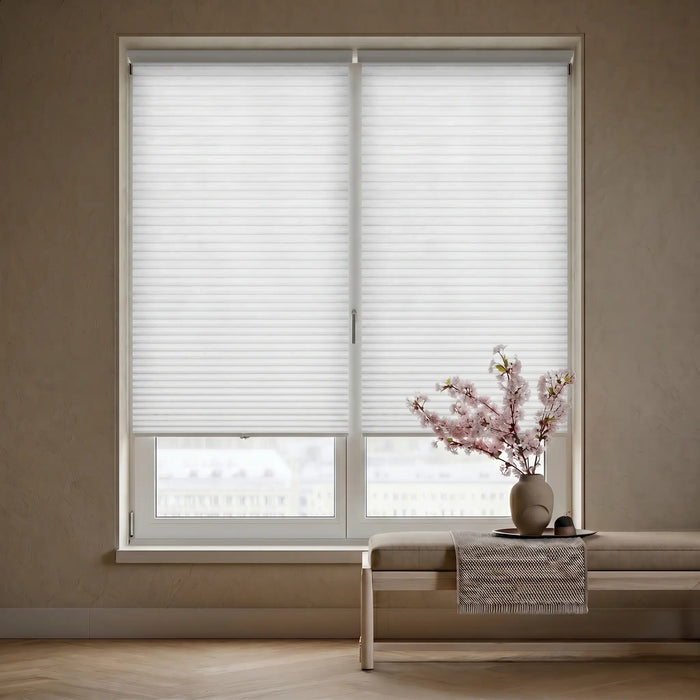
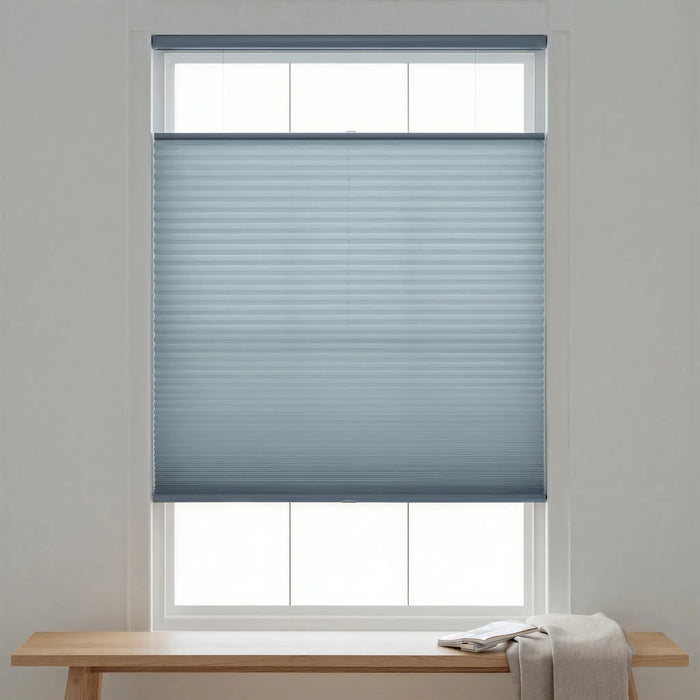
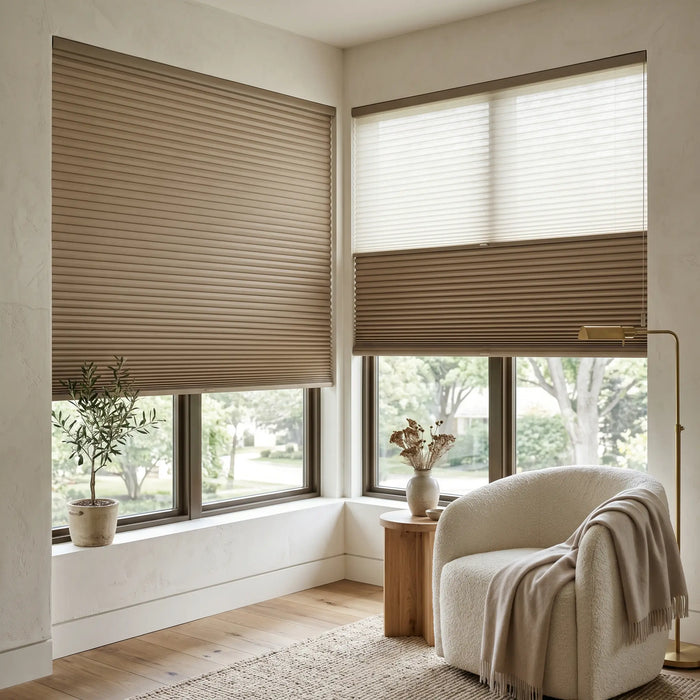
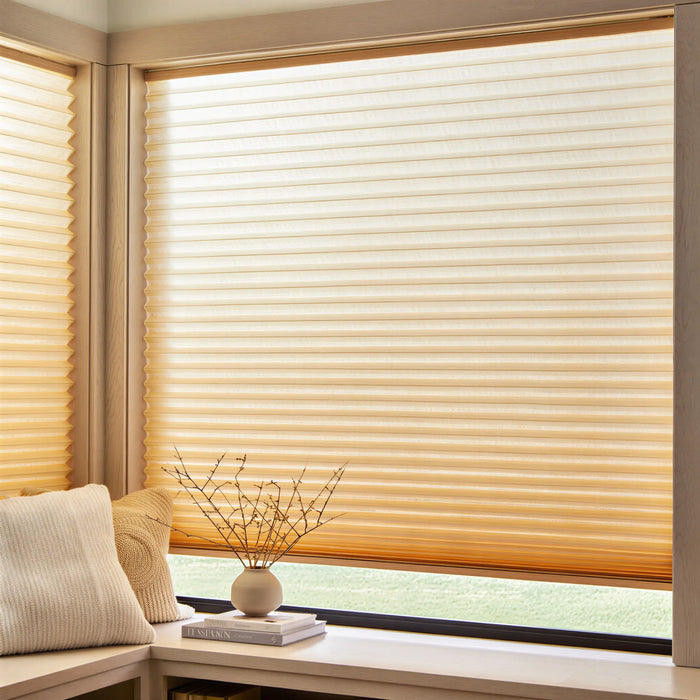
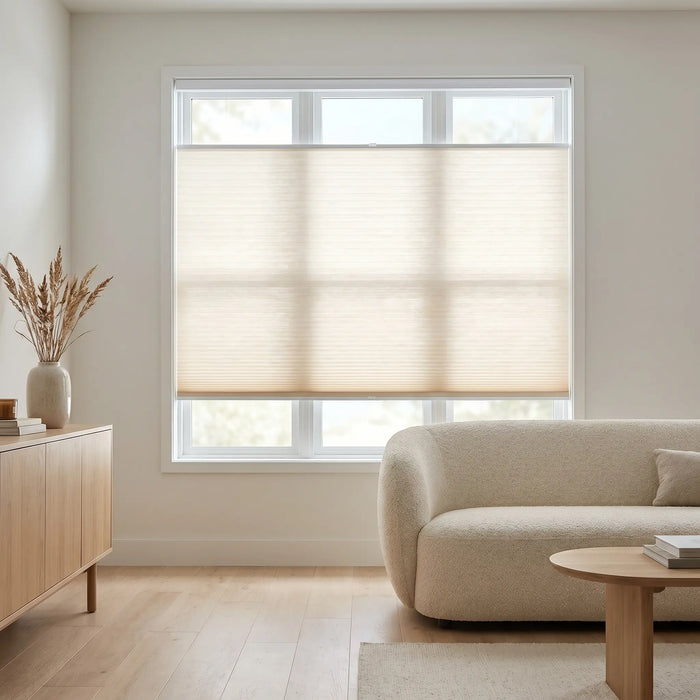
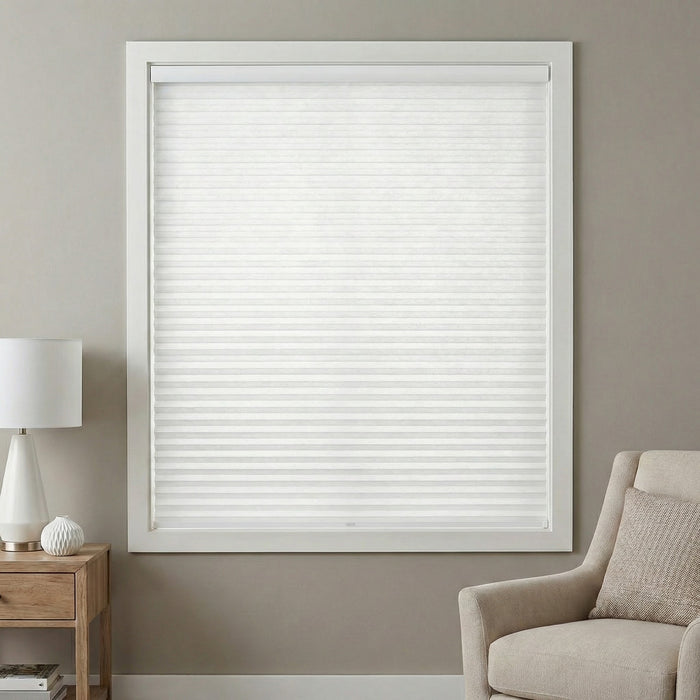
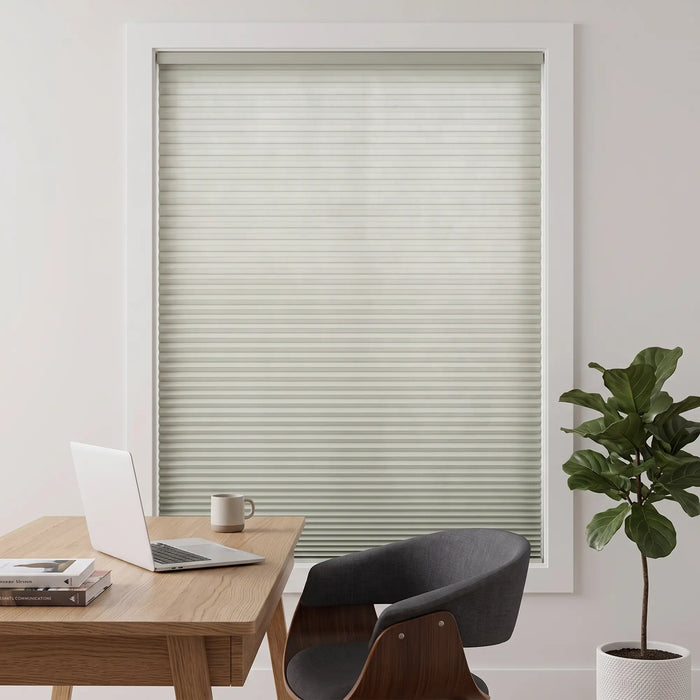
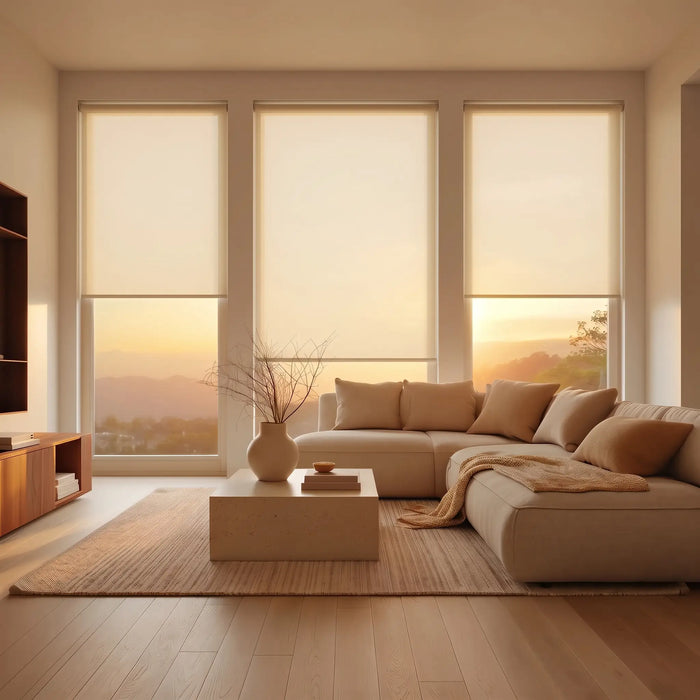
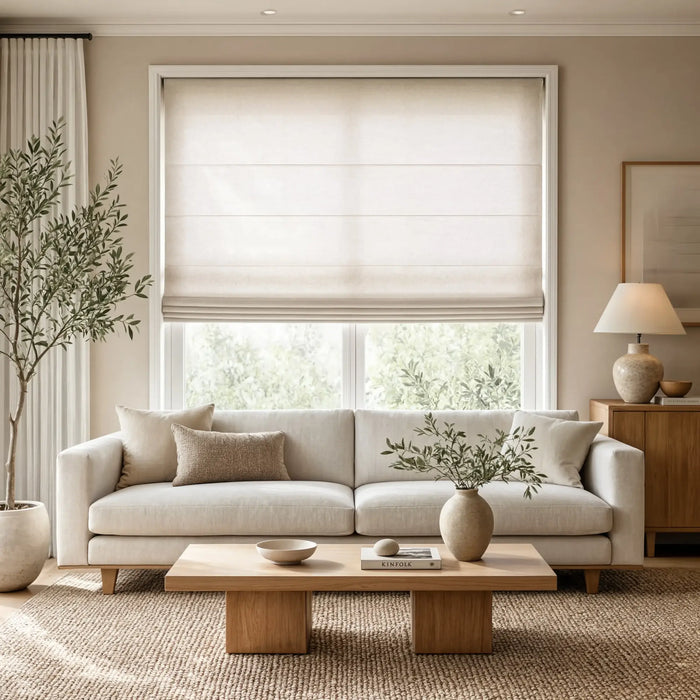
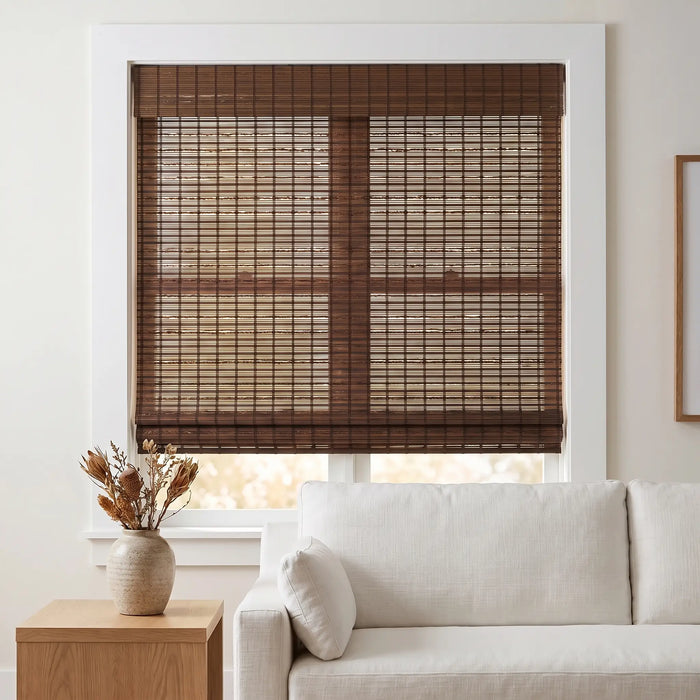
The cells are the point. Each one holds a pocket of still air between the room and the glass, so a cellular shade insulates the window in a way a flat fabric shade or a slatted blind does not. When the shade is raised, the pleats fold into a slim stack at the top of the window and leave the view almost unobstructed.
Because the fabric is soft and the pleats are crisp, cellular shades also read cleanly on almost any window: no slats to dust one by one, no hard lines, and a choice of fabrics from bright light filtering to full blackout.
Why the Cells Matter: Insulation
Windows are where a house loses much of its heat in winter and gains it in summer, and a lowered cellular shade puts a layer of trapped air in the way. A 2021 U.S. Department of Energy fact sheet, based on an Oak Ridge National Laboratory study, reports that cellular shades saved up to 20% of heating energy and up to 15% of combined heating and cooling energy compared with no shades.
Those are maximum figures, and real savings depend on your climate, your existing windows, your heating system and how you use the shades: they work when they are lowered on cold nights and through the hottest part of a summer day. A shade with wide gaps at the edges also loses part of the benefit, so a close inside fit, or an outside mount with generous overlap, matters as much as the fabric. Insulation comes from the cells rather than the opacity, so a light filtering shade insulates as well as it filters light.
Light Filtering, Blackout or Day/Night
The fabric decides what the shade does with light, and this is the first choice to make.
-
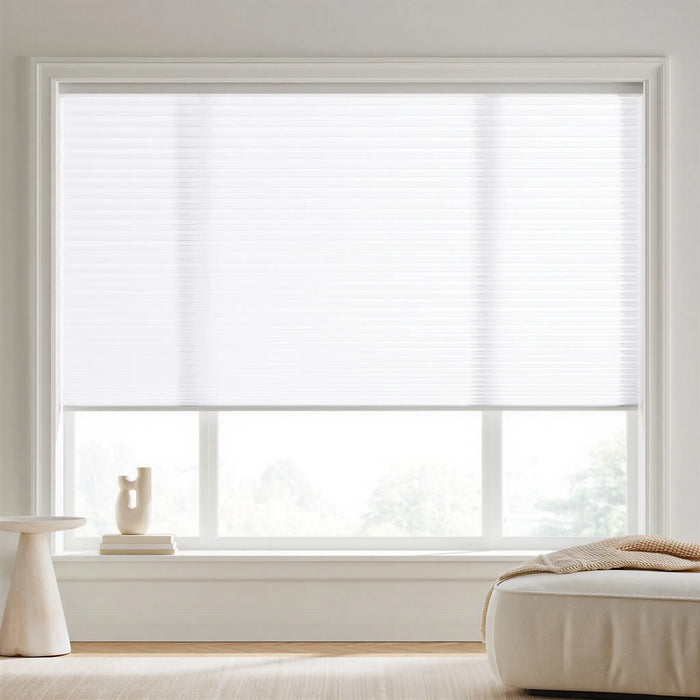
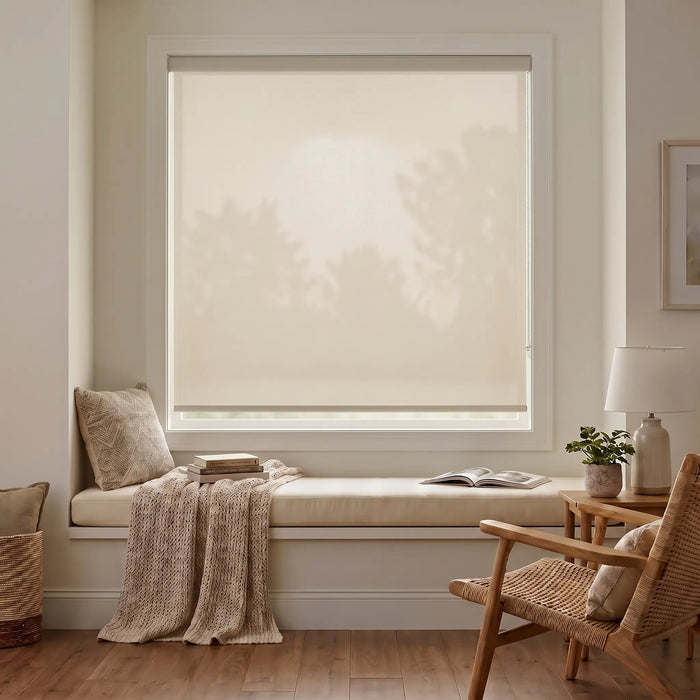
Light filtering cellular shades turn daylight into an even glow and give daytime privacy. They do not provide darkness or nighttime privacy: once lamps are on inside, shapes become visible from outside. They suit living rooms, kitchens, offices and any room used mostly by day.
-
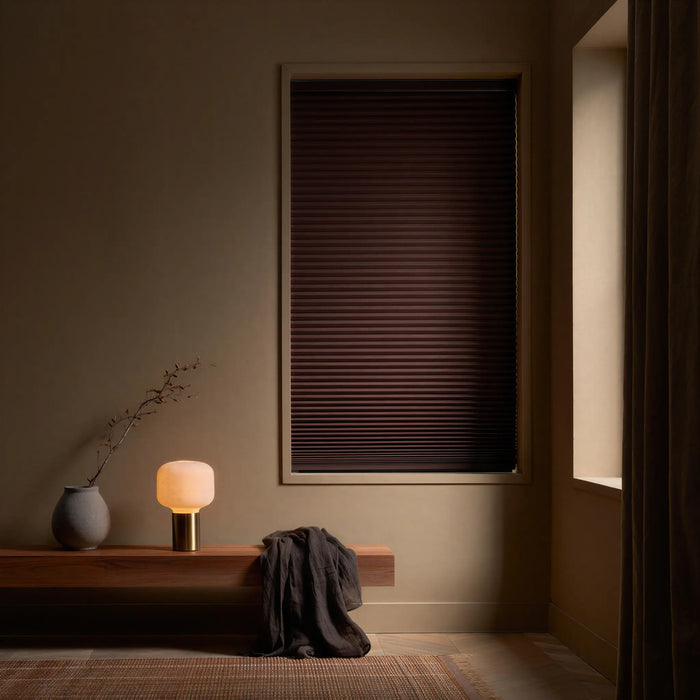
Blackout cellular shades use a fabric that blocks light completely, for bedrooms, nurseries and media rooms. Like any shade mounted inside the window frame, a little light will edge in around the sides, so mount outside the frame with overlap for the darkest room.
-
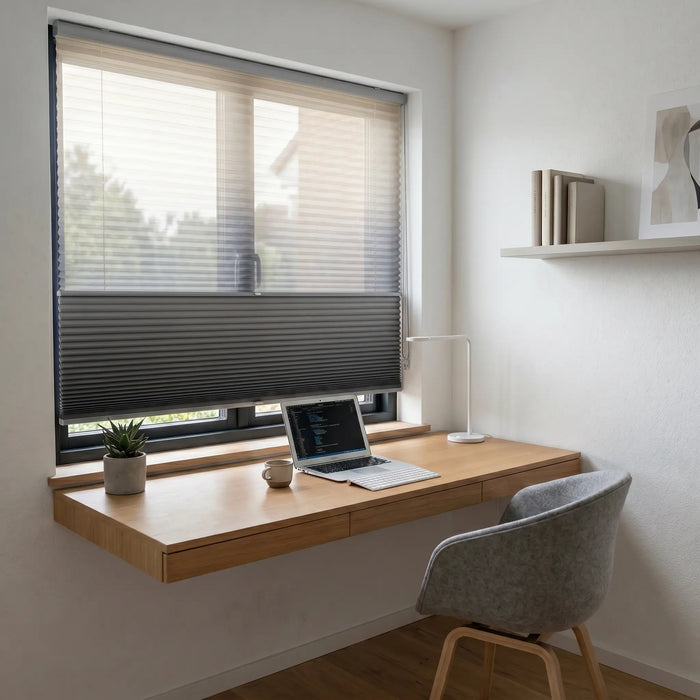
Day/Night cellular shades combine both, in 5/8-inch and 9/16-inch cells. The 5/8-inch Day/Night shade joins two fabrics in a single continuous shade – a light filtering panel on top and a blackout panel below, divided by a slim movable middle rail – so you slide between soft daylight and genuine darkness.
Single Cell, Double Cell and Cell Size
Cell size is mostly about proportion: a smaller cell gives fine pleat lines and a slim stack, a larger cell gives bolder lines across tall glass. We build cellular shades in 3/8-inch, 7/16-inch, 1/2-inch, 9/16-inch and 5/8-inch cells. Double cell adds a second row of air pockets inside the same pleat, and our 3/8-inch and 7/16-inch double cell shades are the ones to look at for drafty windows. Our light filtering cellular page walks through single versus double cell and cell size in detail.
Lift and Control
Cordless is standard on almost every shade in the range: raise or lower the shade by the bottom rail and it stays where you leave it, with no cord at the window. Most of our cellular shades are built cordless only, which makes them a natural fit in a home with children or pets. See our cordless collection for the wider choice.
Top-down/bottom-up versions add a second moving rail, so you can lower the top for daylight and sky while the bottom stays closed for privacy. It is available on our 3/8-inch and 9/16-inch light filtering shades, our 1/2-inch blackout shade and our 7/16-inch double cell.
The 7/16-inch double cell also offers a continuous cord loop, which is what takes it to the largest windows in the range. And for hands-free control, our Motorized Light Filtering Cellular Shade runs on a rechargeable motor in the headrail with a remote, with an optional Smart Hub for app control.
What to Know Before You Buy
-
Size: most of our cellular shades go up to 72 inches wide. For wider glass, use two shades side by side or the 7/16-inch double cell, which reaches 144 inches with a cord loop.
-
Light at the edges: an inside-mounted shade needs a little clearance to move, so some light passes at the sides. Outside mount is the fix where it matters.
-
Dust: the cells collect dust inside, where a cloth cannot reach. Clear them now and then with a hair dryer on the cool setting or a burst of compressed air.
-
Moisture: fabric and water do not mix. A ventilated bathroom is fine, but keep cellular shades out of direct shower spray and splashes.
-
Condensation: in very cold weather, a fully closed insulating shade keeps the glass colder, and moisture can form on it. Leaving the bottom rail about half an inch above the sill helps.
Measuring, Care and Ordering
Measure the opening in three places for width and height and give us the narrowest width – for an inside mount, we take the deduction. Our cellular shade measuring guide and installation guide cover inside and outside mounts, and each product page lists the inside-mount depth it needs.
For care, vacuum along the pleats with a brush attachment on moderate suction, and blot marks with mild soap and water; our cleaning guide has the detail. Order free samples and look at them with sun behind them. Every shade is built to your measurements, shipping is free on most orders, and you can add our optional MeasureSafe™ Guarantee in case a measurement goes wrong.
 Skip to content