Skip to content


Sheer vs Blackout Zebra Shades: How to Choose the Right Opacity


Once you know you want zebra shades, the next question is simple: how much light do you want to let in, and when. This guide walks you through sheer, room-darkening, and blackout options so you can match each room to the right fabric and opacity.
Key Takeaways
- Zebra shade fabrics and weaves determine light transmission, privacy level, and ultraviolet protection.
- Sheer, room-darkening, and blackout opacities offer increasing dimming and nighttime privacy levels.
- Room type influences opacity suitability: bedrooms lean toward room-darkening or blackout for darker conditions.
- Banded zebra design enables adjustable light control but still allows side and headrail light gaps.
- Common fabrics include polyester, linen-look, and technical solar textiles, each affecting durability and appearance.
How Zebra Shade Fabric Affects Opacity
Zebra shade fabric does two jobs at once: it sets the look of the shade and it controls how much light gets through. Most options use polyester or polyester blends, which hold up well to daily use and resist fading. You will also see linen-look fabrics for a softer, textured feel and technical or solar fabrics that focus on UV filtering and glare control.
The weave of the fabric is what changes opacity. Open weaves let more light in and create a soft, diffused glow. Tighter weaves block more light and improve privacy. When you choose fabrics, think about three things for each room: how bright you like it during the day, how much privacy you need at night, and whether UV exposure is a concern.
Sheer Shades vs Zebra Shades at a Glance
If you are choosing between sheer shades and zebra shades, it helps to think about how much light control and privacy you want from each window treatment. Sheer shades use soft fabric vanes between two sheer panels to gently filter natural light. They are ideal when you want a light, airy look and are comfortable with lower nighttime privacy.
Zebra shades use alternating sheer and solid fabric stripes on a single roll. By sliding those stripes past each other, a zebra shade gives you a wider range of light control than a traditional sheer shade: from open view, to filtered light, to a more private, room-darkening setting. Both options are modern window coverings, but zebra blinds are better when you want one shade that can handle daytime light control and more privacy in the evening.
Sheer, Room-Darkening, and Blackout Compared
Zebra shades usually fall into three opacity categories.
-
Sheer / light-filtering zebra shades
- Let in plenty of daylight while softening harsh glare.
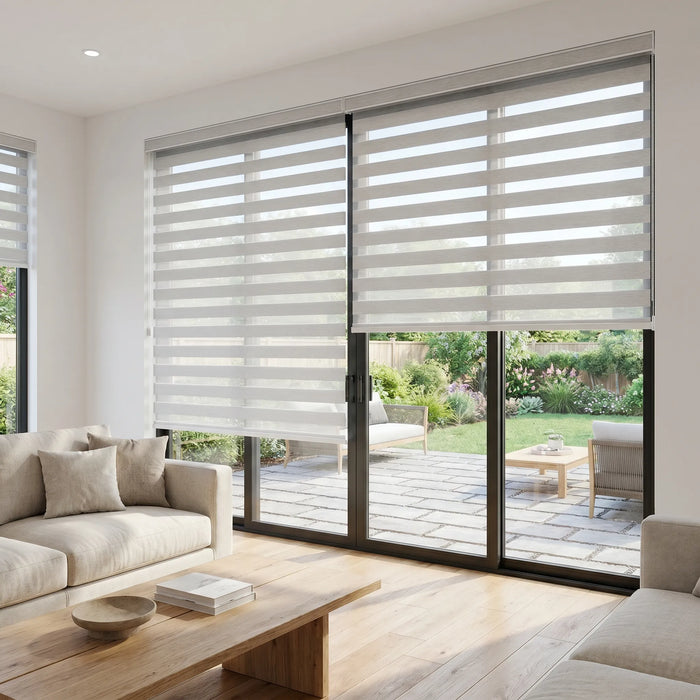
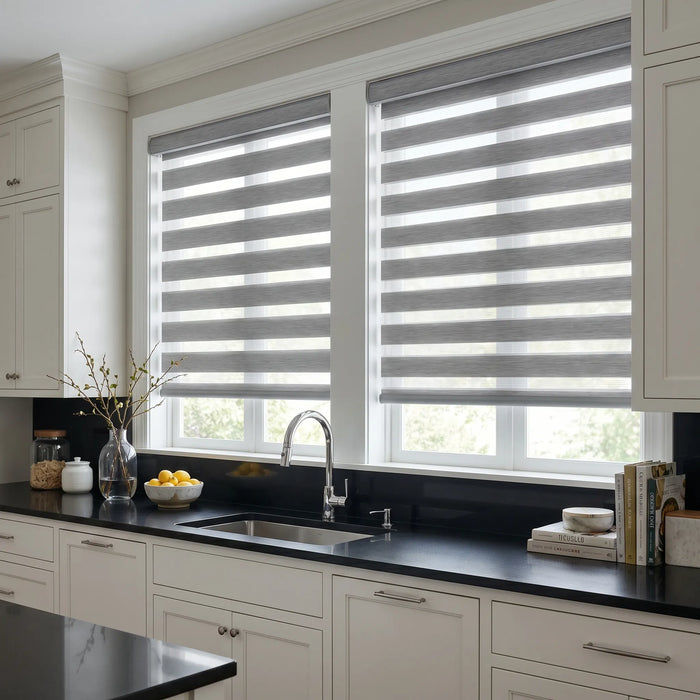
- Good for rooms where you want light and a view: living rooms, kitchens, and home offices.
- Offer daytime privacy from a distance but will still show silhouettes at night when interior lights are on.
-
Room-darkening zebra shades
- Block a large share of light and noticeably dim the room.
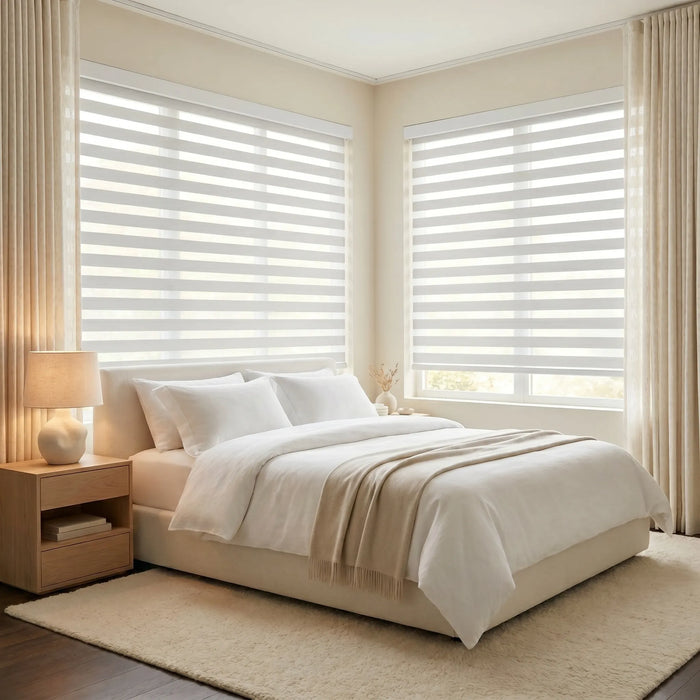
- Strong choice for bedrooms, nurseries, and media rooms where you want it darker without going fully blacked out.
- Improve nighttime privacy compared to sheer fabrics while still letting in some light when bands are tilted open.
-
Blackout zebra shades
- Use opaque bands and backing to block almost all incoming light through the fabric.
- Best for people who sleep during the day, very light-sensitive sleepers, and rooms where maximum privacy is non-negotiable.
- Still allow you to slide bands into a more open position when you want light and a view during the day.
In short, sheer is about soft daylight, room-darkening is about a dimmer, calmer space, and blackout is about sleep-friendly darkness and privacy.
Room-by-Room Recommendations
Bedrooms and nurseries: Most people are happiest with room-darkening or blackout zebra shades here. Room-darkening is usually enough if you like a dim, hotel-like feel. If even a small amount of light bothers you, or you live on a bright street, blackout fabric is the safer choice.
Living rooms and family rooms: Light-filtering or lighter room-darkening fabrics keep these spaces bright while reducing glare on screens. If you are often in these rooms at night and face close neighbors, consider a slightly tighter weave for better evening privacy.
Home offices: Light-filtering zebra shades work well when you want natural light without screen glare. Look for technical or solar fabrics if your workspace gets strong afternoon sun and you need extra UV and glare control.
Kitchens and dining rooms: Light-filtering zebra shades are usually enough, especially on ground-floor windows where you still want a view. For street-facing windows that feel exposed after dark, a room-darkening fabric can add peace of mind without making the room feel closed in during the day.
If you also want a smoother, hands-free experience in bedrooms and media rooms, pair your opacity choice with the right lift system. Our operation type comparison explains cordless and motorized zebra shades so you can line up safety, ease of use, and budget.
Practical Limitations and Tradeoffs
Even with blackout fabric, zebra shades rarely create the same effect as a single-panel blackout roller shade. There are usually small light gaps at the headrail and along the sides of the window, especially with inside mounts. A cassette valance and careful measuring can reduce that halo of light, but it will not remove it completely.
Sheer and light-filtering zebra shades also have natural privacy limits at night. When interior lights are on, the outside view of the window gets darker and silhouettes become more visible. Aligning the opaque bands helps, and choosing room-darkening or blackout fabric improves the situation further, but the banded design will always leave some light and visibility compared to a solid blackout panel.
Cleaning is straightforward. Most zebra shades can be dusted with a duster or vacuumed gently with a brush attachment. Check the care notes for your specific fabric, but in general, the alternating bands do not make these shades meaningfully harder to maintain than other fabric window treatments.
Choosing Fabric and Getting Ready to Order
Start by deciding what you need most from each room: soft daylight, deeper dimming, or close to blackout. Then choose a fabric family that matches your style and maintenance preferences, whether that is smooth polyester, linen-look texture, or a technical fabric that emphasizes UV control. Our full zebra shades buying guide walks you through the entire process.
Frequently Asked Questions
How do sheer, room-darkening, and blackout zebra shades differ in light control and privacy?
Sheer zebra shades let in plenty of daylight while softening harsh glare and offer daytime privacy from a distance but will show silhouettes at night. Room-darkening shades block a large share of light and improve nighttime privacy without going fully blacked out, while blackout shades use opaque bands and backing to block almost all incoming light for maximum privacy.
Which opacity is best for bedrooms, living rooms, and home offices?
For bedrooms and nurseries the guide recommends room-darkening or blackout fabrics, with blackout if even small amounts of light are a problem. Living rooms and family rooms work well with light-filtering or lighter room-darkening fabrics to reduce glare, while home offices typically use light-filtering shades and may benefit from technical or solar fabrics for extra UV and glare control; you can order free fabric samples to compare textures and opacity.
Will blackout zebra shades block all light and can I eliminate light gaps?
Even with blackout fabric, zebra shades rarely create the same effect as a single-panel blackout roller shade because small light gaps usually remain at the headrail and along the sides, especially with inside mounts. A cassette valance and careful measuring can reduce that halo of light, but it will not remove it completely; see installation tips for reducing gaps.
How should I clean and maintain zebra shades?
Most zebra shades can be dusted or vacuumed gently with a brush attachment, and the alternating bands do not make them meaningfully harder to maintain than other fabric window treatments. Check the care notes for your specific fabric before attempting any wet-cleaning methods.