Skip to content


Cordless vs Motorized Zebra Shades: Which Operation Type Is Right for You?


If you already know you want zebra shades, the next choice is how you want to operate them. Cordless and motorized zebra shades each have different strengths when it comes to safety, convenience, and cost.
Key Takeaways
- Cordless shades use a spring-loaded mechanism operated by hand, offering a clean look without cords.
- Motorized shades have a headrail motor with remote, wall switch, or smart app control and scheduling.
- Motorized models cost more but enable smart home integration and effortless operation for high or hard-to-reach windows.
- Cordless options are mid-priced, widely used for bedrooms and living rooms, and favored for child and pet safety.
- Operation type does not change the shades' ability to alternate filtered natural light and privacy.
This guide compares both so you can pick the right option for your home. For readers who are new to the product, our complete guide to what zebra shades are covers the basics before you decide on operation type.
Zebra shades are sometimes called zebra blinds; both refer to the same window treatment.
The Two Operation Types at a Glance
Zebra shades are available in two main operation styles: cordless and motorized.
Cordless shades use a spring-loaded mechanism so you lift and lower the shade by hand with no cords.
Motorized shades use a small motor inside the headrail, usually powered by a rechargeable battery or plug-in transformer, and are controlled by a remote, wall switch, or smart device.
Your choice affects daily use, safety, and price. Below we break down each type and then give you a simple comparison table to help you decide.
Cordless Zebra Shades
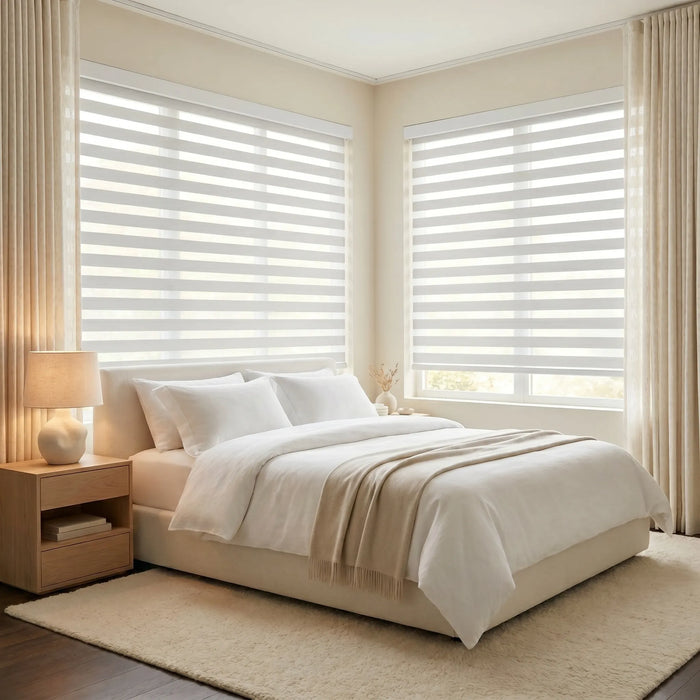
Cordless zebra shades have no pull cords or chains. You operate them by gently pushing the bottom rail up or pulling it down. A spring mechanism inside the tube holds the shade in place at the height you choose.
Best for: Child and pet safety. Cordless is the safest option for homes with young children or pets because there are no dangling cords. Many parents and pet owners choose cordless for bedrooms and living rooms for this reason. They are also a good fit if you like a clean, minimalist look with no visible chain or cord.
Ease of use: Lifting and lowering by hand is straightforward on standard-sized windows. On very large or heavy shades, cordless operation can require more effort, so consider window size when deciding.
Price: Cordless zebra shades typically sit in the mid-range. They cost less than motorized. You get a safer, cleaner setup without the added cost of a motor.
Smart home: Standard cordless shades are not smart-home compatible on their own. If you want automation later, you would need to look at motorized options. Motorized shades offer remote control and can tie into smart home systems.
Motorized Zebra Shades
Motorized zebra shades have a small motor in the headrail that moves the shade up and down and adjusts the bands. They are controlled by a remote control, wall-mounted switch, or smart app. For many homeowners, motorization is worth the upfront cost for convenience and smart home integration.
Best for: Convenience and smart homes. If you want to adjust shades from across the room, on a schedule, or with voice commands, motorized is the right choice. They are ideal for high or hard-to-reach windows and for people who like automated routines (for example, opening at sunrise and closing at sunset).
Ease of use: Once set up, operation is the easiest of the two: press a button or use an app. No lifting, no pulling chains. That makes them a strong option for anyone with mobility limits or for rooms with many or large windows.
Price: Motorized zebra shades cost more than cordless. You pay for the motor, battery or power supply, and controls. The convenience and smart features come at a premium, so the upfront cost is higher than for cordless blinds.
Smart home: Motorized shades can integrate with systems like Alexa, Google Home, and others, so you can control them by voice or group them with other smart devices. If smart home compatibility is a priority, motorized is the only option of the two that delivers it out of the box.
Cordless vs Motorized: Comparison Table
| Factor | Cordless | Motorized |
|---|---|---|
| Child and pet safety | Best: no cords or chains | Best: no cords or chains |
| Ease of daily use | Good: lift and push by hand | Best: remote or app |
| Price | Mid-range | Highest |
| Smart home | No | Yes |
| Best use case | Families, safe and clean look | Convenience, high windows, automation |
Use this table as a quick reference. Your own priorities (safety, budget, convenience, or smart home) will point you toward one type over the other.
How to Choose the Right Operation Type for You
Start by asking what matters most. If child or pet safety is top of mind, both cordless and motorized are safe options. If you want the least effort every day and the option to automate, motorized zebra shades are worth the extra investment.
Zebra shades allow you to alternate between filtered natural light and more privacy; the operation type does not change that. For homeowners weighing cordless vs motorized blinds, the best choice often comes down to safety and budget first, then convenience.
You can mix operation types in the same home. For example, use cordless in the kids' rooms and living rooms, and motorized in master bedrooms or great rooms where you want one-touch or scheduled control. Like other window treatments, zebra shades offer light control and privacy; the difference is how you operate them.
Once you have chosen your operation type, the next step is fabric and opacity. Our guide walks you through sheer, room-darkening, and blackout options so you can match the shade to each room's needs.
Where to Buy Zebra Shades
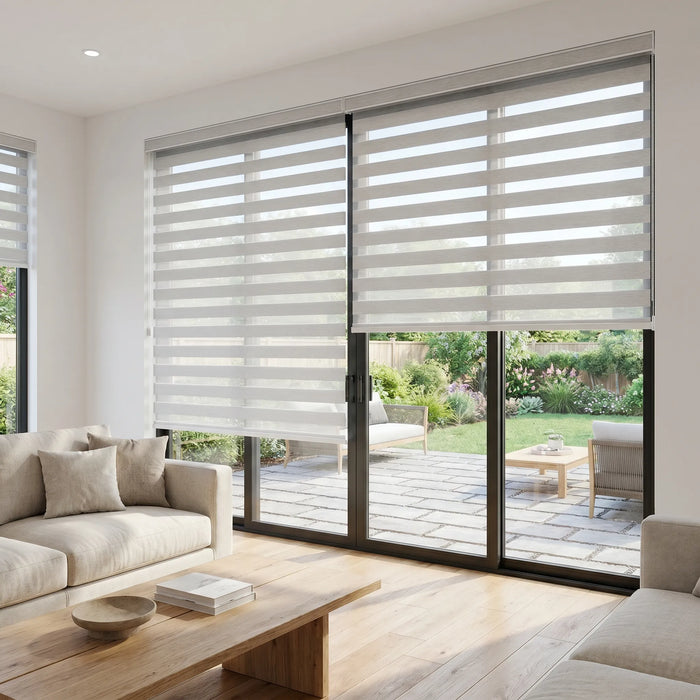
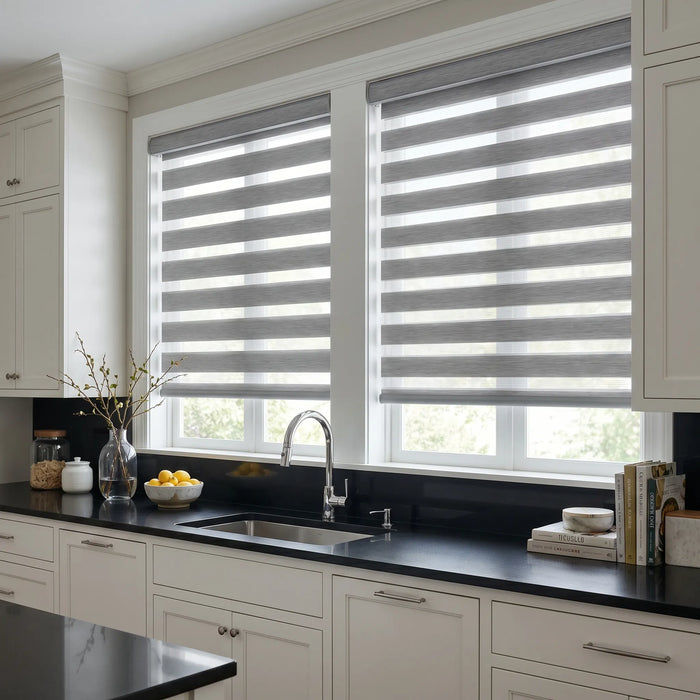
Zebra shades are available in light-filtering, room-darkening, and blackout fabrics to suit different rooms and preferences. They work like a roller shade with alternating sheer and opaque bands.
You can browse our zebra shades collection to see the full range of colors and materials.
For a popular starting point, our zebra light-filtering roller shades soften glare while keeping rooms bright and are available in cordless and motorized operation. Many homeowners choose light-filtering for living rooms and add blackout where they need better darkness or energy efficiency.
Frequently Asked Questions
Which is safer for homes with children or pets: cordless or motorized zebra shades?
Both cordless and motorized zebra shades are safe because neither uses dangling cords or chains; cordless is often recommended for homes with young children or pets since it uses a spring-loaded bottom rail. Motorized shades also eliminate cords, so they are a safe alternative with added convenience.
Can motorized zebra shades integrate with smart home systems?
Yes — motorized zebra shades are designed to work with remotes, wall switches, or smart apps and can integrate with systems like Alexa and Google Home. Standard cordless shades are not smart-home compatible without adding motorization.
Is cordless operation practical for very large or heavy windows?
Cordless operation works well for standard-sized windows, but very large or heavy zebra shades can require more effort to lift and lower by hand. If window size is a concern, measure your opening and consider a motorized option; see guidance on how to measure blinds and shades.
Do motorized zebra shades cost significantly more than cordless?
Motorized zebra shades typically cost more than cordless because of the motor, battery or power supply, and control hardware. Cordless shades sit in the mid-price range, offering a safer, cleaner look without the extra motorized features.