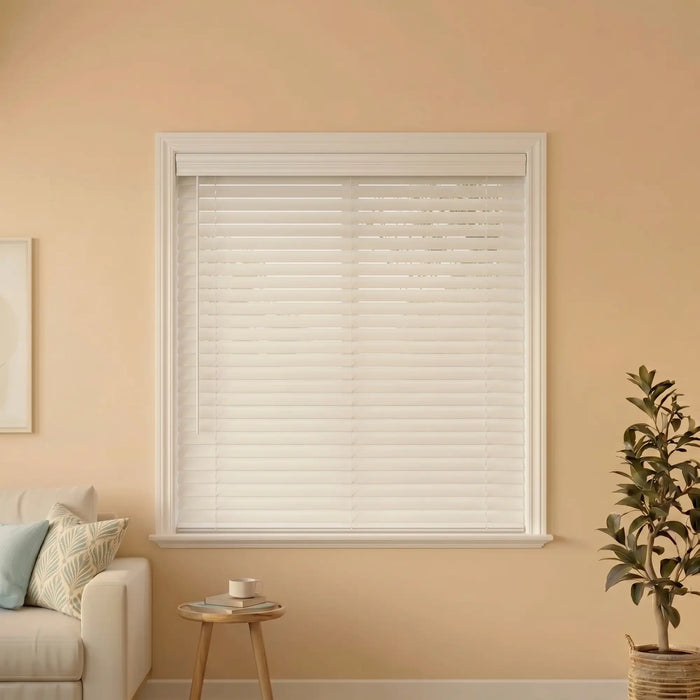
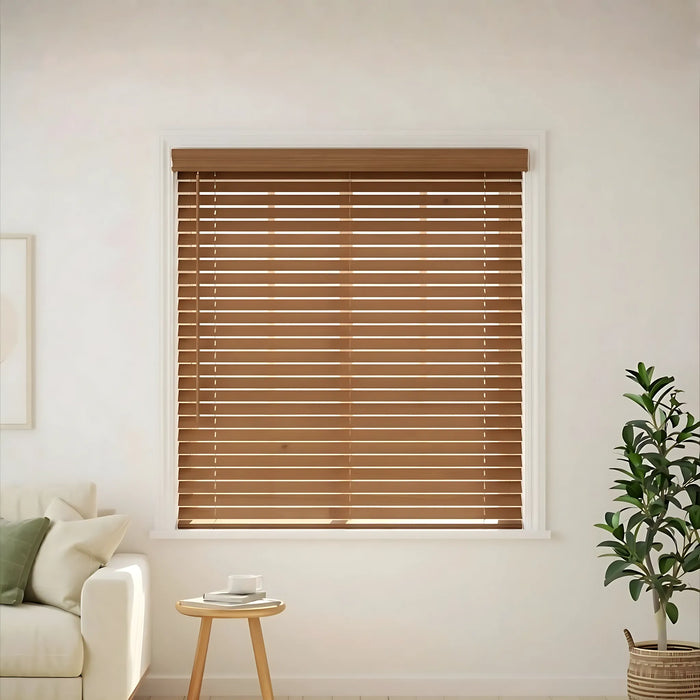
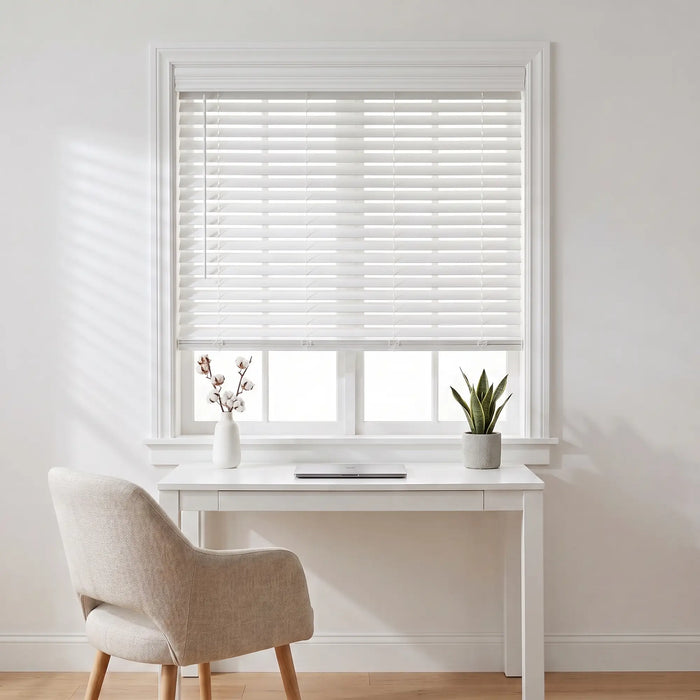
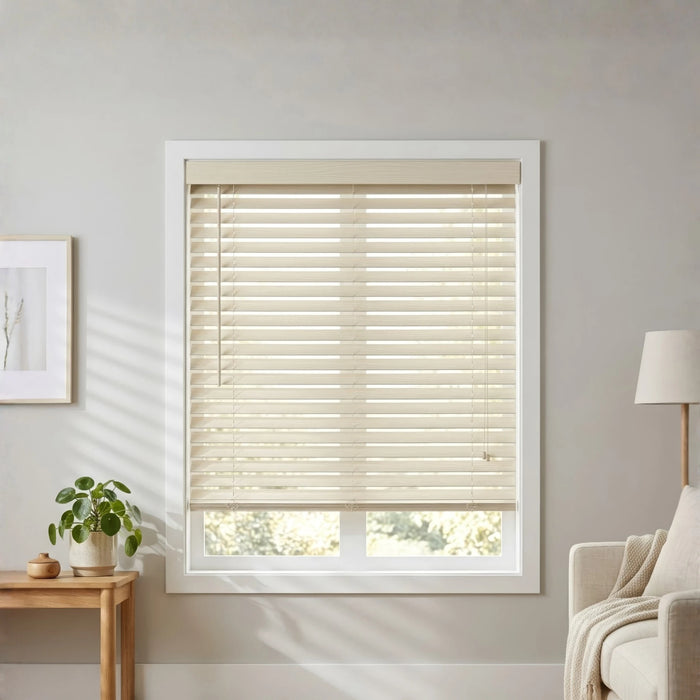
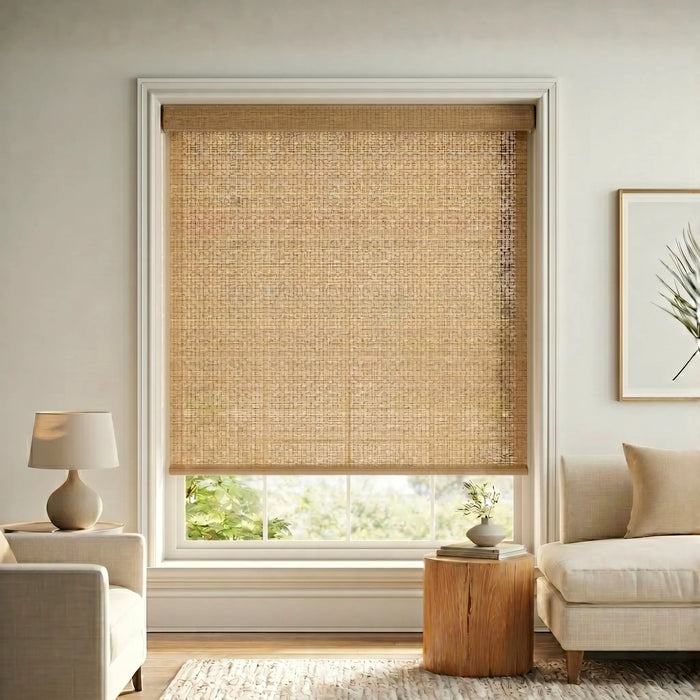
That tilt is the whole point, and it is what a blind does that a shade cannot. Close the slats for privacy, open them flat for the view, or angle them partway to bounce daylight up onto the ceiling: the room stays bright and nobody outside can see in, with the blind still fully down. A window shade is a single piece of soft material, so it is either up or down and the fabric decides everything.
The trade runs the other way too. Because slats sit on ladder cords with route holes through them, no blind seals light out completely. For a genuinely dark bedroom or nursery, a blackout shade is the right product. Blinds are for controlling the direction of light, not for eliminating it.
The Types of Window Blinds We Make
Faux wood blinds
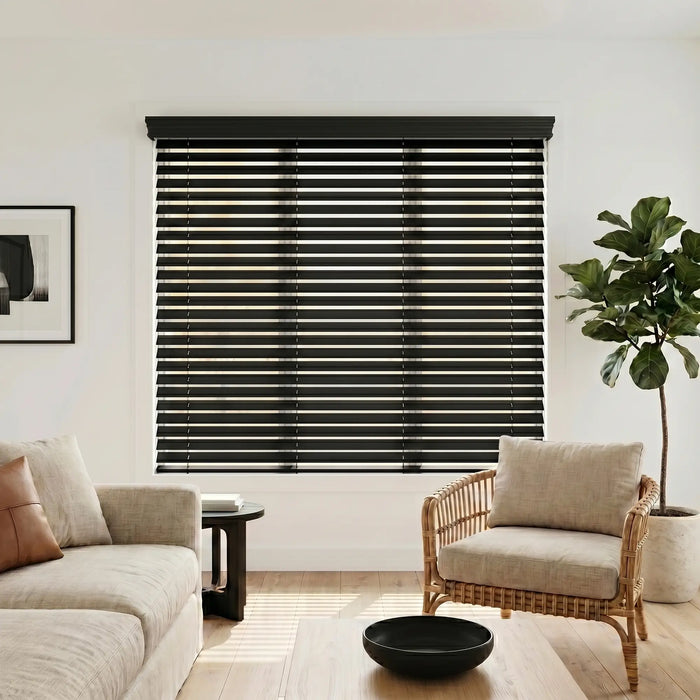
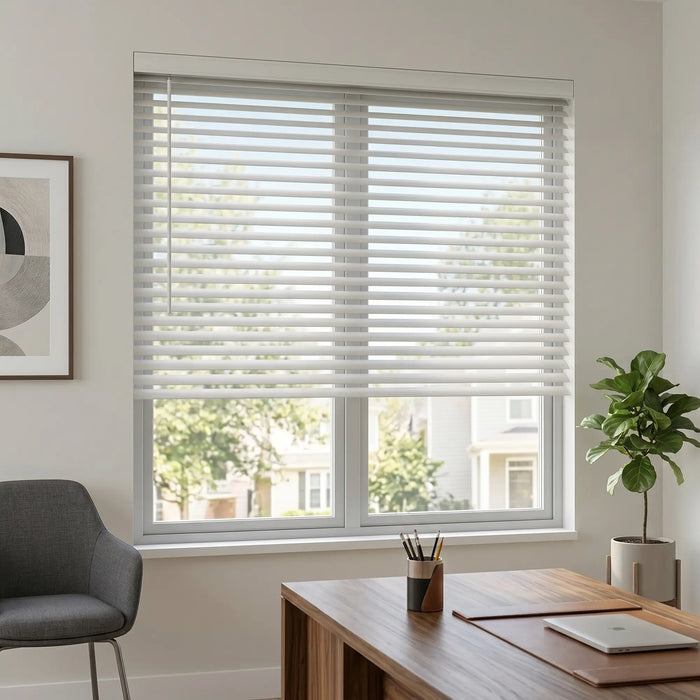
Faux wood blinds use 2-inch composite slats that read as painted or stained timber from a few feet away, but absorb almost no moisture. They are the default for kitchens, bathrooms, laundries and sun-facing glass, where real wood cups and splits. Four ranges, from a plain white budget slat to smooth and sandblasted finishes with a choice of valance profile.
Hardwood blinds
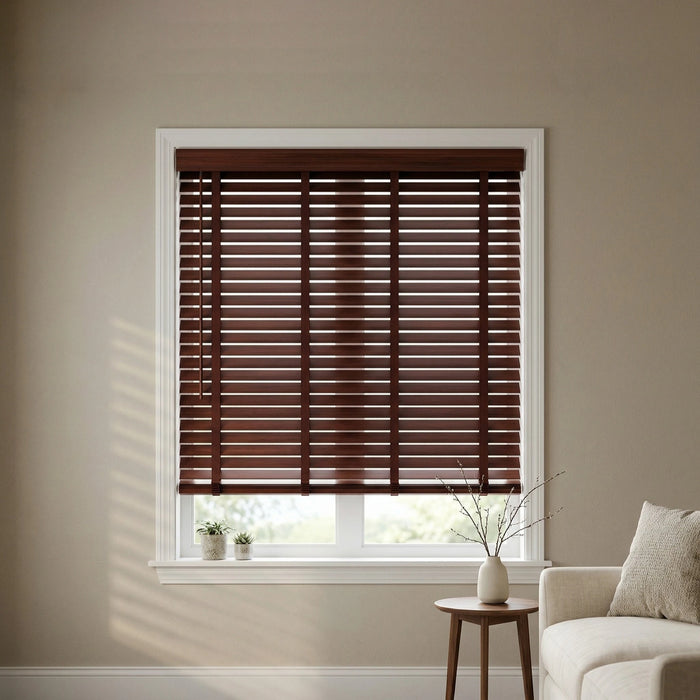
Hardwood blinds are cut from real basswood in a 2-inch slat, with sixteen stains and painted finishes. Real timber takes stain down into the grain, so the color has a depth that a printed finish never repeats. They are lighter than composite for the same size, and they belong in dry rooms: keep them out of a full bathroom or above a cooktop.
Aluminum mini blinds
Mini blinds are slim aluminum slats in 1-inch and 2-inch widths on a compact headrail. They fit shallow reveals that will not take a wood headrail, they cost the least of anything here, and they are the widest blind we build. Aluminum does not warp, swell or rot, which makes it a sound choice for rentals, garages, laundries and commercial glass.
Vertical blinds
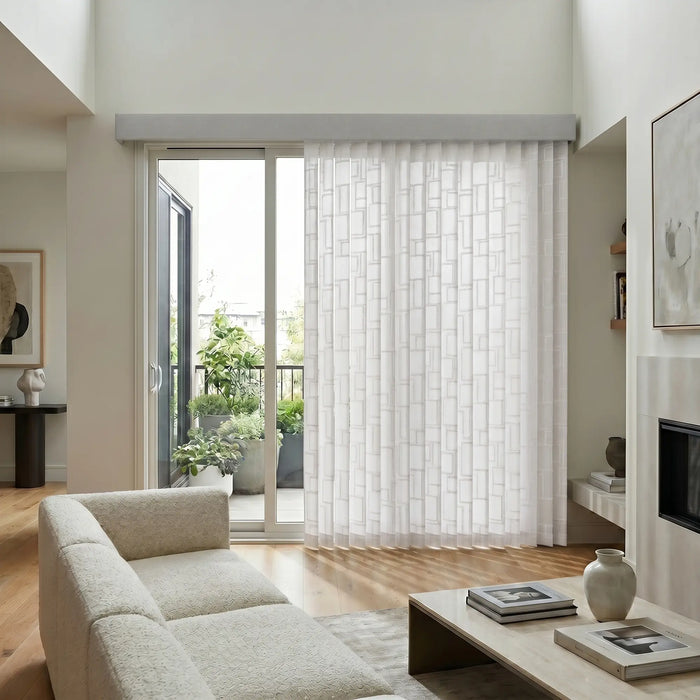
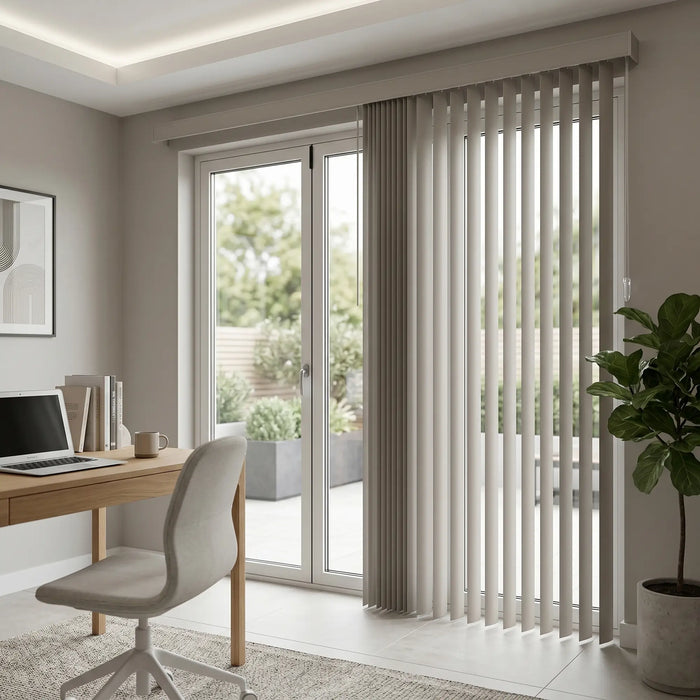
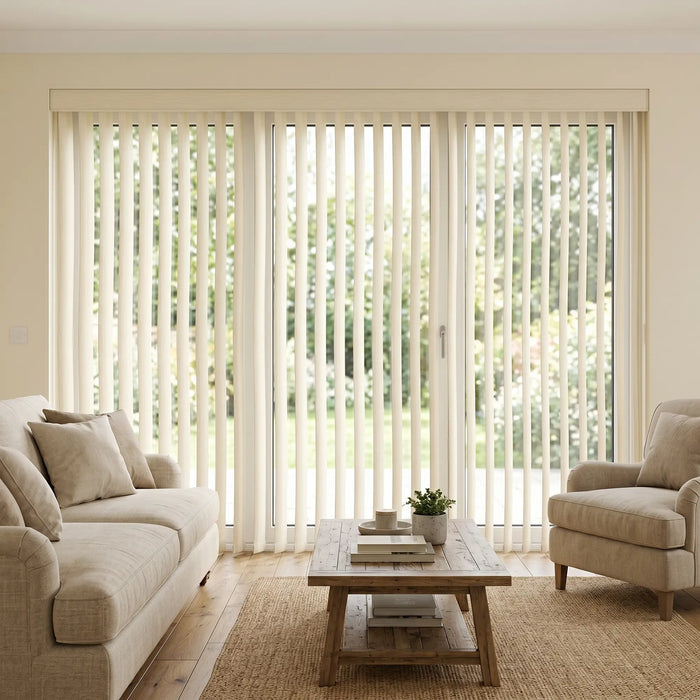
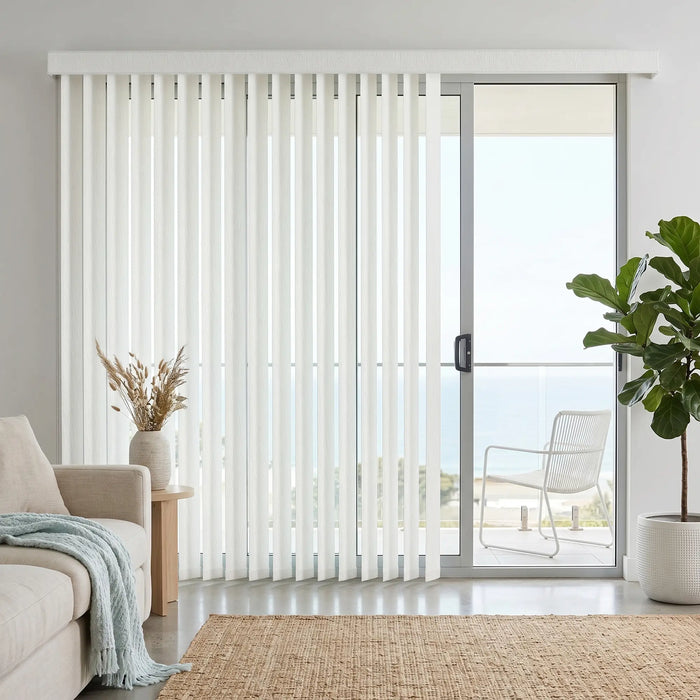
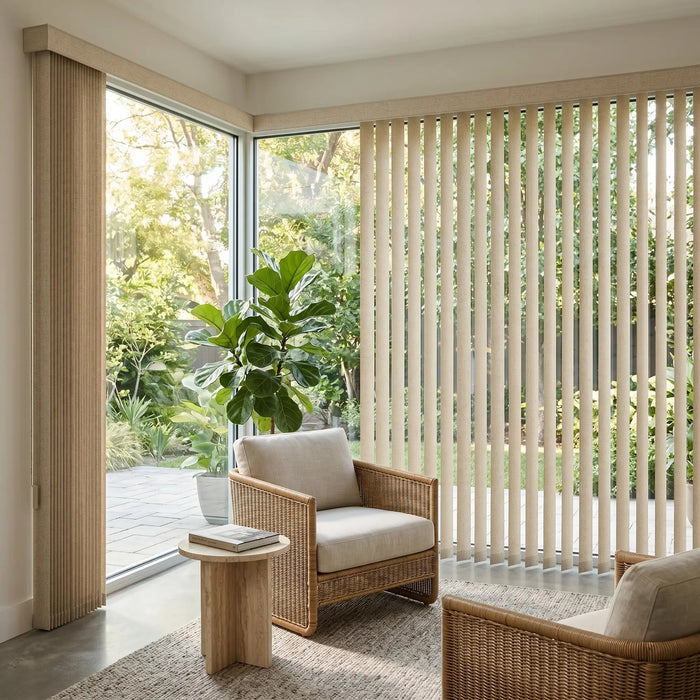
Vertical blinds hang 3.5-inch vanes from a top track and draw sideways instead of stacking up. That makes them the answer for sliding patio doors and wide openings. Vanes come in PVC, including two woodgrain finishes, plus a fabric option, and you choose whether they stack left, stack right, or split to both sides.
A note on names. Venetian blinds and horizontal blinds are not separate products. Both are umbrella terms for a slatted blind that raises vertically, which on this site means the faux wood, hardwood and aluminum ranges above.
Slat and Vane Widths
Width changes how a window reads and how finely you can steer light.
A 1-inch aluminum slat gives the finest control and the shallowest stack, and it fits reveals nothing else will. A 2-inch slat, in aluminum, composite or hardwood, is what most people order: fewer slats across the drop, a more generous view when tilted open, and a look that suits a full-size window. On verticals, the 3.5-inch vane is sized for the long horizontal runs it has to cover.
Tilt direction matters as much as width. Angling the slats upward throws light onto the ceiling and closes the sightline from the street; angling them down lights the floor but leaves a view in from anywhere higher than the window.
Cordless Lift and Wand Tilt
Every horizontal blind here raises cordlessly. You lift the bottom rail by hand and it holds where you leave it, so there is no looped cord hanging beside the window. Tilt runs off a wand, with the side selectable on our Premier and Signature ranges. Verticals are wand-operated throughout, for both traverse and tilt.
This is a deliberate range decision rather than an upgrade you have to select. Our Classic, Premier and Signature faux wood blinds carry the independent Best for Kids certification, and the whole cordless range is built the same way.
If you want a motor, schedules or app control, that lives in our motorized shades rather than in the blind ranges.
Wide Windows and Sliding Doors
This is where blinds pull ahead of most soft treatments.
Vertical blinds run to sixteen feet wide in a single track, which covers a standard sliding patio door and most glass walls, and the vanes draw clear of the opening so you can walk through. Our sliding glass door range is built around them.
For a wide horizontal window, aluminum mini blinds go widest, to about twelve feet. On hardwood and aluminum you can also order two blinds on a single headrail, so a wide opening reads as one treatment from the room but each half operates independently. That is usually a better build than one very wide blind, which gets heavy to lift and shows any bracket that is out of level twice over.
Choosing by Room
- Kitchens, bathrooms and laundries: faux wood or aluminum. Both wipe clean and neither swells.
- Living and dining rooms: hardwood for finish depth, faux wood for the same look at a lower price.
- Home offices: tilt the slats to lift daylight off the screen. See our office range.
- Bedrooms: blinds control glare well, but pair them with a blackout shade if you need real darkness.
- Sliding doors and wide glass: vertical blinds.
- Shallow reveals, transoms and rentals: 1-inch aluminum mini blinds.
Measuring, Mounting and Ordering
Measure the opening with a steel tape in three places for width and three for height, then use the narrowest width and the longest height for an inside mount. Measure the window itself, never your existing blind and never the finished size you have in mind.
Give us the raw opening figure and we take the deduction. An inside mount needs enough flat depth to clear the headrail, and how much depends on the range, so check the spec before ordering. An outside mount fixes above and beyond the opening and suits a shallow or out-of-square reveal. Our measuring guide covers both, and the installation guide walks through the brackets type by type.
Every blind is built to order at your size, so it is worth being sure first. Order free samples to see a slat and its finish in your own light, and you can add our MeasureSafe™ Guarantee at checkout: measure wrong and we remake the blind.
 Skip to content