Skip to content


Best Vertical Blinds for Offices, Rentals and Commercial Spaces


Buy the vertical blinds that are repairable with one part, not the ones that look beautiful in the picture. That's the whole point of vertical blinds for office floors, rental properties, and commercial venues, since vertical blinds fail one slat at a time, while mini blinds fail all at once.
Anyone who has ever walked through a floor after a move-out will recognize the situation. Three bent slats in the middle of a mini blind, and the entire unit is thrown out. With a vertical blind unit with three messed-up vanes, only three vanes need to be replaced..
The Only Spec That Matters in a Rental Is Whether You Can Replace One Vane
Individual vane replacement is what makes vertical blinds the best blinds for rental properties, and it's the spec most buying guides skip. Vertical slats hang independently from carrier clips in the headrail. Pull one out, push a new one in, and the blind is whole again in under a minute.
Mini blinds don't work that way. Their slats thread through a ladder of cords, so a bent slat in the middle means dismantling the stack or binning the unit. That's why the standard turnover routine is "order new cheap blinds," and why the same cost lands again after the next lease.
Think about the investment over a five-year period. A set of durable blinds for rental properties that survives four tenancies on a handful of replacement vanes costs less than four rounds of throwaway minis, even if they have a marginally higher sticker price on day one. Affordable blinds for rental properties is a cost-per-year question.
Two more reasons blinds for landlords point vertical:
-
Visible damages can be billed when the vanes are gone. A missing vane can easily be found during an inspection as opposed to having to prove the age of slats that have become bent out of shape.
-
Be sure to keep spare vanes stored away in your maintenance room. This way, the tech finishes fixing the job the first time around, rather than having to wait for new materials to be brought in.
Why Vertical Blinds Beat Mini Blinds on Office Windows
Vertical blinds control screen glare better than horizontal slats, and that's the argument that wins over facility managers. Rotate the vanes a few degrees, and you cut the low, direct sun that lands on monitors in the late afternoon. Horizontal slats tilt light only up or down, so a west-facing wall still throws bars of glare across desks. As office light control blinds go, side-to-side rotation is the more useful axis.
Width is the second reason. Most blinds for office windows in a modern building cover long spans of glass or floor-to-ceiling curtain wall, and a vertical headrail carries that width without sag. Horizontal blinds past about 72 inches have to be split across multiple units on one rail. For blinds for large office windows, one track beats three, which is why vertical blinds for large office windows show up on so many curtain wall specs.
Then there's the daily reality of a shared floor. Workplace window blinds get operated by people who did not buy them and will not repair them. A wand twist survives that better than a cord loop yanked by someone in a hurry, and the difference shows up in your maintenance log over a year.
PVC or Fabric: Pick PVC for Almost Every Commercial Job
PVC is the right call for commercial office blinds in nearly every case, and fabric belongs in a short list of exceptions. PVC vanes wipe clean with a damp cloth, shrug off humidity, and cost less to replace when one gets damaged. That combination is what buyers mean by durable window blinds and low-maintenance blinds for offices.
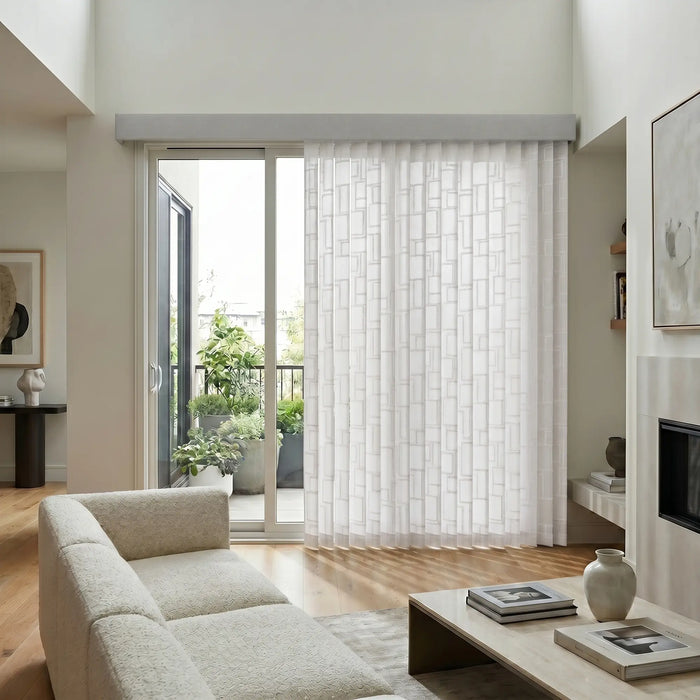
Vertical fabric drapes introduce softness in a room and disperse light more uniformly, making them as suitable for an executive suite or boardroom as for a hotel lobby where aesthetics matter. However, they have downsides: higher price, greater likelihood of staining, and being unsuitable for machine wash because doing so will remove stiffening elements. In any space where tenants operate on a daily basis, relying on fabric blinds is simply not a viable option.
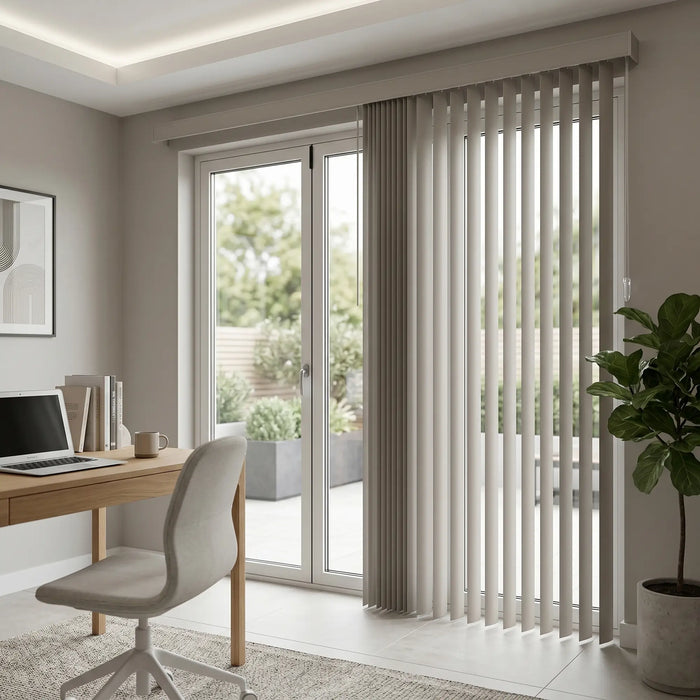
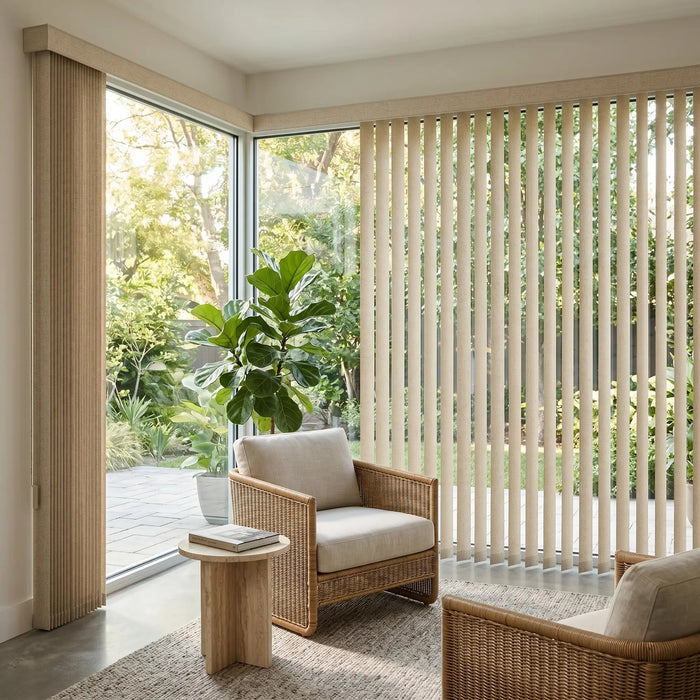
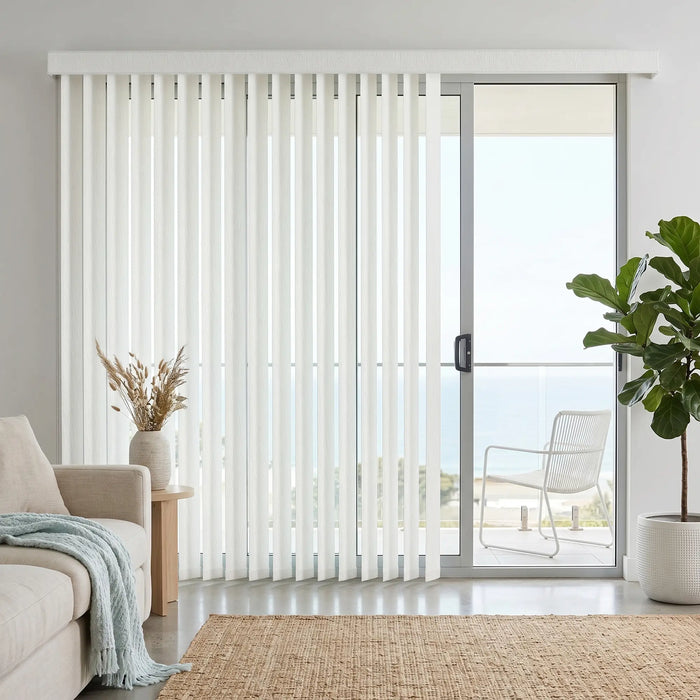
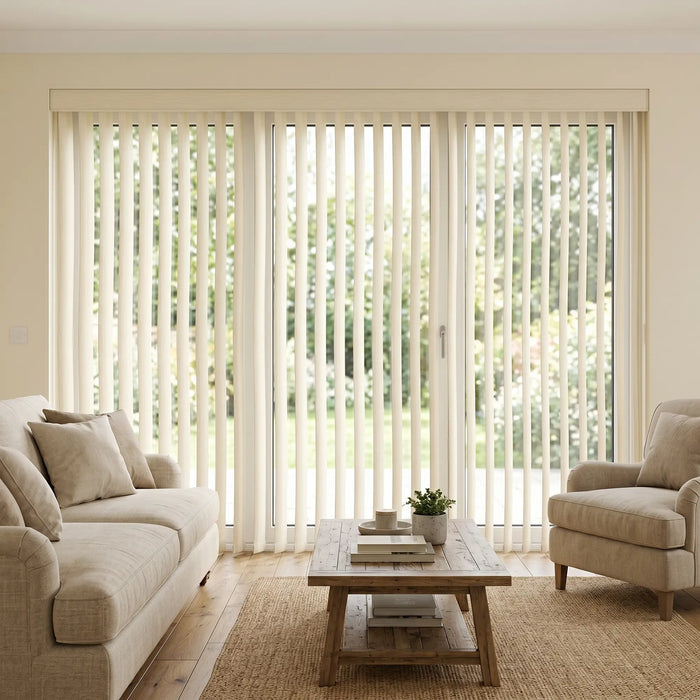
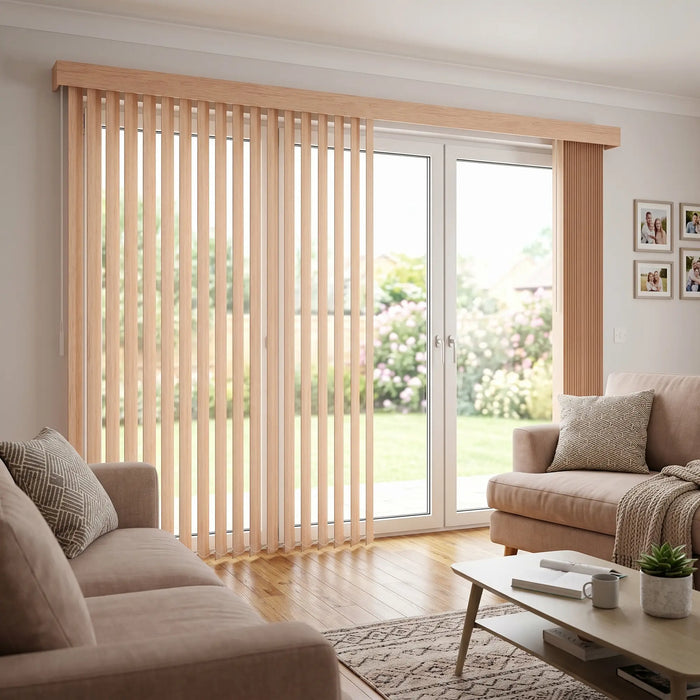
Instead, when the expectation is that anything will be constantly touched by people who don’t own the premises, PVC is the right answer. The range of vertical blinds available at Factory Direct Blinds features 3.5-inch PVC slats in various textures and colors that do not require using fabric to achieve a professional look.
There is one important thing to consider when choosing the color of your blinds. White PVC material tends to yellow under direct sunlight, so western exposure could result in a different color than northern exposure after a decade. Using gray or wood colors is a way to get around this issue.
What Vertical Blinds Cost Across a Multi-Unit Order
Entry PVC verticals at Factory Direct Blinds start around $105 for the Classic Curved line and $141 for the Premier line at base sizes, with 11 and 22 colors respectively. Those are per-window retail numbers, not what you should plan a building around.
Once you're ordering 50 units or more, the commercial blinds team quotes volume pricing and will meet or beat a written competing bid. That threshold matters for anyone specifying commercial window blinds across a property, since the retail sticker tells you almost nothing about what a floor of identical windows costs.
Two things worth asking for on any bid for blinds for commercial buildings: staged delivery timed to your install schedule, and a single contact who owns the order. Both cut coordination costs that dwarf the price gap between suppliers, and both matter more on the best blinds for large commercial windows, where one mis-sized unit holds up a whole elevation.
Custom cutting matters more than buyers expect. Every window gets cut to its own measurement, so fit and finish match from the first window to the last. Ordering stock sizes and shimming the gaps is how a floor of window blinds for commercial spaces ends up looking like three different jobs.
The Cord Rules You Have to Meet in Rentals and Commercial Buildings
Since December 2018, the ANSI/WCMA safety standard has required stock window coverings sold in stores and online to be cordless, to have inaccessible cords, or to keep operating cords to eight inches or shorter. Custom corded products face their own length limits. If you're buying blinds for rental homes with children on site, or fitting out a daycare or multi-family building, this is the rule your inspector will ask about.
Vertical blinds handle it cleanly, because standard operation is a wand rather than a hanging cord loop. Tilt and draw both come off a rigid stick, which removes the loop hazard without paying for a motorized upgrade.
Specs to Confirm Before You Order for a Building
Check these before a purchase order goes out, since they are the ones that cause change orders:
-
The time and availability of the replacement of the same bend with color and finish.
-
Possibility of fireproof materials, depending on the nature of usage.
-
Length of the pole and whether ten feet can be lowered without the use of a ladder.
-
Type and width of the bend per seam, as the bend can fall right into where the door opens.
-
Depth of the curtain for each window type since there is little similarity between punched openings or curtain types.
What to Order for Each Space Type
Specify PVC verticals as your default for offices, rentals, and any commercial floor, and treat fabric as the exception you approve window by window. Repairability, not looks, is what puts them at the top of most shortlists of best window coverings for offices. One damaged vane costs a few dollars and five minutes, while the same damage on a corded horizontal blind costs a whole unit and a work order.
Browse the office blinds selection to compare finishes, then order free samples and hold the material against your actual wall color before committing a floor to it. If the job runs past 50 windows, skip the retail cart and request a written quote.
FAQs
What Are the Best Blinds for Office Windows?
Vertical blinds are the best blinds for office windows on wide or floor-to-ceiling glass, because they control screen glare and cover long spans without sagging. For punched windows under about six feet wide, 2-inch faux wood horizontals give finer light control at a lower price. Match the blind to the window, not to the whole building.
Are Vertical Blinds Good for Commercial Buildings?
When it comes to commercial offices, vertical blinds for commercial buildings are definitely among the best options. Vertical blinds do not split into other types of blinds; instead, vertical blinds made for commercial applications are simply repairable via the slat system to cover wide glazing areas easily. In addition, PVC systems allow cleaning with a simple wipe, thus making these verticals suitable for fast-working cleaning crews in hospitals and hotel corridors.
What Blinds Last Longest in a Rental Property?
In rentals, PVC vertical blinds outperform most other alternatives as they allow repairs to be done one vane at a time. Vertical blinds made for rentals also steer clear of the two most common failure points associated with mini blinds: crimped slats and broken lift cords. Just remember to keep spare vanes nearby, as one set of vanes can last through many tenants.
How Do You Get Privacy Without Losing Daylight in an Office?
To ensure privacy inside the office, simply turn the vanes at about 45 degrees. This is the only trick that you have to perform for creating office privacy since the angled slats allow blocking any ground views, while at the same time allowing for most light to enter the room.
Do Vertical Blinds Need a Lot of Maintenance?
Vertical blinds need less upkeep than horizontal slats because dust falls past a vertical edge instead of settling on a flat ledge. That makes them easy to maintain: vacuum the blinds with a brush attachment every few weeks, plus a damp wipe on PVC when marks appear. The one part that wears out is the plastic carrier clip, cheap and quick to swap.