Skip to content


Vertical Blinds vs Horizontal Blinds: Which Should You Choose?


Before you choose a style, take the size of your opening into consideration. That one measurement determines the majority of the vertical blinds vs horizontal blinds decisions before you even get to the question of preference, since the two function opposite from each other, while in one case only one blind will deal with a wide opening that you pass through every day.
Keep in mind this simple rule: if the opening is wider than it is tall, or a person is passing through it, it’s time to go for verticals. Otherwise, choose horizontals. The following vertical blinds comparison shows why and clarifies where each of the options fails.
The Real Difference Between Vertical and Horizontal Blinds Is Direction of Travel
The difference between vertical and horizontal blinds is due to the position of the slats and the opening. In the case of vertical slats, they hang from the top rail and slide to the side or get gathered on one side of the opening. Horizontal slats, in turn, are situated in a ladder of chains and lift upwards to the headrail of the window.
That difference decides everything downstream. A blind that draws sideways clears a doorway in one motion. A blind that lifts has to be raised out of the way completely before anyone can pass, and lifting a heavy blind two or three times a day is what wears out the lift mechanism.
Slat sizes differ too. Standard vertical slats run 3.5 inches wide. Standard horizontal slats run 2 inches, with 1-inch minis at the narrow end. Wider slats mean fewer of them across a big opening, which is part of why verticals look calmer on a large window instead of busy.
Vertical Blinds Win on Anything Wider Than It Is Tall
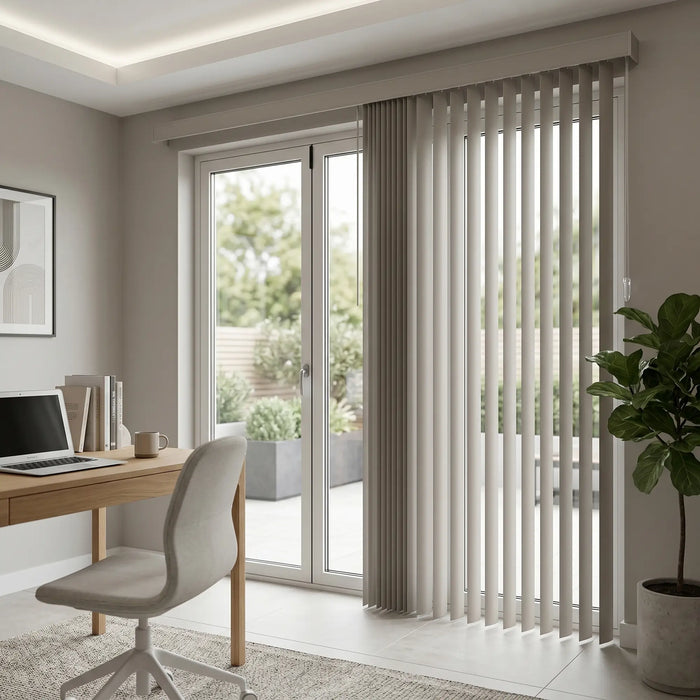
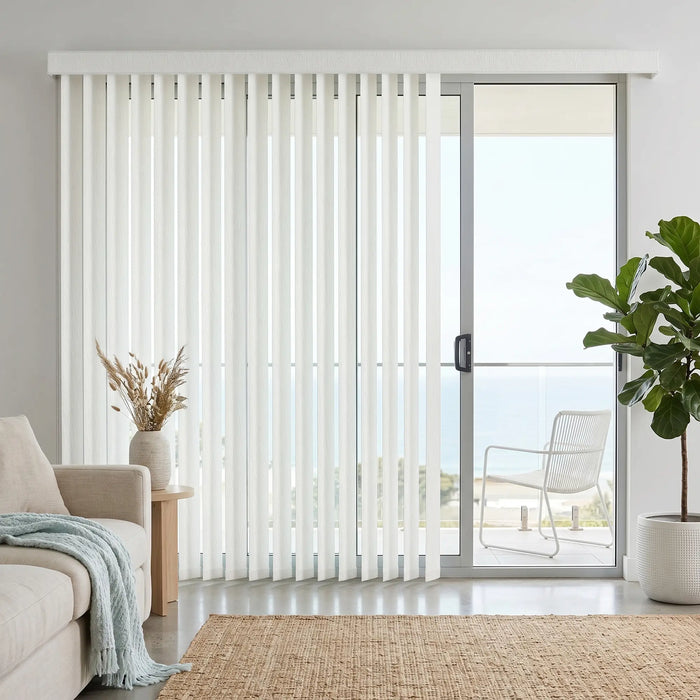
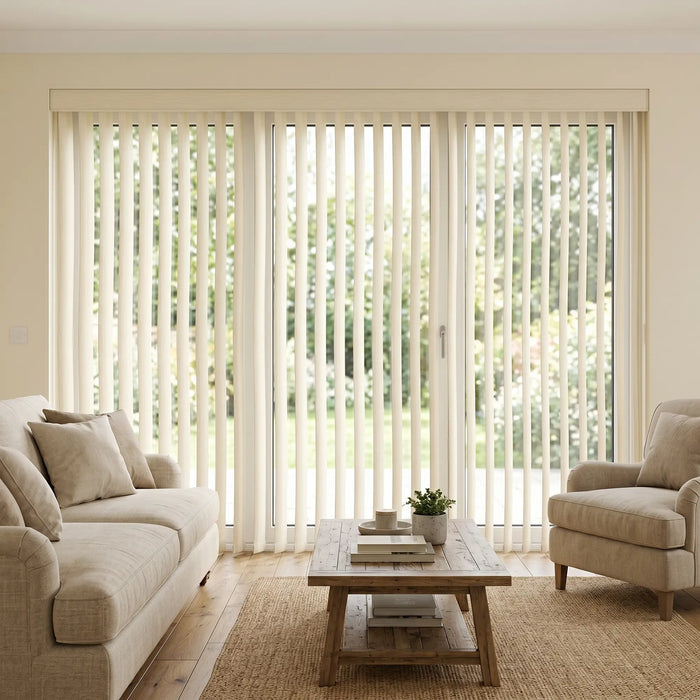
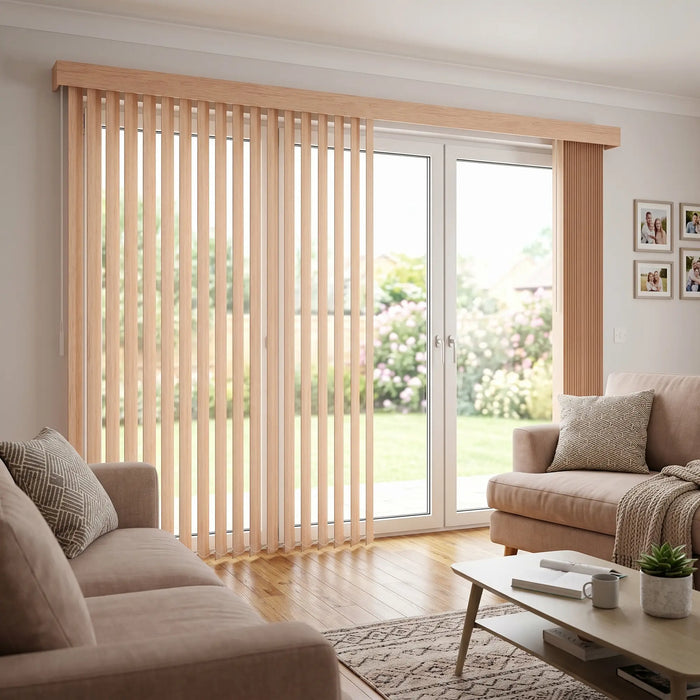
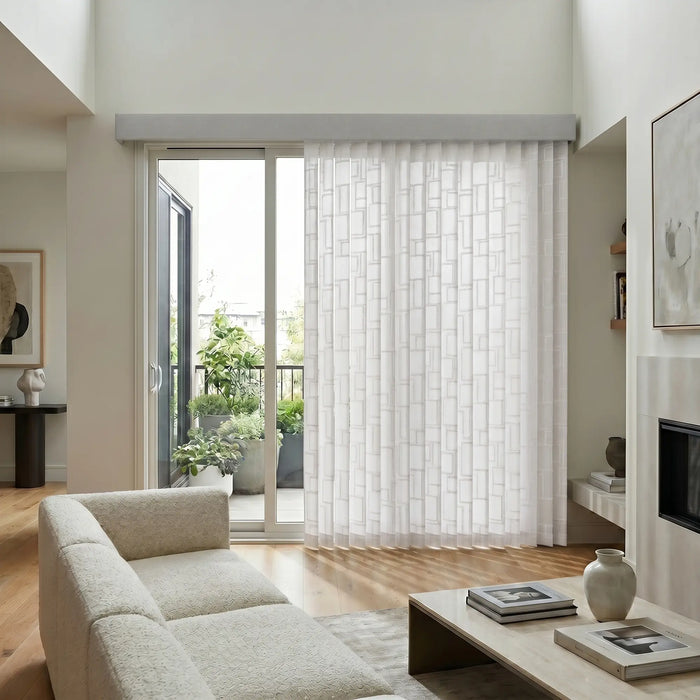
For blinds for patio doors and picture windows, vertical wins on function, not preference. A vertical stack collapses to one side and sits flat against the jamb, so the glass stays open and the traffic path stays clear. That's the whole argument for blinds for sliding glass doors, and it's why the sliding glass door collection leans vertical.
The width point matters more than most buyers expect. Vertical blinds carry their weight from a headrail track, so adding width adds track, not sag. Horizontal blinds carry their weight on lift cords, and weight grows with every inch of width.
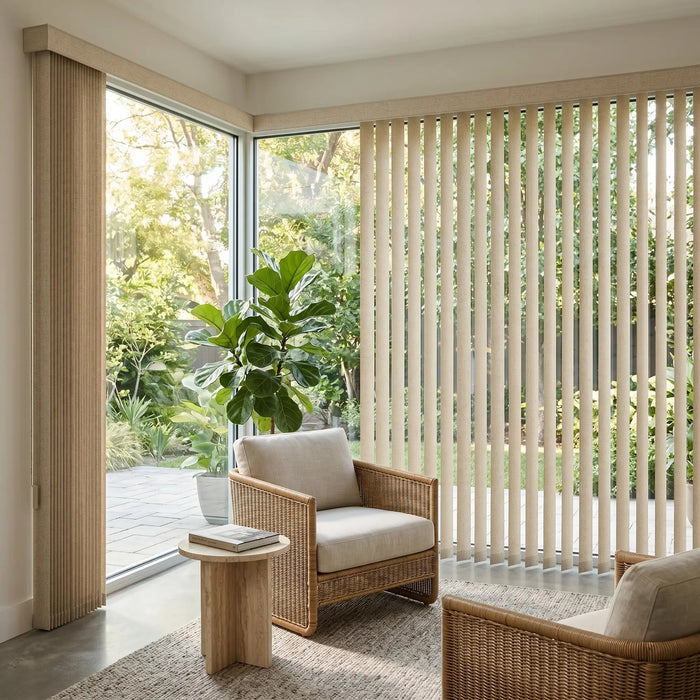
So when people ask are vertical blinds good for large windows, the answer is yes, and for a mechanical reason rather than a style one. Vertical blinds for wide windows have no practical width ceiling in the way a heavy horizontal blind does. Weight and traffic are the two things that decide vertical blinds vs horizontal blinds for sliding doors, and vertical takes both.
One honest drawback: verticals rattle. Leave a slider cracked open on a breezy evening and the slats knock against each other. If that sound will bother you in a bedroom, that's a real reason to look elsewhere.
Horizontal Blinds Give You Finer Light Control
Horizontal blinds beat vertical on precision. Tilt the slats upward and daylight bounces off the ceiling, filling the room without throwing glare across a screen or a dining table. You cannot do that with a vertical slat, which only swivels between open and closed on the same plane.
They also handle street-level privacy better. Tilted-down horizontal slats block sightlines from someone standing outside while still letting light in from above. Vertical slats either give you the view or block it.
On a standard bedroom or bathroom window, horizontal is the better buy. The faux wood blinds in that category resist moisture better than real wood, which is why they end up in kitchens and bathrooms so often.
Horizontal Blinds Hit a Width Wall Around 72 Inches
Faux wood blinds normally have to be separated into two or three separate blinds if they exceed around 72 inches in width. This is due to the fact that faux wood is the heaviest slat material and a single long panel that is as wide as the patio door will sag in the middle and place excessive pressure on the lifting cords.
Splitting the blinds does help, however, and the aesthetics are decent enough. What this does mean, however, is you will be required to operate two or three individual blinds rather than one and more splitting means more visible seams to distract from the rest of the room.
This is the practical heart of vertical vs horizontal blinds for large windows. Horizontal can be made to fit. Vertical was built for it, which is why shortlists of window blinds for large windows put verticals near the top.
Which Style Needs Less Cleaning?
The structure of vertical blinds makes them relatively resistant to dust accumulation. Dust particles falling from the air strike a slat only at the edge, making it easier for dust to go past. In contrast, horizontal blinds are perfect candidates for dust collection since they have flat surfaces that tend to collect dust particles.
In a kitchen, horizontal blinds are the worst option because of grease being present in the air, the combination of which creates a film of dust that requires wiping, not just dusting. If maintaining them is a priority for you and they happen to be situated near the cooking area, your decision is made.
Vertical blinds mean extra hassle due to the plastic components placed up on the blinds, which may become brittle after being exposed to UV rays over years.
How the Prices Compare Once Width Is Factored In
Horizontal blinds start cheaper, and vertical blinds get cheaper as the opening grows. At Factory Direct Blinds, entry 2-inch cordless faux wood horizontals start under $60 at base sizes, while entry PVC verticals start around $105. On a bedroom window, horizontal wins on price without much argument.
That gap narrows and often reverses at slider width. Once a horizontal blind needs splitting onto a multi-blind headrail, you're paying for extra hardware and extra labor on a treatment that still operates in three pieces. Fabric verticals sit at the top of the range, so if budget decides it on a wide opening, PVC verticals are the value pick and the best blinds for wide windows on cost per foot. Order free samples before you compare quotes, since PVC finishes vary more than the product photos suggest.
Pros and Cons of Vertical Blinds and Horizontal Blinds
The pros and cons of vertical blinds and horizontal blinds land in different places, so here they are side by side.
Vertical blinds comprise:
-
A piece that opens in one move, which makes them a good choice for large windows or doors.
-
Civilization has no limits on width because the entire weight is supported by the headrail.
-
They are dust-shedding rather than dust-collecting types of blinds.
-
They are noisy when there is a breeze, and the clips tend to become brittle with time.
-
They allow for light to be either turned on or off, nothing in between.
Horizontal blinds include:
-
Precision light control by reflecting light from the ceiling.
-
Because of the down tilt of the slats, they provide the best privacy from the street.
-
They are also less expensive compared to other types of blinds on standard windows.
-
They need to be divided when over 72 inches since faux wood is a heavy material.
-
Every slat is a shelf to collect dust.
Among types of window blinds, these two cover most residential openings, which is exactly why the choice comes up so often. If you're mapping blinds for different window types across a whole house, expect to mix both rather than standardize on one.
Final Call
Let the window decide, not the showroom photo. Any opening over six feet wide, or one you walk through, points to vertical. A standard bedroom or bathroom window points to horizontal, and a 2-inch faux wood in that spot will look better and cost less than a vertical squeezed into the same frame. Most houses need both, so treat vertical or horizontal blinds as a per-window call rather than a whole-house decision.
If you're outfitting a patio door or a run of wide glass, start with the vertical blinds collection and filter by width. For standard windows, compare the horizontal blinds range instead. Either way, order free samples first and hold the material against your own wall in afternoon light before you commit.
FAQs
Which Is Better, Vertical or Horizontal Blinds?
The opening decides it, not the style. Which is better, vertical or horizontal blinds comes down to width and traffic: vertical for sliding doors and anything wider than about 72 inches, horizontal for standard windows where you want fine light control. Function should outrank looks here, because a blind you fight with daily gets replaced early.
What Are the Best Blinds for Sliding Glass Doors?
Because vertical blinds move to the side, enabling the doorway to be used without moving them up, they are ideal for sliding glass doors. On the other hand, horizontal blinds must be raised completely every time someone wants to go through the door, giving rise to wear and tear on the lift cords, which becomes annoying over time.
Are Vertical Blinds Good for Tall Windows?
Vertical blinds are very appropriate for tall windows, as slats can be cut to the needed length and slats will not weigh down their tracks, but tall windows that are long and thin may be better off with horizontal blinds or roller shades, as vertical blinds take up the horizontal space that your small window may not have.
Do Vertical Blinds Look Outdated?
Vertical blinds can remind people of their time in 1990s offices, and that is something that does not hold significance anymore. Contemporary materials used for making vertical blinds are PVC and fabric, and they have interesting texture and color solutions rather than being flat beige. The biggest change that you can make is to choose a different type of slat rather than choosing a plain white one.
Should I Choose Vertical or Horizontal Blinds for a Wide Window?
Choose vertical for anything past about 72 inches. Should I choose vertical or horizontal blinds is a weight question at that width, since a horizontal blind that wide has to be split into multiple units on one headrail. A single vertical track covers the same span in one motion, and it costs less once the split hardware is priced in.