Skip to content


Custom vs. Ready-Made Cellular Shades: Which Is Better?


If you are choosing between custom blinds and ready-made shades, the decision is less about labels and more about fit, value, and long-term performance. If you are still deciding whether honeycomb shades justify the spend at all, we breakdown the pros and cons in this guide.
Key Takeaways
- Custom shades are built to exact measurements, yielding closer edge alignment and cleaner visual lines.
- Ready-made shades come in standard sizes, offering lower upfront cost and faster availability for simple openings.
- Standard sizing can cause side gaps, uneven reveals, and fit issues that reduce blackout and insulation performance.
- A mixed approach commonly uses custom in visible or irregular openings and ready-made in secondary, standard rooms.
A bargain that does not fit perfectly can become expensive fast. A custom order that solves the problem once can feel cheaper over time.
This guide compares both options specifically for cellular shades, so you can pick the right window treatment for your space and budget.
What Is a Custom Cellular Shade
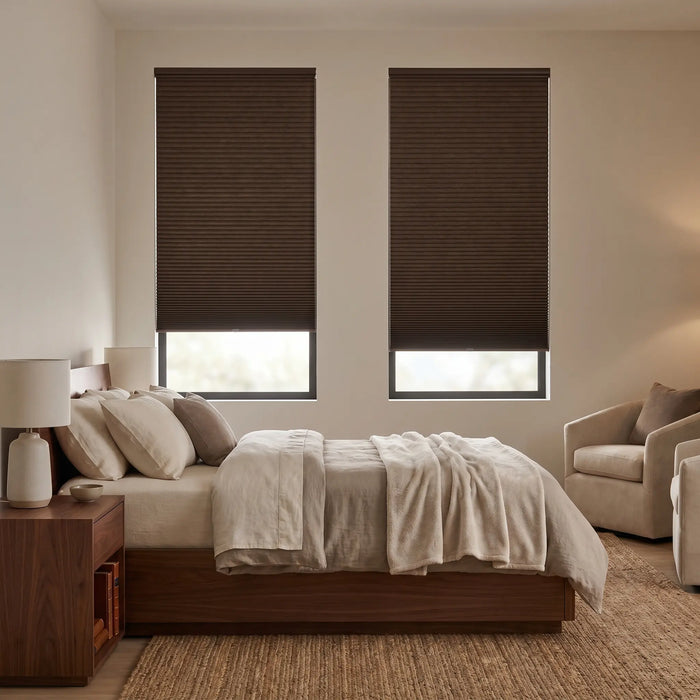
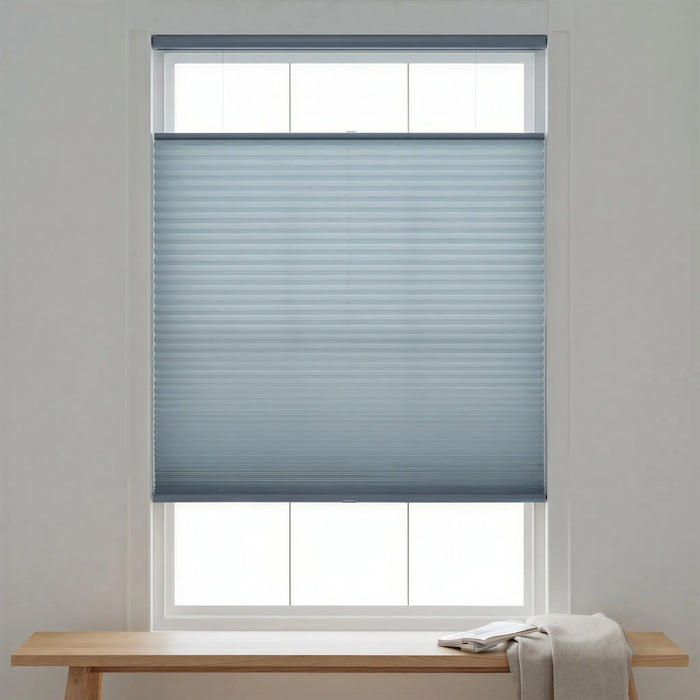
A custom shade is built to your exact measurements. Width, height, fabric, operating system, and features are chosen for your specific opening rather than pulled from fixed shelf sizes.
For custom window projects, that means:
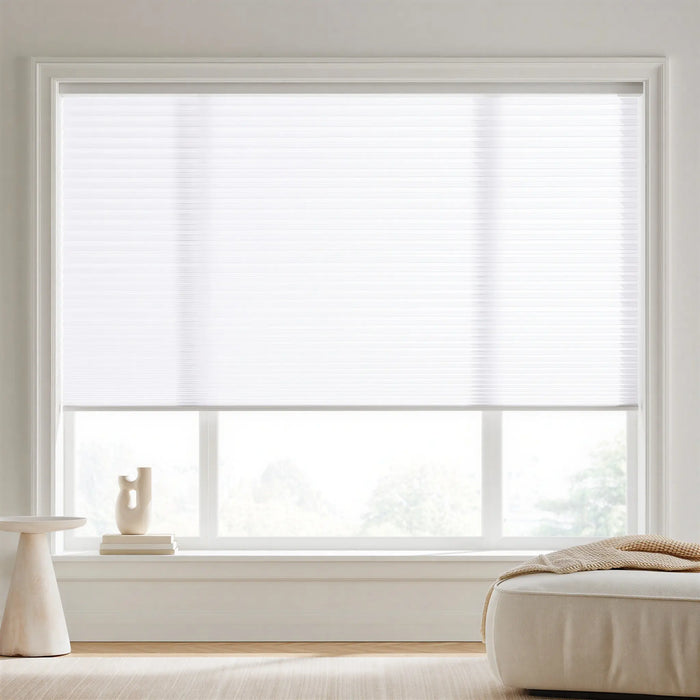
- closer edge alignment
- cleaner visual lines
- better light control
- fewer installation compromises
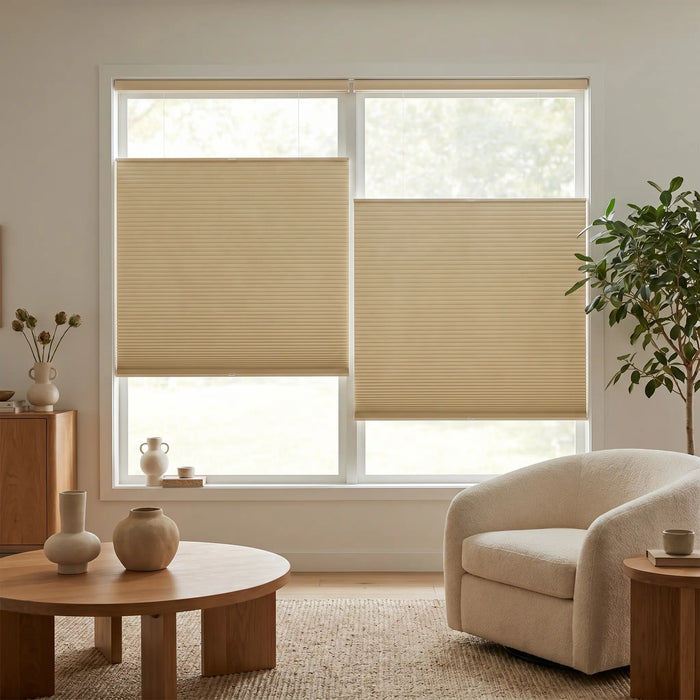
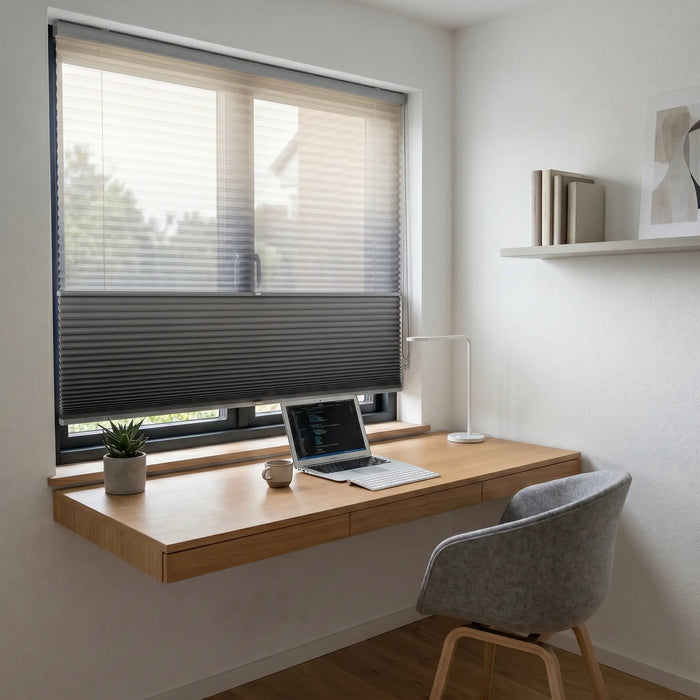
Custom can also include options you may not find in basic stock listings: cordless lifts, top-down bottom-up, motorization, smart integrations, and deeper material selection.
If your priority is a perfect fit and consistent performance across rooms, custom is usually the strongest route.
What Is a Ready-Made Cellular Shade
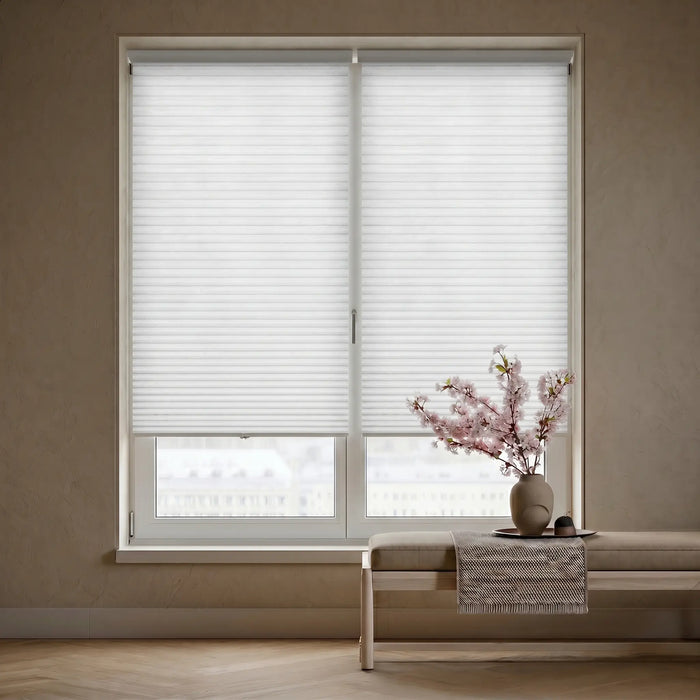
A ready-made shade (or pre-made option) is produced in standard sizes and sold off the shelf. You choose the closest available dimensions and install it as-is or with limited adjustments.
These are attractive when:
- you need something fast
- you have standard-size windows
- upfront cost is your top priority
There is nothing inherently wrong with ready-made options. In straightforward openings, they can work well. The key is knowing where standard sizing stops being practical.
Why Standard Sizing Often Does Not Fit Real Windows
Most real homes are not perfectly standardized. Even in newer builds, window openings can vary by fractions that matter for honeycomb shades.
Common fit problems with ready-made window products:
- side gaps that leak light
- uneven reveal depth
- slight out-of-square openings
- hardware interference
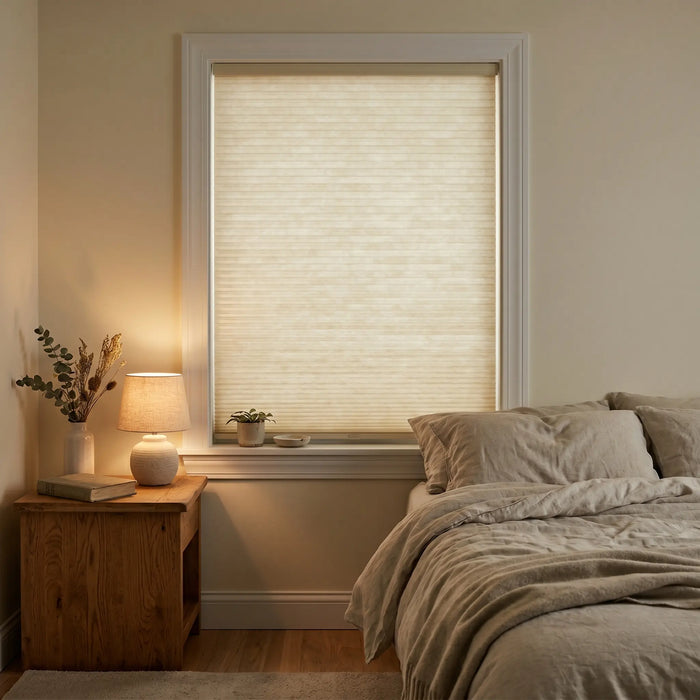
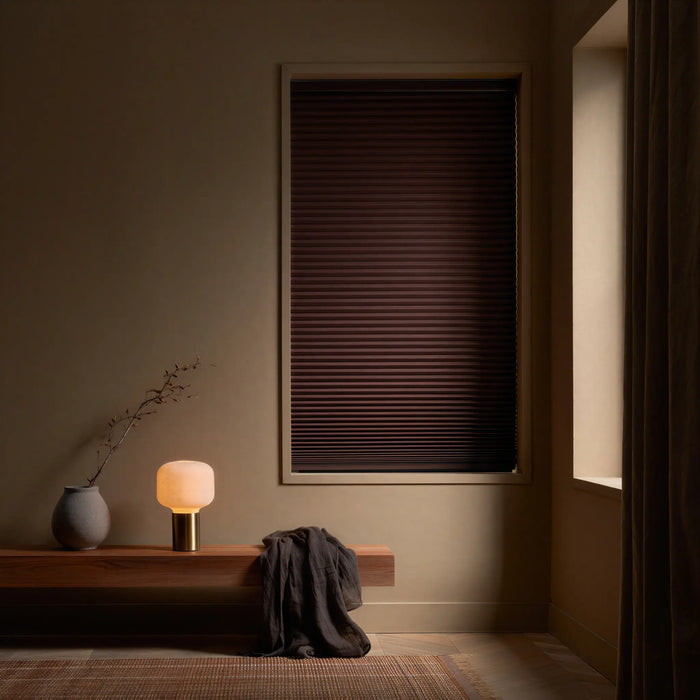
These issues are especially noticeable in bedrooms where you want blackout performance. A shade that is “close enough” in width may still leave edge light. That is one reason many homeowners switch from shelf products to custom on their second purchase.
How Custom Sizing Is Measured and Ordered
Custom ordering starts with precise measurements and mount decisions (inside vs outside). Follow measurement guide so your order matches the opening. The product is then built for those dimensions, including the selected fabric, opacity, and operating system.
A typical process:
- Confirm mount type and clear depth
- Measure multiple points for width/height
- Select shade spec (single/double cell, blackout vs light filtering)
- Choose operation (manual, cordless, motorized, smart home ready)
- Place order and review lead time
When measurements are done correctly, custom products tend to fit perfectly and reduce post-install troubleshooting.
Price Difference Breakdown
Yes, custom usually costs more upfront than ready-made. But the pricing gap is not always as large as people expect, especially when you compare similar feature sets.
Why custom can cost more:
- made-to-order production
- broader material choices
- tighter quality control
- optional feature upgrades
Why “cheaper” ready-made can become costly:
- replacement after poor fit
- added accessories to cover gaps
- reduced performance in key rooms
- compromise installs
If you compare basic stock against premium custom, the gap looks huge. If you compare equivalent quality and features, it often narrows.
Why the Gap Is Often Smaller Than People Expect
The real decision is total value, not ticket price alone. A lower-cost shade that you replace in two years is not truly cheaper. A better-fit product with higher durability can win on lifetime cost.
Custom can also help on comfort and efficiency. Better fit often supports better insulation and easier privacy control, which is why many people view custom as a functional upgrade, not just a style upgrade.
This does not mean custom is always right. It means the “custom is too expensive” assumption is often based on incomplete comparison.
Feature and Performance Differences That Matter Day to Day
Beyond fit and price, daily usability can shift the value equation.
Cordless safety and convenience
Many custom programs provide broader cordless configurations across sizes and fabrics. For families with kids or pets, this can be a deciding factor, not just a nice extra.
Smart controls and automation
If you want to motorize shades or connect to a smart home routine, custom lines often offer stronger compatibility and cleaner integration. Ready-made can include motorized products too, but availability is usually narrower by size.
Light behavior in real rooms
A tighter fit helps with light control, especially in bedrooms and media spaces. If the goal is reduced edge glow with blackout fabric, precision sizing can make a visible difference.
Thermal consistency
For honeycomb products, closer fit can support better insulation performance. It does not replace window upgrades, but it can improve comfort and reduce hot/cold spots near glass.
Room-by-Room Strategy: Mix Custom and Ready-Made
You do not always need one choice everywhere. Many homeowners get better value with a split strategy:
- use custom in high-visibility rooms and hard-to-fit openings
- use ready-made in secondary rooms with standard dimensions
- prioritize custom in spaces where appearance or performance must be exact
This approach can control budget while still delivering a near perfect fit where it matters most.
Lead Time, Warranty, and Replacement Reality
Ready-made usually wins on speed. You can often install quickly and move on.
Custom usually wins on precision and often on warranty support, depending on brand and product tier. Replacement planning is also worth considering:
- if a shelf product is discontinued, matching later can be harder
- custom reorder paths are often easier when original specs are documented
- long-term finish consistency can be better with made-to-order lines
For homeowners staying in place for several years, these practical details often outweigh a small upfront price difference.
When Ready-Made Is the Better Buy
Choose ready-made when:
- windows are truly standard and square
- you need quick turnaround
- budget is strict and short-term
- slight light gaps are acceptable
In these cases, shelf products can be a sensible and cost-effective window covering.
When Custom Is the Better Buy
Choose custom when:
- openings are irregular or oversized
- you care about clean sight lines
- room function depends on tight fit (bedrooms, media rooms)
- you want advanced controls and better finish consistency
If you want to compare current options and features, browse cellular shades and evaluate by room needs, not just by initial price.
Bottom Line
For simple, standard openings, ready-made can absolutely work. For challenging windows or higher expectations, custom usually performs better and lasts longer.
The best choice is the one that matches your real constraints: budget, timeline, window geometry, and how much precision you need from your window treatment. In many homes, a mixed strategy works best: custom where fit matters most, ready-made where tolerance is higher.
Quick Fit Questions Before You Buy
Use these quick checks to decide whether your next cellular shades order should be custom or ready-made:
- Do your cellular shades need bedroom-level blackout performance with tight edge coverage?
- Will your cellular shades sit in openings that are not perfectly square?
- Are these cellular shades for large feature windows where small sizing errors are obvious?
- Do you want motorized cellular shades tied to a schedule or smart routine?
- Are you trying to keep replacement cycles low with higher-durability cellular shades?
If most answers are yes, custom cellular shades usually make more sense. If most answers are no, ready-made cellular shades can still be a practical value choice.
Frequently Asked Questions
How do I decide between custom and ready-made cellular shades?
Decide based on fit, budget, timeline, window geometry, and room function: custom is usually best for irregular or high-performance rooms while ready-made works for standard windows and tight budgets. Consider long-term value, since a better fit can reduce replacements and improve performance over time.
Will ready-made cellular shades provide true blackout performance?
Ready-made shades can leave side gaps and edge light, so they often don’t deliver bedroom-level blackout unless the opening is perfectly standard. Custom sizing reduces edge light and usually gives noticeably better blackout performance.
How are custom cellular shades measured and ordered?
Custom sizing starts with choosing an inside or outside mount and measuring multiple width and height points using a reliable guide; confirm clear depth before ordering. Then select cell construction, fabric opacity, and operating system, and review lead time before placing the order; see our measuring guide for blinds and shades for detailed steps.
Is it practical to mix custom and ready-made shades in one home?
Yes — many homeowners use custom shades in high-visibility or hard-to-fit openings and ready-made shades in secondary, standard rooms to control budget. Prioritize custom where appearance, insulation, or blackout performance must be exact.