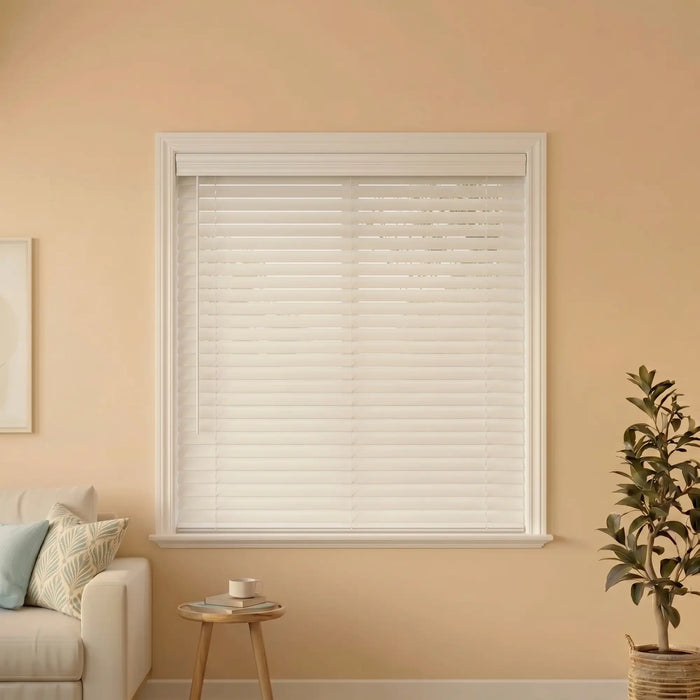
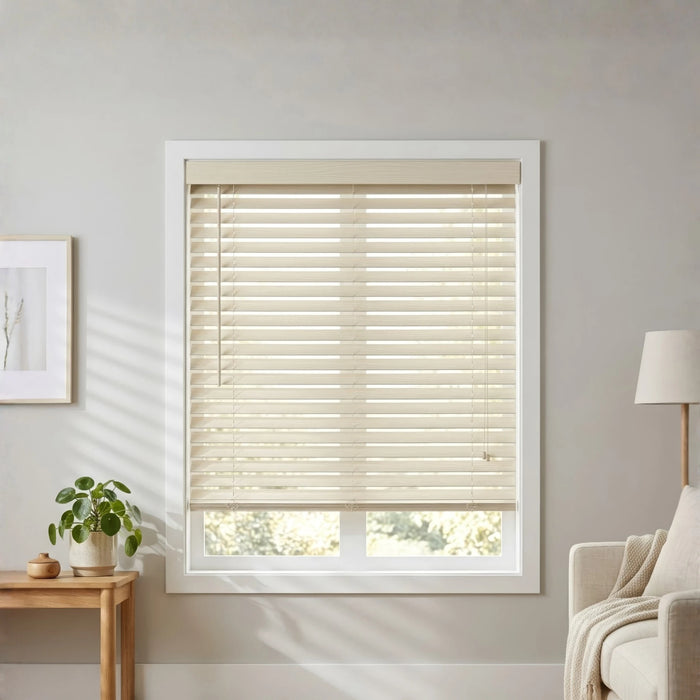
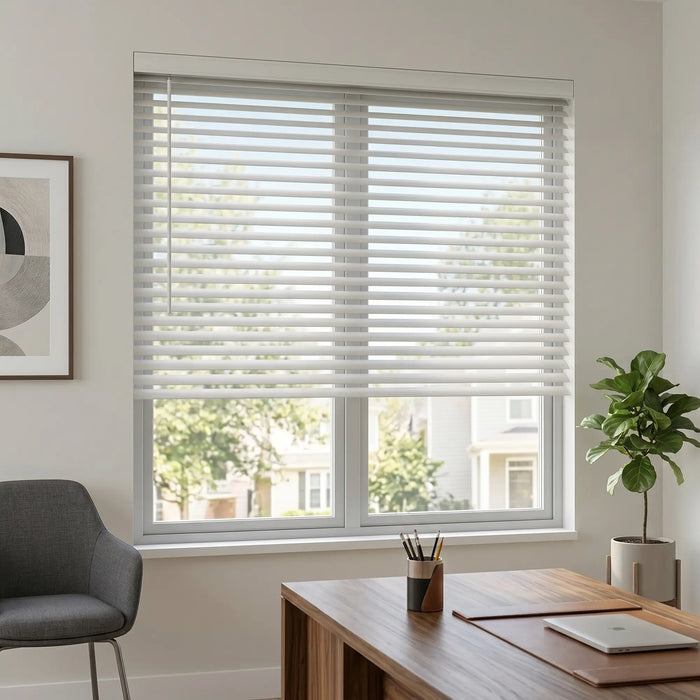
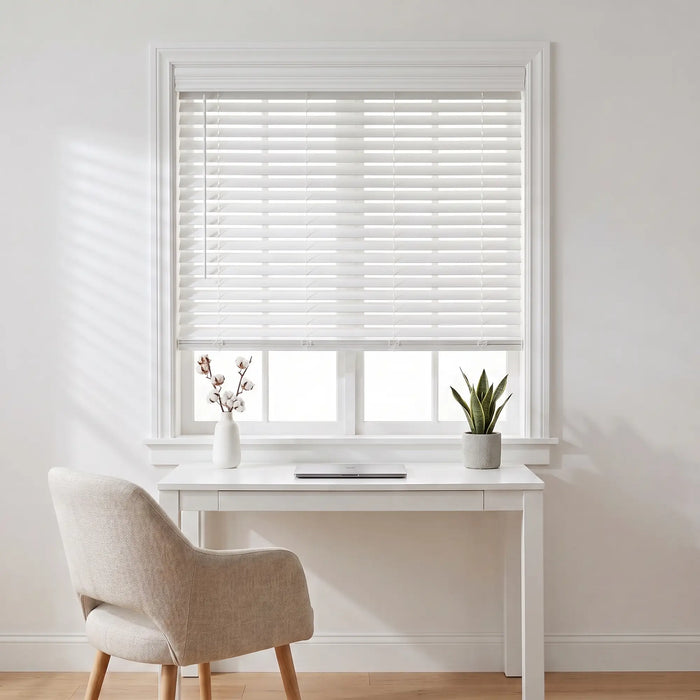
That is the practical difference from window blinds, which use hard slats you tilt to angle light without moving the covering. Blinds let you steer daylight. Shades give you cleaner lines, better insulation and a far better chance of a genuinely dark room.
The Types of Window Shades We Make
Every shade here is cut to your window, so the first decision is material and construction.
Cellular and honeycomb shades
Cellular shades trap air inside honeycomb cells, which makes them the best insulator of any soft shade. Single cell suits a standard window. Double cell is worth the upgrade on single-pane glass, older aluminum frames or a drafty north-facing wall.
Roller shades
Roller shades wind onto a tube at the head of the window, so nothing breaks the view when they are up. This is our widest range, from economy vinyl to woven and decorative fabrics, in every opacity.
Solar shades
Solar shades use an open mesh rated by openness factor: 1, 3, 5, 10 and 14 percent. Lower numbers block more heat and give tighter privacy; higher numbers keep the view crispest. All of them cut the UV that fades floors and furniture.
Roman shades
Roman shades are sewn fabric panels that fold into horizontal pleats as they rise, bringing the softness of drapery in the footprint of a shade. Choose a Flat, Plain or Soft Fold.
Woven wood and bamboo shades
Woven wood shades are woven from bamboo, reeds and grasses, so every panel carries its own grain and color variation. They filter light warmly and add a texture no printed fabric matches.
Zebra shades
Zebra shades carry alternating sheer and solid bands on one roller. Line the bands up for privacy, offset them to see through: light control and view from a single pull.
Sheer and pleated shades
Sheer shades float fabric vanes between two sheer layers, so you get tilt-style control in a soft shade. Pleated shades are a single crisply folded layer, the simplest and least expensive way to cover a window properly.
Light Filtering, Room Darkening or Blackout
Opacity matters more than color, and it is the spec people most often get wrong.
Light filtering fabric spreads daylight through the room and blocks the outside view during the day. It will not darken a room, and once your lamps are on after dark, shapes are visible from outside.
Room darkening fabric removes most of the light, around 85 to 95 percent, so the room goes dim rather than dark.
Blackout fabric blocks 99 to 100 percent of light through the panel. One thing to know before ordering: an inside-mounted shade is built slightly narrower than the opening so it can travel, so daylight comes in around the edge rather than through the cloth. For a truly dark bedroom or nursery, mount outside the frame with generous overlap.
Insulation, Heat and Glare
Cellular shades are the ones that genuinely insulate, because the sealed cells hold a layer of still air between the room and the glass. The US Department of Energy puts the saving at up to 20 percent of heating energy, and around 15 percent of total heating and cooling energy, against a bare window. Double cell does more of this than single cell.
Solar shades solve a different problem. They insulate very little, but the mesh rejects heat and glare while you keep the view, which is what a west-facing wall of glass or a room full of screens actually needs.
Fit matters as much as fabric. A shade with wide gaps at the sides loses much of the benefit, so a snug inside mount, or an outside mount with generous overlap, is worth the care at the measuring stage.
Lift and Control Options
Cordless lift is the standard across most of this range: raise the shade by the hem bar and it holds where you leave it, with no cord hanging anywhere. That is the right default in a home with children or pets, and it meets CPSC child safety guidance.
A continuous cord loop runs over a clutch and gives real mechanical advantage on a tall or heavy panel. Motorized shades run on remote, app, voice or a schedule, and earn their price on high transoms, stairwell glass and runs of windows that should move together.
Top down bottom up is worth knowing separately: two moving rails let you drop the top for daylight while the bottom stays shut at eye level.
Choosing by Room
- Bedrooms and nurseries: blackout fabric, mounted outside the frame. Cellular holds heat as well as light.
- Living and dining rooms: light filtering or woven wood for daytime privacy without gloom, Roman if you want the window to look finished.
- Home offices: solar shades cut screen glare while you keep the view.
- Kitchens and bathrooms: roller shades with a wipe-clean face. No folds to trap moisture, no sewn channels to mildew.
- West and south-facing glass: solar for glare, double-cell cellular for heat.
- Sliding doors and wide openings: roller shades cover most patio widths, and beyond that we mount panels side by side.
Measuring, Mounting and What Custom Means Here
Measure the opening in three places for width and three for height with a steel tape, then work from the narrowest width and the longest height. Measure the window itself, not your old shade and not the size you want the shade to be. Those two mistakes cost more remakes than anything else.
An inside mount sits the shade within the reveal for a built-in look and needs enough flat depth, and how much depends on the shade type and the lift you choose, so check the spec on the product. An outside mount fixes above and beyond the opening, works on a shallow or out-of-square reveal, and is the only mounting that closes the light path at the edges. Our measuring guide covers both.
Give us the raw opening size and we take the deduction, rather than deducting it yourself. Because every shade is made to order at that size, we also send free samples so you can check color and opacity in your own light first, and you can add our MeasureSafe™ Guarantee at checkout: measure wrong and we remake the shade.
 Skip to content