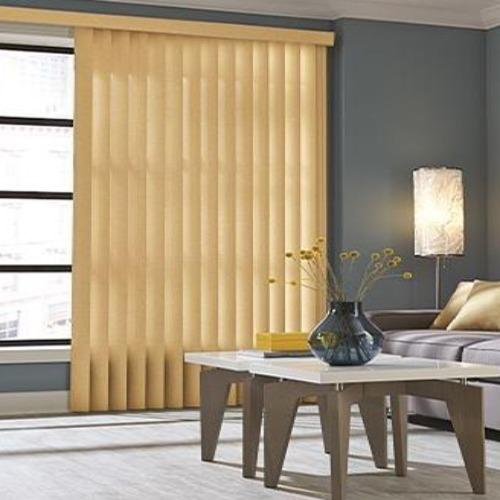
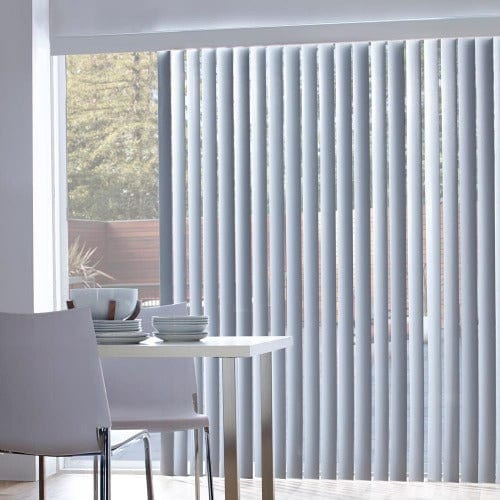
Benefits of Vertical Blinds
Vertical blinds offer several practical advantages for your home or office blinds. They're one of the easiest window treatments to clean, especially PVC and faux wood blinds that simply wipe down with a damp cloth. These materials can last 10-20 years with proper maintenance, even with daily use on high-traffic areas like patio doors.
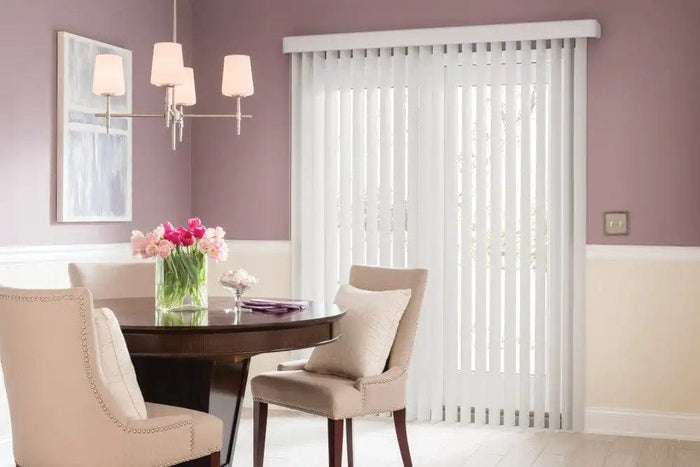
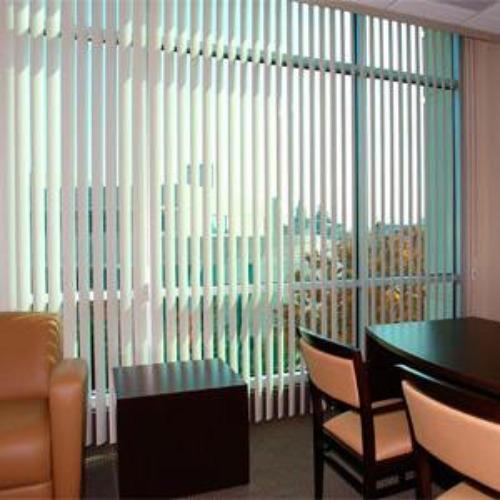
Each vertical blind is built to withstand frequent opening and closing. You get complete control over incoming natural light with vertical blinds, helping reduce glare in areas where you work or watch TV. The sliding design makes them perfect for sliding doors since they compress easily.
Types of Vertical Blinds
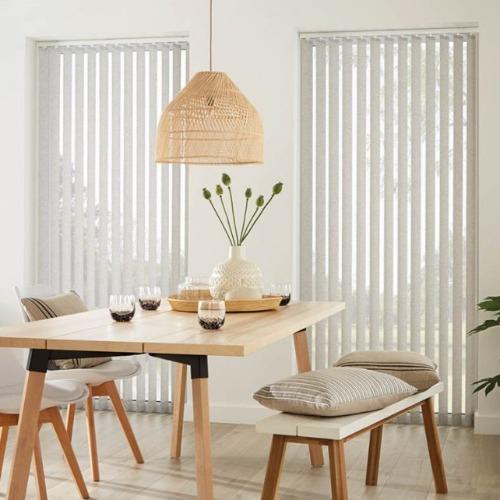
Vertical blinds come in three main material types to suit different needs. Vinyl and PVC options are budget blinds, moisture-resistant, and easy to clean, making them ideal for high-humidity areas. Faux wood vertical blinds resist warping and offer the appearance of real wood blinds at a lower cost, while fabric vanes provide a softer look with light-filtering properties.
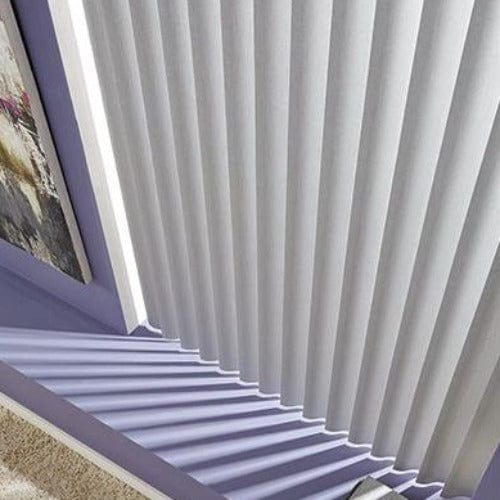
You can choose from smooth, textured, or S-shaped vane styles with various texture options to match your décor. Each vertical blind offers different shade options.
Control and Mounting Options
Vertical blinds offer several control options to suit your needs. Wand control uses a wand to open, close, and rotate the vanes smoothly. This cordless blinds option is safer for homes with children and pets compared to traditional pull cords.
Motorized vertical blinds provide remote control operation for added convenience. Vertical blinds require more mounting depth than other window treatments due to their track system. Most windows aren't deep enough for inside mounting, so outside mounting is typically recommended.
Installation requires basic tools including a pencil, drill, pliers, screwdriver, tape measure, and appropriate fasteners.
Maintenance
Maintaining vertical blinds is simple and low-maintenance. PVC and faux wood options wipe clean with a damp cloth, while fabric vanes may need occasional vacuuming. Regular care helps your vertical blinds maintain their appearance and function for years.
Frequently Asked Questions
Are vertical blinds durable?
Yes, vertical blinds are made with materials like PVC, faux wood, and fabric. With proper maintenance, they can last 10-20 years even with frequent daily use.
Are vertical blinds easy to clean?
Vertical blinds are one of the easiest window treatments to clean. PVC and faux wood options simply wipe down with a clean cloth, making them ideal for high-traffic areas.
Can vertical blinds block light?
When closed, vertical blinds effectively block direct sunlight. Some light may filter through at certain angles. For complete light blocking, consider room darkening or blackout options.
Can vertical blinds be motorized?
Yes, vertical blinds can be motorized for remote control operation. This adds convenience and works well for hard-to-reach windows or doors.
How do I measure and install vertical blinds?
Measure your window width and height carefully, noting whether you want inside or outside mounting. Installation requires basic tools and can be done DIY or by a professional installer.
What are the different types of vertical blinds?
Vertical blinds come in vinyl, faux wood, and fabric materials. You can choose smooth, textured, or S-shaped vane styles with wand, cordless, or motorized control options.
 Skip to content