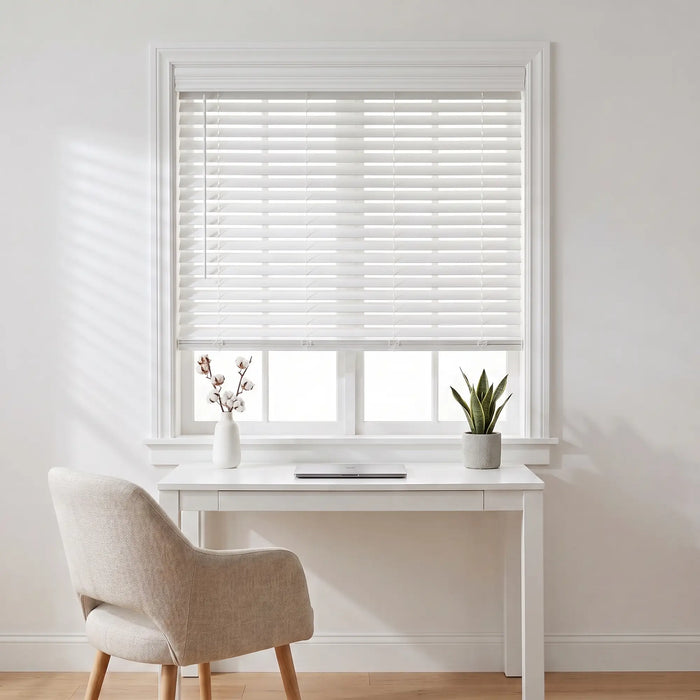
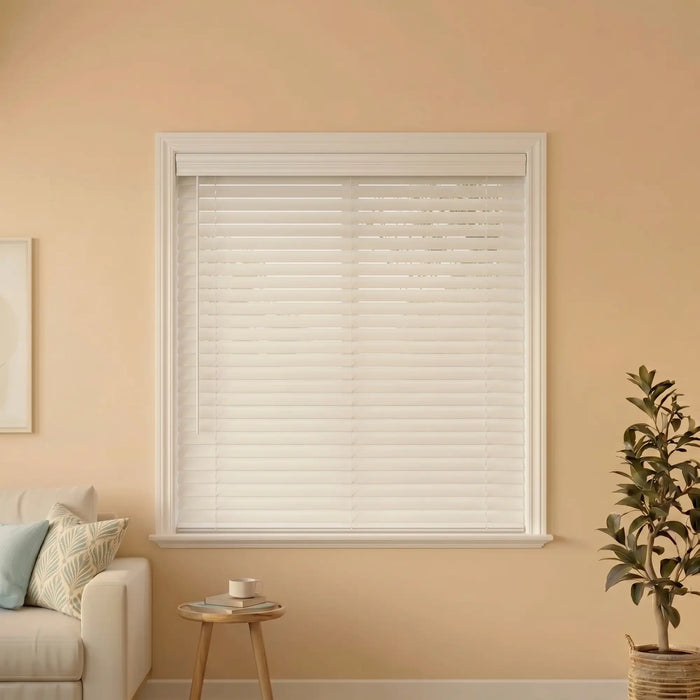
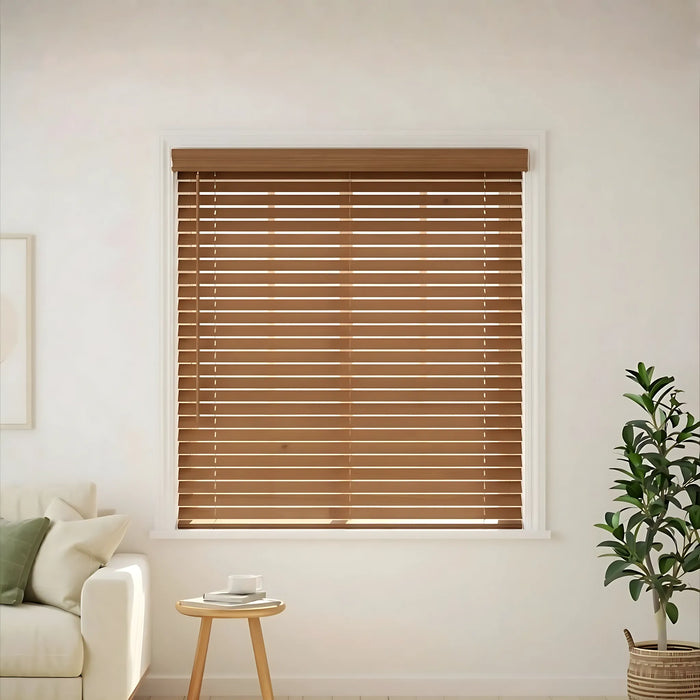
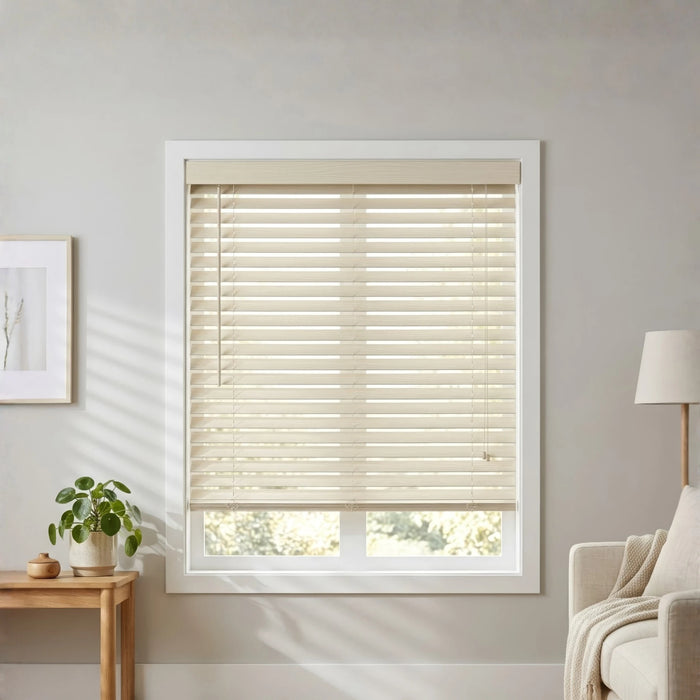
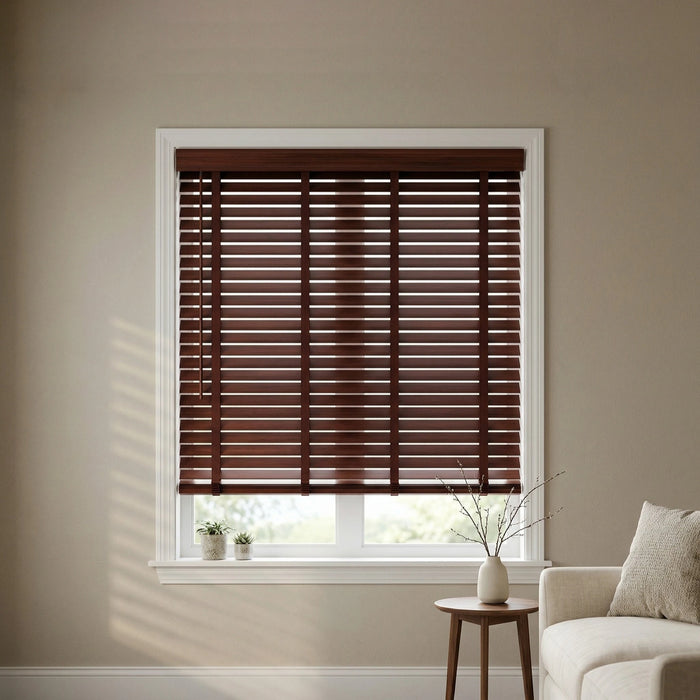
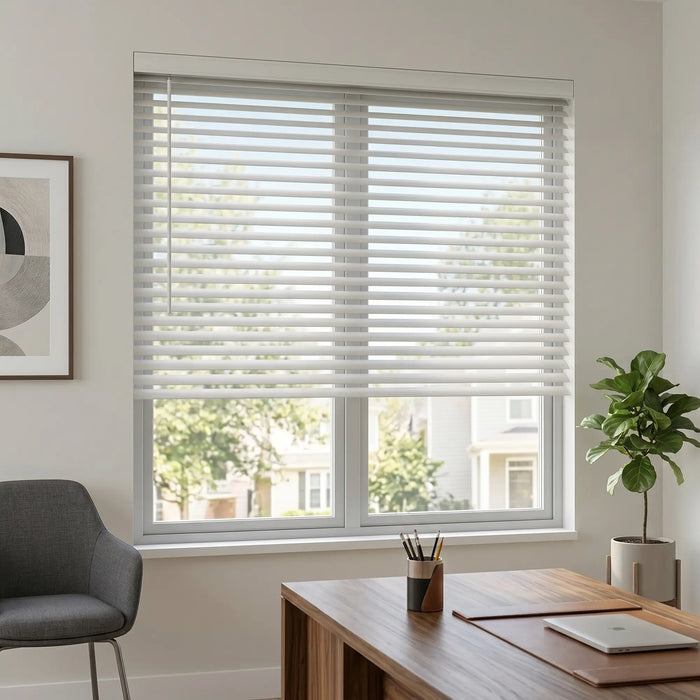
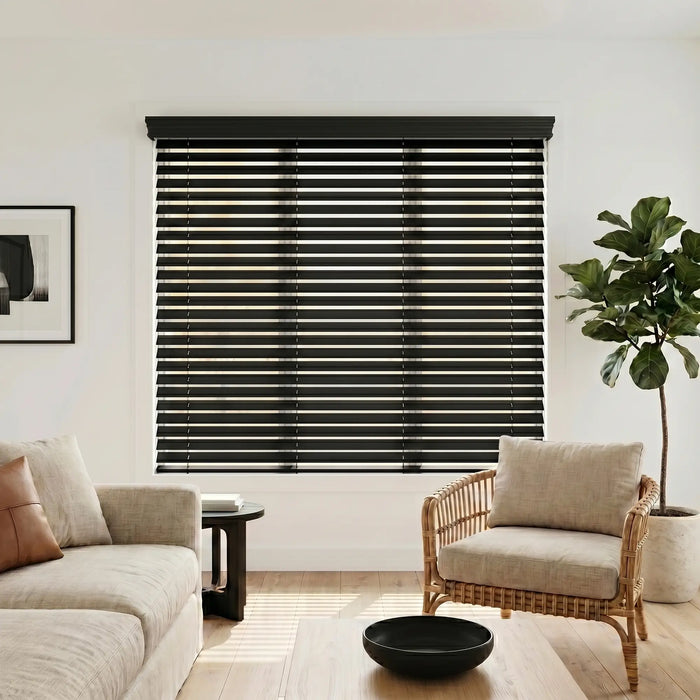
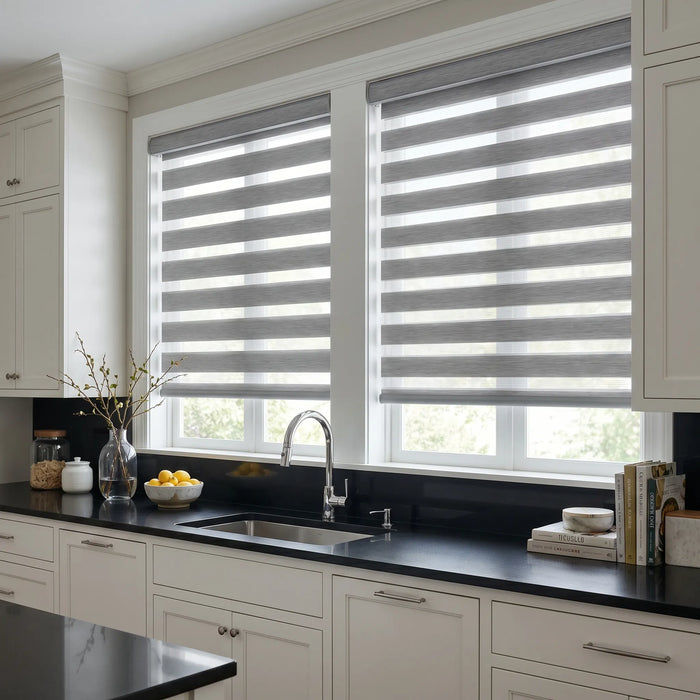
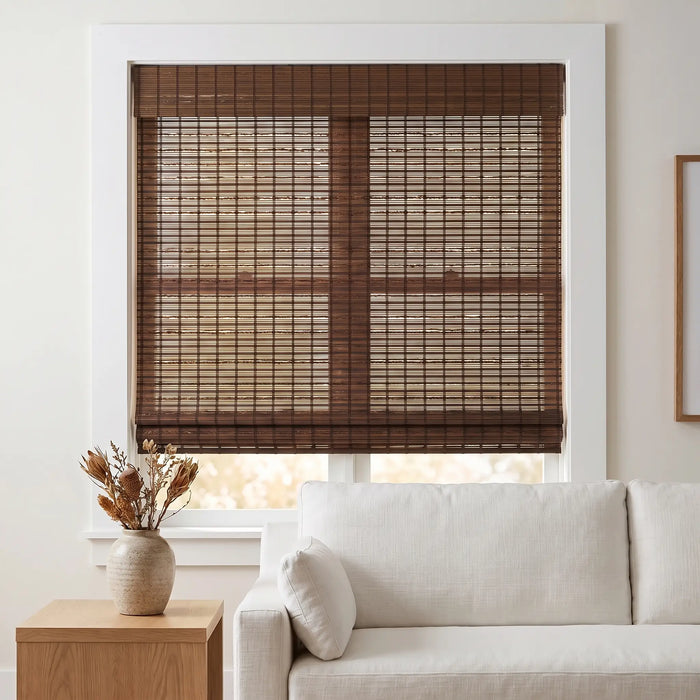
A composite slat costs around half what comparable basswood does, and stays flat where timber misbehaves most: steamy rooms and sun-baked windows. Every set is cut to your measurements, so the real choice is material, slat width and finish.
Slat Widths, Textures and Finishes
2-inch slats: the default, and for good reason
The 2" slat is our most-ordered width. It closes to a nearly solid panel, opens to a generous view-through, and stacks to roughly four to six inches at the head of a 60-inch window – the best choice for 99% of windows.
2.5-inch slats: fewer slats, more window
A 2.5" slat removes roughly a fifth of the slats from the same drop, buying a shallower stack and wider sightline closer to a plantation shutter – the trade-off is weight per square foot on wide openings.
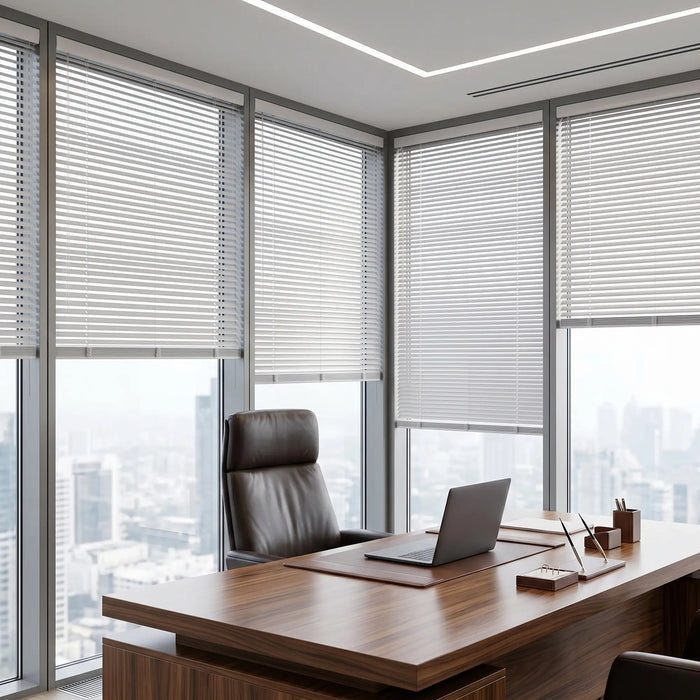
Shallow reveals and door lites that won't take a faux wood headrail suit aluminum mini blinds instead.
Surfaces and color
On our Premier range you choose the texture: smooth reads like painted millwork, sandblasted carries a subtle grain closer to stained wood.
Why Faux Wood Blinds Hold Up to Moisture, Heat and UV
Humidity and the swell-shrink cycle
Timber absorbs water vapor when the air is damp and releases it when the air dries, unevenly across the width of a slat. A bathroom that swings from 40 percent relative humidity to near saturation during a ten-minute shower puts a wood slat through that cycle twice a day – a few hundred cycles later, you get cupping, twist and split ends around the ladder holes.
A PVC or wood-composite slat absorbs a negligible amount of moisture, so the damage never occurs: over a tub, that is a blind that lasts two years compared to one that lasts ten.
Heat and sustained sun
Vinyl softens as it warms, and a slat held closed against a south- or west-facing window can sit well above 130°F on a summer afternoon – our quality composite slats carry heat stabilizers and UV inhibitors to hold their shape at those temperatures.
Three customization choices help ensure your faux wood blinds last: choose a lighter slat color, tilt rather than fully close during peak sun, and pair the blind with a blackout roller if heat rejection matters more than view control.
Yellowing, mildew and cooking films
Older vinyl yellowed from plasticizer migration under UV; modern composite resists it. What people notice as yellowing today is usually a film from cooking vapor, candle soot or nicotine that washes off with warm water and dish soap. Composite also gives mildew nothing to feed on, so these blinds outlast fabric in basements, laundry rooms and windowless bathrooms.
Faux Wood vs. Real Wood: An Honest Side-by-Side
Weight, sag and span: the real dividing line
Composite slats weigh roughly twice as much per square foot as basswood at the same 2" width – enough that a 72-by-48-inch window means lifting with one hand versus two. Weight also loads the brackets, capping most faux wood units between 72 and 96 inches wide.
Beyond these widths, we have found that homeowners and professionals have had headrail defects: the rail deflects in the middle, the blind gets harder to raise over the first year, and the stack goes crooked. We recommend splitting an opening wider than about six feet into two blinds on one headrail, or using real timber if you are set on a single unbroken blind across a wide window.
Appearance and finish depth
In white and off-white, a composite slat is hard to tell from painted wood, since paint hides grain in both. In stains the gap widens: real wood takes stain into the grain for depth that never repeats, while a faux finish repeats on a fixed cycle noticeable up close at eye level.
Cost, repair and lifespan
Faux wood usually lands at 40 to 60 percent of the price of comparable hardwood. A crushed composite slat creases rather than snapping, so the damage stays cosmetic – a real advantage for rentals, kids rooms, and any window that gets bumped.
Rooms Where They Earn Their Keep, and Rooms Where They Do Not
Kitchens are the obvious win: steam, spatter and oil wipe off a sealed composite face without leaving cooking odors like fabric does. Bathrooms, laundries, mudrooms and basements follow the same logic. In a home office, tilt is the point – angle daylight onto the ceiling and off a monitor, unlike a roller shade.
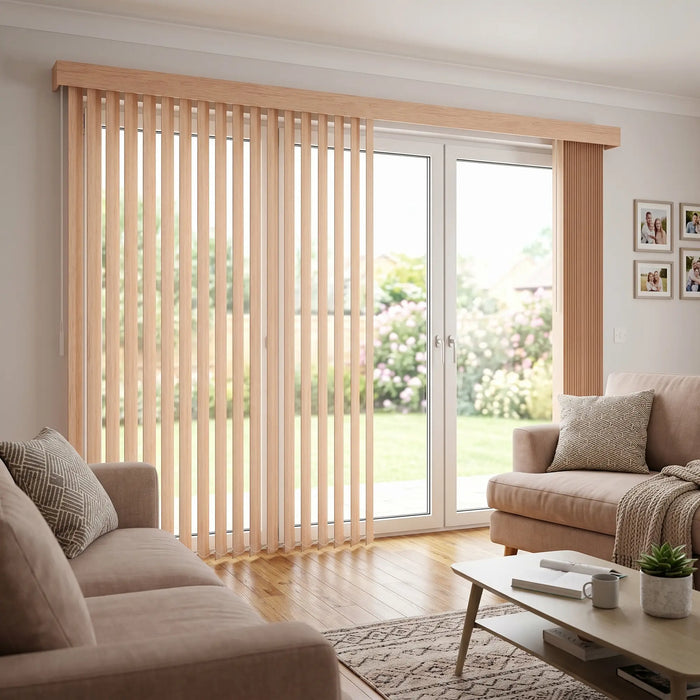
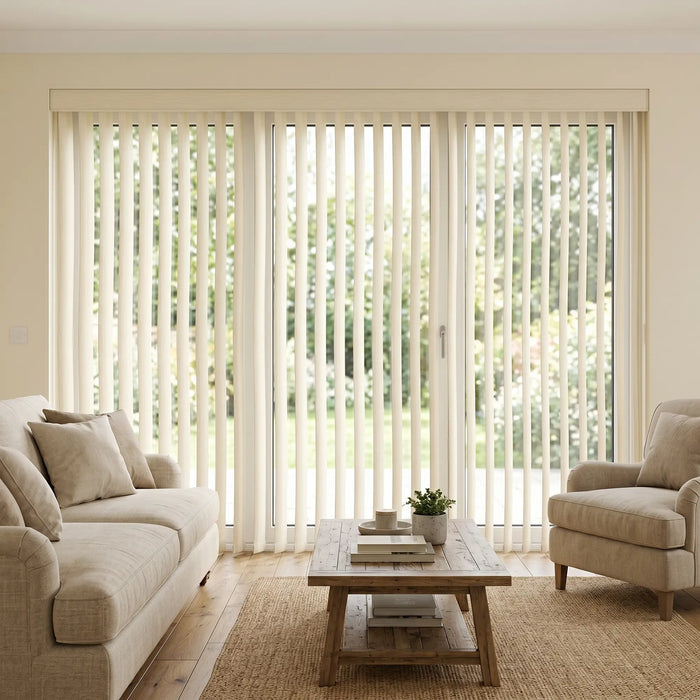
Two situations call for something else: a sliding patio door or wide glass wall needs a treatment that stacks sideways – see vertical blinds – and since no slatted blind seals at the edges, real room darkening for shift work or a nursery calls for a blackout roller shade mounted outside the frame.
Lift, Tilt and Child Safety
Cordless lift is the default on our faux wood blinds, and in homes with children or pets it should be non-negotiable: you raise the bottom rail by hand with no looped cord anywhere – which is why the range carries the Best for Kids certification. Tilt runs off a wand – browse the full cordless range if safety is driving the decision.
Measuring, Fitting and Cleaning
Measure the opening in three places each for width and height, using the narrowest width and longest height. For an inside mount, allow a minimum depth of 1 7/8" for cordless lift to sit fully recessed – give us the exact opening size and we'll take the deduction. For an outside mount, add at least 1.5 inches of overlap each side and 2 to 3 inches above the opening.
Because these blinds are heavier than timber, fix brackets into the frame or solid blocking rather than drywall, and add a center support over about 48 inches wide. On a door, hold-down brackets stop the blind swinging shut. If replacing an existing treatment, our guides cover releasing each bracket type without tearing up the frame.
For upkeep, wipe the face with a microfiber cloth on each tilt side; monthly, add warm water and a drop of dish soap, wiping along the slat rather than across it. For a deep clean, faux wood blinds can be taken down and washed flat in a bathtub – never do that with real timber. Skip bleach, solvents and abrasive pads, which dull the painted surface permanently.
 Skip to content