Skip to content


PVC vs Fabric Vertical Blinds: Which Is Better?


When you’re standing in front of a vertical blind display, the two types being compared seem identical at first glance. However, once installed in the home, differences in the functionality and usage of the PVC and fabric vertical blinds become apparent. These differences could be found everywhere from the sound of a patio door opening to the way your pet interacts with the two types of blinds. The question of whether to pick PVC vs fabric vertical blinds gets an unequivocal answer in the evaluation below that shows the relevant information for each type of material before making a decision on the right PVC or fabric vertical blinds for each room.
PVC vs Fabric Vertical Blinds: The Short Answer
In most home settings, PVC is clearly the preferable vertical blind material. The PVC vertical blinds can be cleaned with a simple cloth and are resistant to moisture. In addition, PVC vertical blinds tend to cost less than fabric and, therefore, are the more economical choice.
Fabric earns its higher price in exactly one situation: a room where the blinds are part of the decor, and nobody touches them much. A formal living room, a primary bedroom, a home office you want to look finished on video calls. There, fabric's softer drape does something PVC cannot.
What Separates PVC From Fabric Vanes
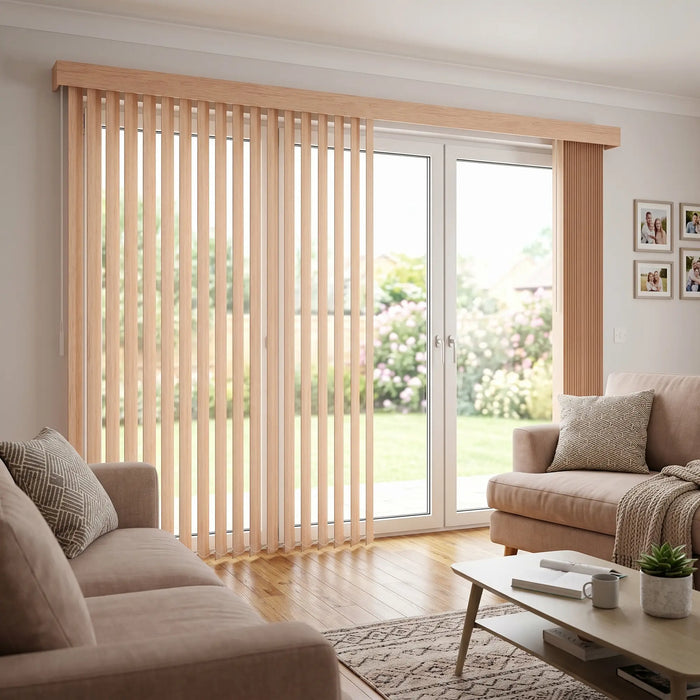
The manufacturing process of the two types of blinds varies, which explains the many differences in their build. A PVC slat is a solid, colored section of material that is smooth or slightly rough. On the other hand, a fabric slat is a piece of fabric that is treated to stiffen it in such a way that it hangs straight.
One detail to clarify here is that many people confuse vinyl vertical blinds and PVC vertical blinds, even though they mean the same. Vinyl is used in everyday language to indicate the type of slat, while PVC is the name of the material used for making them. Retailers use the words interchangeably and do not charge for one product more than for another.
The failure types of both kinds of slats are different as well. If you bend a PVC slat too much, it gets creased or cracked, and the result is permanent. The fabric slat bends well and goes back to its original shape, but its edges may fray after a long period of use, whereas the stiffening treatment might wear down at the spots where it is held the most often.
Are Fabric Vertical Blinds Better Than PVC for Looks?
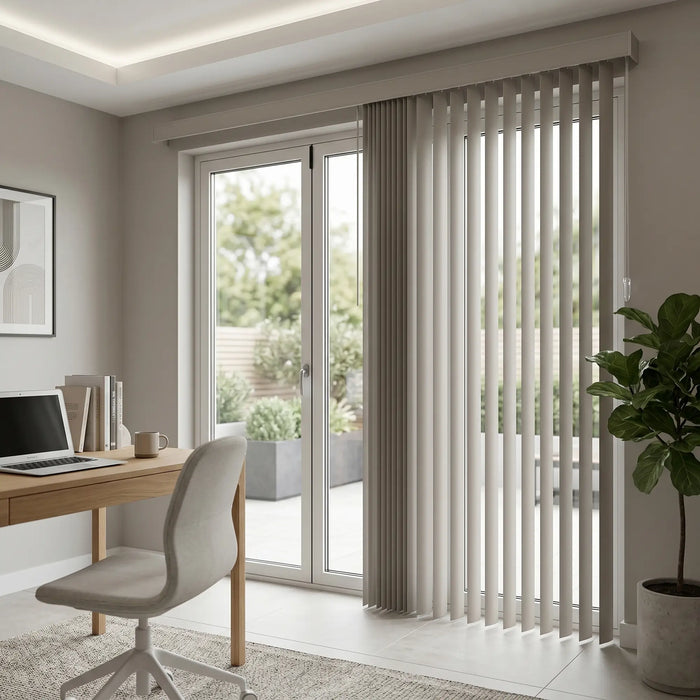
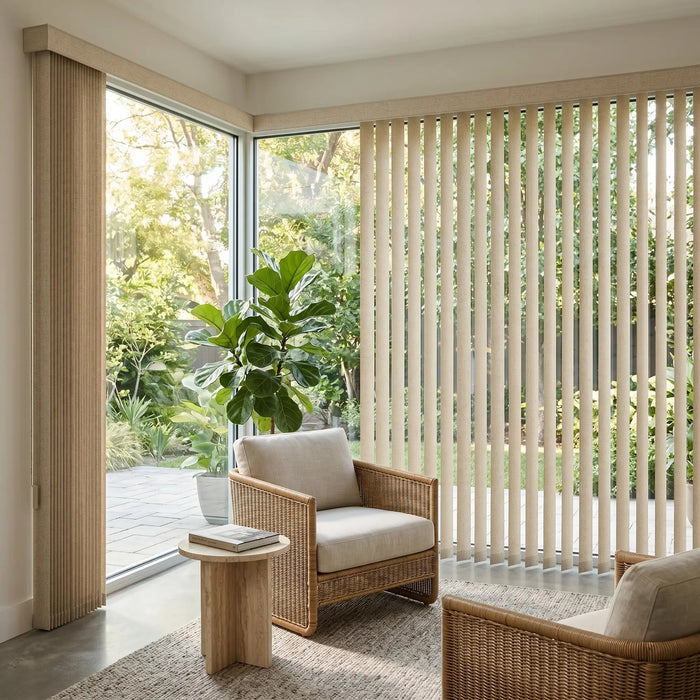
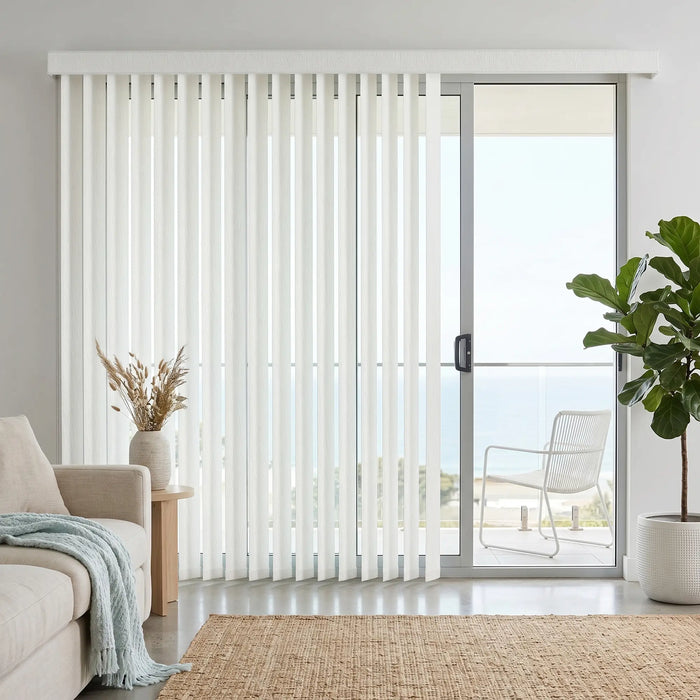
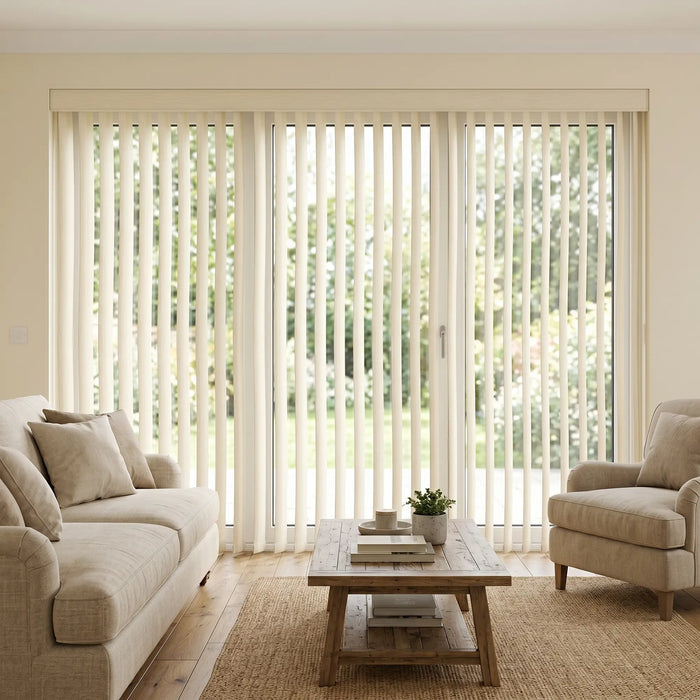
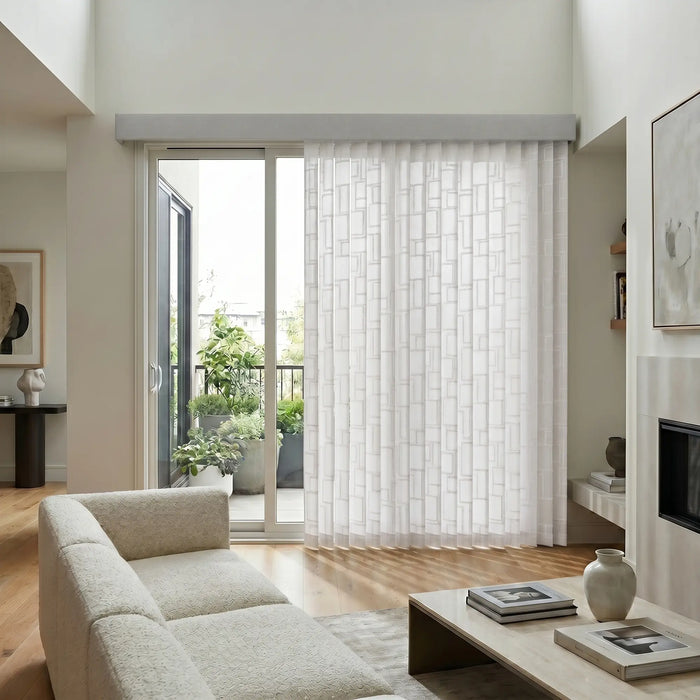
Yes, on looks alone, fabric wins. So are fabric vertical blinds better than PVC overall? Only in rooms where appearance outranks upkeep. Woven vanes diffuse sunlight instead of blocking it flat, so a closed fabric blind glows softly where a closed PVC blind reads as a plastic wall. From across a room, fabric vertical blinds pass for drapery.
Fabric is also the quieter material. PVC vanes clatter against each other when a breeze comes through an open door. Woven vanes bump with a dull tap you stop noticing. In a bedroom with a cracked window, that difference decides the purchase for some buyers on its own.
The Signature Fabric Vertical Blinds come in 16 woven colors if you want to see what the drapery effect looks like in practice.
The Easiest Vertical Blinds to Clean Are PVC
The easiest vertical blinds to clean are smooth PVC vanes, and the gap is not close. Kitchen grease, fingerprints, pollen film, splashed coffee: all of it comes off PVC with a damp cloth and a minute of wiping. The surface is nonporous, so nothing soaks in and nothing stains permanently.
The same nonporous surface matters if anyone in the house has dust allergies. A wiped PVC vane is fully clean, while a vacuumed fabric vane still holds fine dust deep in the weave, right at face height where you brush past it on the way out the door.
Fabric asks more of you. The weave holds dust, so it needs regular vacuuming with a brush attachment, and spills need spot-cleaning with mild soap before they set. A stain that sits overnight in polyester weave often becomes a shadow you live with. Fabric vanes near a stove or a bathroom also pick up odors that a wipe-down will not remove.
Whichever material you own, clean gently. Vanes pop off their carrier stems when yanked, and a cracked stem is the most common failure point. The vertical blinds repair guide covers the fixes, but avoiding the yank costs nothing.
The Best Vertical Blinds for Pets Are PVC Too
The best vertical blinds for pets are PVC, full stop. Cats treat fabric vanes as vertical scratching posts, and every snag pulls a thread that never goes back. Dog fur clings to woven texture and laughs at the vacuum. Smooth vinyl vertical blinds give claws nothing to grip and fur nothing to stick to, and a nose-print at dog height wipes off in a second.
One habit helps either material: leave the vanes rotated open when you leave the house. Pets push through closed vanes to reach the glass, and an open path saves both the blind and the carrier stems it hangs from.
Room-by-Room Verdicts
Match the material to the room, and you will not regret either purchase. My defaults after weighing the trade-offs above:
-
Sliding glass door or patio door: PVC. Daily traffic and direct sun settle it before you even factor in the occasional flying soccer ball.
-
Kitchen or bathroom: PVC. Grease and steam meet a wipeable surface.
-
Living room or dining room: fabric, if the room is more for show than through-traffic.
-
Bedroom: fabric for the softer light and quieter vanes, PVC if pets sleep there.
-
Rental property or office: PVC. Tenants and coworkers are hard on blinds, and replacements are cheap.
What Each Option Costs at Factory Direct Blinds
PVC gives you the wider range and the lower entry price. The Classic Curved line starts at $104.99 in 11 colors, the textured Premier collection at $140.99 in 22 colors, and the Signature PVC vertical blinds at $189.99 in 35 colors. Fabric starts at $247.99 in 16 woven colors. Every option is made to measure with free shipping, and a woodgrain faux wood PVC line sits in between at $117.99 if you want the wood look with the plastic durability.
The price gap is real, but so is the lifespan math. A PVC blind on a busy door will still look new when a fabric blind in the same spot shows wear, so the cheaper option is also the one you replace less often.
Order Samples of Both and Let Your Room Decide
You now have the verdict: PVC for working rooms, fabric for showpiece rooms, and no prize for paying fabric prices at a door the dog owns. The one thing a comparison article cannot show you is how each vane feels and how its color sits against your wall. Factory Direct Blinds mails up to 10 free swatches, so order a PVC and a fabric sample in your shortlisted colors, hold them up in afternoon light, and then pick your blind from the custom vertical blinds collection with the guesswork gone.
Frequently Asked Questions
Are Fabric Vertical Blinds Better Than PVC?
In terms of aesthetics and tranquility, fabric vertical blinds outperform PVC material. Fabric vanes give a softer light effect and look like curtains due to the properties of the material, but they are more expensive, harder to maintain, and trap pet hair in their fibers. In all other regards, both cost and maintenance, PVC blinds have obvious advantages
Are Vinyl and PVC Vertical Blinds the Same Thing?
Indeed, dry cleaning is one term used for PVC blinds. Thus, when comparing the prices of different retailers, make sure they offer the same items by looking at the price and color options rather than names.
How Do You Clean Fabric Vertical Blinds?
In order to keep the blinds in good condition, you should vacuum them with the help of a vacuum cleaner with a brush attachment. The cleaning should be done once every one or two weeks from top to bottom. If you spill something on your fabric blinds, you should clean it immediately to avoid stains.
Do PVC Vertical Blinds Fade in the Sun?
PVC holds its color well because the pigment runs through the whole vane instead of sitting on the surface. Deeply dyed fabric vanes are the ones to watch on a south- or west-facing window, where daily direct sun can soften the color over the years. If your window gets harsh afternoon light, that is one more point for PVC.