Skip to content


Vertical Blinds for Sliding Glass Doors: What to Know Before Buying


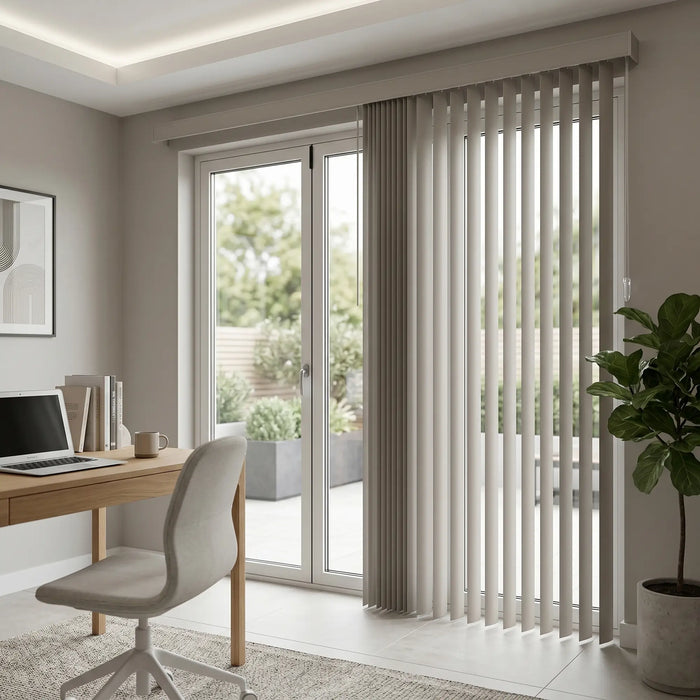
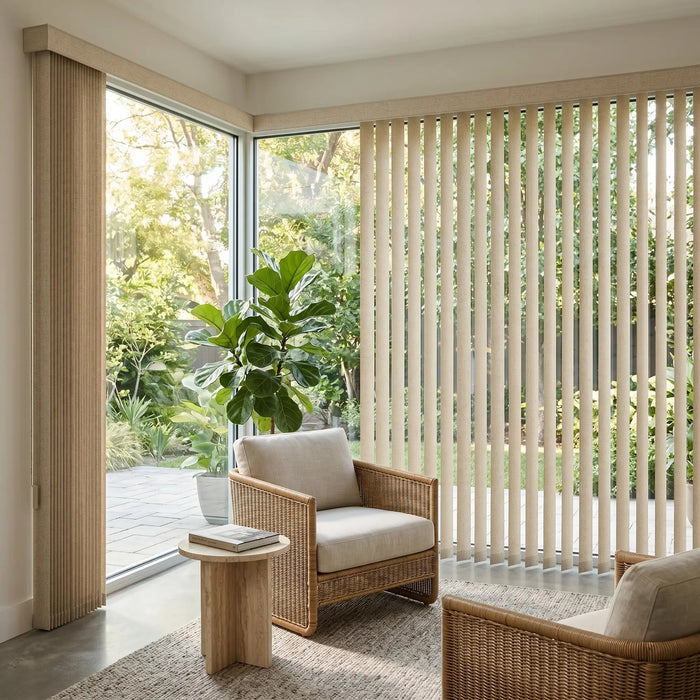
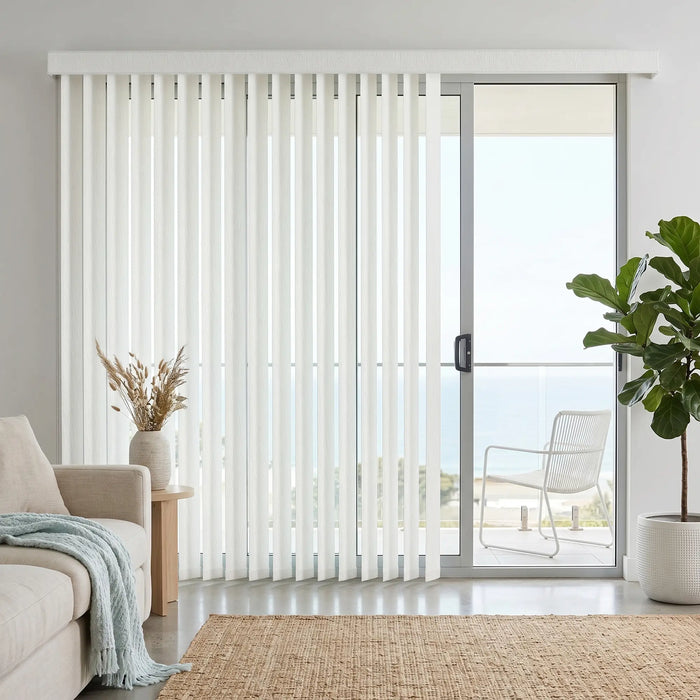
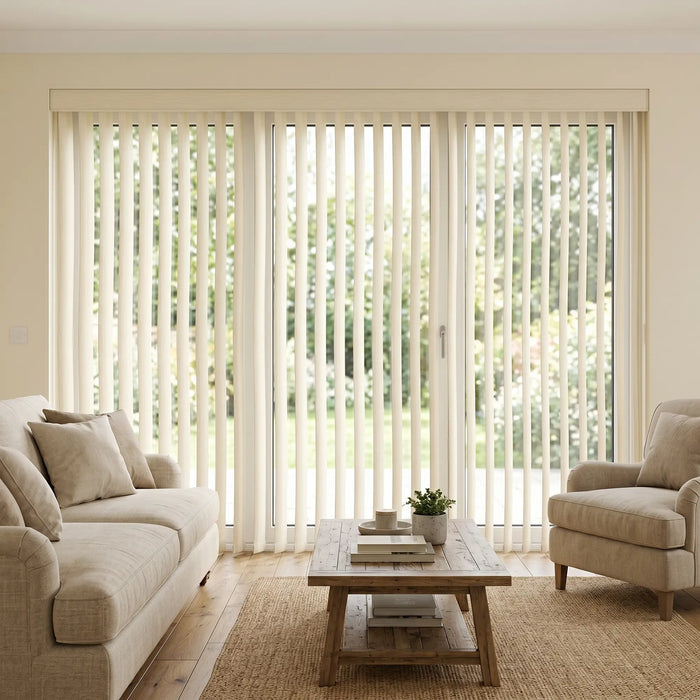
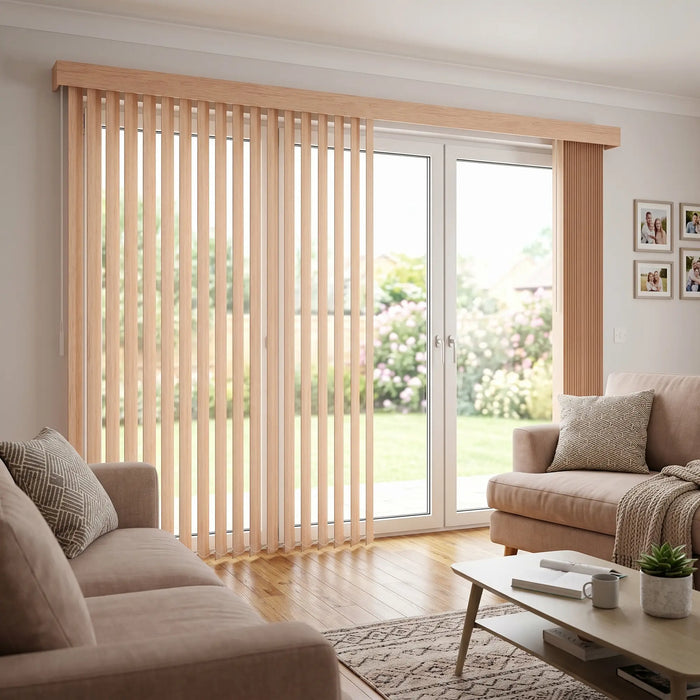
A sliding glass door is typically the largest window in a home; combined with the fact that it opens horizontally makes it the only viable option for window coverings. The only option here is that the covering above the door should be completely moved away from the opening when opened. It should also be able to withstand footfalls on a daily basis and withstand sunlight during the evening. Vertical blinds for sliding glass doors provide you with solutions to all the mentioned obstacles, and that is why they are the most popular choice for patio doors. There are four choices you need to make apart from color before you get them: what to make the vanes out of, which mount to select, and what stacking decision to make. Getting those right ensures that the horizontal blinds blend in well into everyday life, but getting even one wrong means you will have to bump into that mistake every time you step out of the house.
Why Vertical Blinds Beat Other Sliding Door Treatments
Vertical blinds are ideal for patio doors as they operate in the same direction as the door, whereas curtains get on the floor and accumulate. In addition to being easier to manage than heavy horizontal blinds, which can be cumbersome over time, vertical blinds are simple because they don’t need regular maintenance.
Vertical blinds also offer the advantage of rotating almost 180 degrees so one would always be able to dim the light that is coming through the door but still keep the option of looking through it.
If you are comparing sliding door blinds more broadly, panel tracks and cellular shades both work on wide openings. For a door that gets opened several times a day, though, the best vertical blinds for sliding glass doors are the practical pick: 3 1/2 inch vanes, which is the width Factory Direct Blinds builds across its entire vertical line. Wider vanes mean fewer moving parts, fewer gaps, and a cleaner view when the blinds are open.
Pick the Vane Material First: PVC, Fabric, or Faux Wood
For most patio doors, PVC is the right call. The vanes shrug off humidity and wipe clean with a damp cloth. They also survive the occasional whack from a laundry basket. If your door opens onto a pool deck or a grill area, PVC is both the cheaper option and the harder-wearing one.
Fabric vanes earn their higher price in living rooms and bedrooms where the door is more view than thoroughfare. They hang softer and mute sound slightly. From across the room they read as drapery. The trade-off is cleaning: fabric holds dust and stains in a way vinyl never will.
Faux wood splits the difference. You get a woodgrain finish that matches wood furniture without the warping real wood risks next to a big pane of glass that sweats in winter.
You can compare all three in the custom vertical blinds collection, and every option ships free in the continental US.
How to Measure Vertical Blinds for Sliding Doors
Go with an outside mount. Most sliding door frames lack the depth for an inside mount headrail, and outside mounting lets the blinds overlap the frame for better light control anyway. Knowing how to measure vertical blinds for sliding doors comes down to five steps:
-
Measure the full width of the door opening, frame included.
-
Add 2 to 4 inches on each side so the vanes overlap the frame and close the light gaps at the edges. More overlap on the side where the vanes will stack keeps the glass fully exposed when open.
-
Measure the height from where the headrail will sit to the floor, then subtract about half an inch so the vanes swing free of carpet or tile.
-
Check for at least 3 inches of flat wall or ceiling space above the frame for the mounting brackets.
-
Look for door handles, trim, or moldings that could catch a rotating vane, and adjust the bracket position before you order.
Do not assume your door is a standard size, either. Most American sliding doors are six feet wide and 80 inches tall, but five-foot and eight-foot doors are common in older homes and newer builds, and frames settle over time. Measure your actual opening even if the builder's spec sheet says 72 inches.
Write the width first, then the height, and double-check both. The full walkthrough with diagrams is in the guide on how to measure for vertical blinds. If numbers make you nervous, Factory Direct Blinds offers a MeasureSafe guarantee: measure wrong, and they remake the blind.
Stack Direction is the Detail Most Buyers Miss
Order the stack on the opposite side from the sliding panel. If your door slides open left, the vanes should stack right. Do it the other way and the stacked vanes sit exactly where you walk, and you will swat at them every single time you carry groceries in from the patio.
Plan for the stack itself, too. Vanes do not vanish when open. They compress into a bundle at one end of the track, and on a standard six-foot door that bundle takes up around a foot of the opening. This is another argument for ordering wider than the glass: push the stack past the frame and onto the wall, and you keep the entire view.
Most vertical blinds also offer a split stack, opening from the center outward. Skip it on a sliding door. It puts vanes on both sides of a door that only opens on one.
What Vertical Blinds for Sliding Glass Doors Cost
Custom vertical blinds for sliding glass doors run cheaper than most people expect. At Factory Direct Blinds, the Classic Curved PVC line starts at $104.99, faux wood starts at $117.99, the textured Premier collection at $140.99, and the Signature PVC line, with 35 color options, at $189.99. Fabric verticals top the range at $247.99. Those prices are for made-to-measure blinds cut to your exact width, and shipping is free.
Compare that with replacing a failed big-box kit every few years, and custom patio door vertical blinds start looking like the cheaper decision over the life of the door. The full range of blinds for sliding glass doors sits in one collection if you want to weigh verticals against roller and cellular options at the same time.
Skip the Cords if Kids Use the Door
A patio door is kid territory, so control style deserves a real decision. A wand control rotates and slides the vanes with no dangling loop, and cordless or motorized operation removes the hazard entirely. If small children or pets pass through this door daily, treat cord-free operation as a requirement.
Order Samples Before You Order Blinds
Screens lie about color. A vane that looks warm white on your phone can read gray-blue against your actual wall at sunset, and with a custom order you want to know that before checkout. Factory Direct Blinds sends up to 10 free swatches, so pick your two or three finalist colors and order free samples first. Tape them beside the door, look at them in morning and evening light, then order the blind with the measurements from this guide. Two minutes of taping swatches to a wall beats months of living with the wrong white.
Frequently Asked Questions
Are Vertical Blinds Good for Sliding Glass Doors?
Definitely. Vertical blinds for patio doors work exactly like the doors when it comes to stacking – they are stored on the side, allowing the light to penetrate in and allowing unobstructed views. This explains their long-lasting popularity as patio door dressings.
How Much Wider Than the Door Should Vertical Blinds Be?
Make sure to buy the blinds that are 4 to 8 inches wider than the door opening, meaning there should be an overlap of 2 to 4 inches from each side, which helps to avoid gaps and also provides a place for the vanes to stack.
Should Vertical Blinds Be Inside or Outside Mount on a Sliding Door?
Outside mount is the best choice in almost all cases. Sliding glass doors seldom have sufficient depth for installing inside mount headrails, and an outside mount serves the purpose of covering the door frame in a more effective way, which results in better light blocking. Vertical blind installation is very straightforward and does not take long.
Which Way Should Vertical Blinds Stack on a Patio Door?
Make sure to stack the vanes on the opposite side of the sliding door. If the sliding door is left-side opening, stack the vanes to the right side. This way, you will make sure that the stack of the vanes will not get in the way.