Skip to content


What Are Cellular Shades? (And Why the Honeycomb Shape Actually Matters)


If you are comparing window treatments, you will keep seeing the same phrase: honeycomb, or cellular, construction. Cellular shades are fabric window coverings made from bonded rows of pleated material that form hollow cells. Those cells trap still air at the glass, and that simple idea is what drives insulation, light control options, and the soft, stackable look people associate with this category.
Key Takeaways
- Honeycomb cellular shades are folded fabric channels that trap air, creating an insulating buffer at the window.
- Cell depth and layered cells change insulating value, stack height, and perceived appearance from the side.
- Well-fitted cellular shades can reduce heat loss and solar gain, with lab tests showing about forty percent.
- Fabric cells absorb some noise and glare, offering quieter rooms than slatted blinds, not studio-grade soundproofing.
This guide explains what cellular shades are, how the honeycomb cell does its job, how cell size and layers change performance, and how that performance compares to hard blinds.
What Cellular Shades Are (Definition and Construction)
A cellular shade is a soft window treatment built from one continuous piece of fabric that is folded and bonded into a row of connected tubes or hex-shaped channels. When you look at the edge of the shade, those channels look like a honeycomb, which is why you will hear both honeycomb shade and cellular shade used for the same product family. Retailers use both names for the same construction.
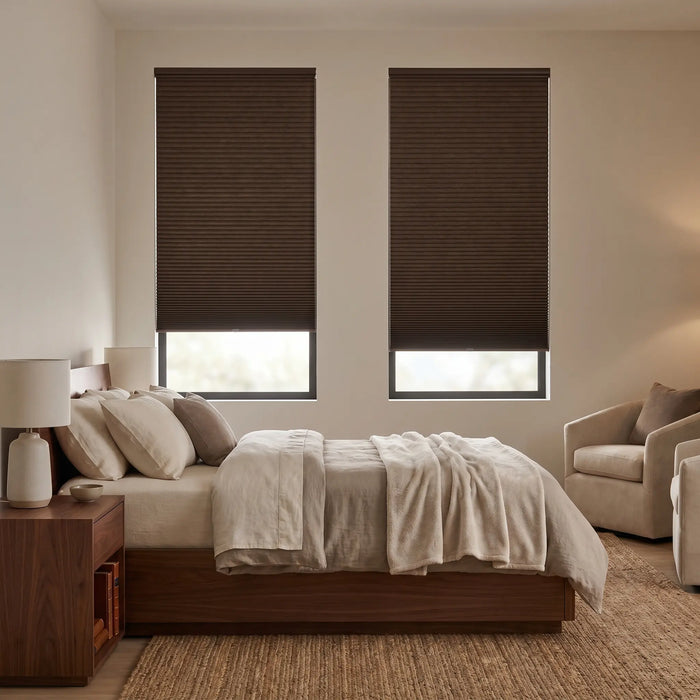
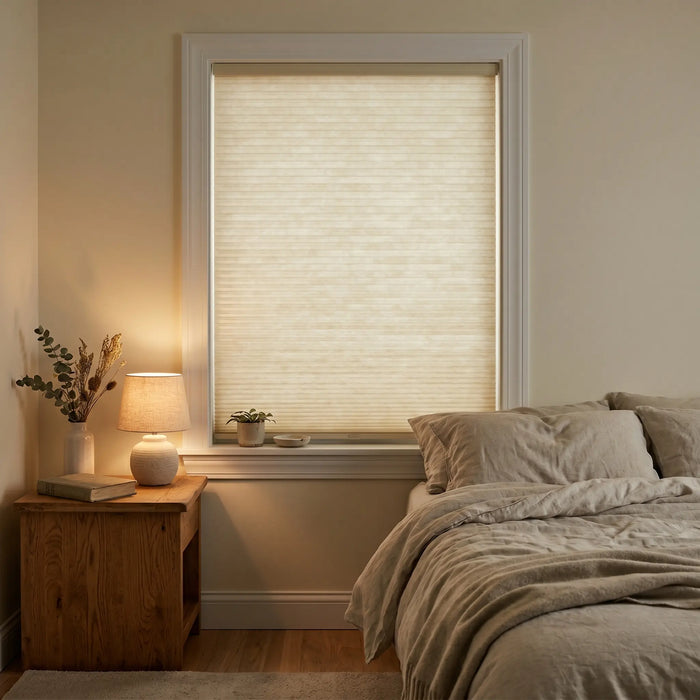
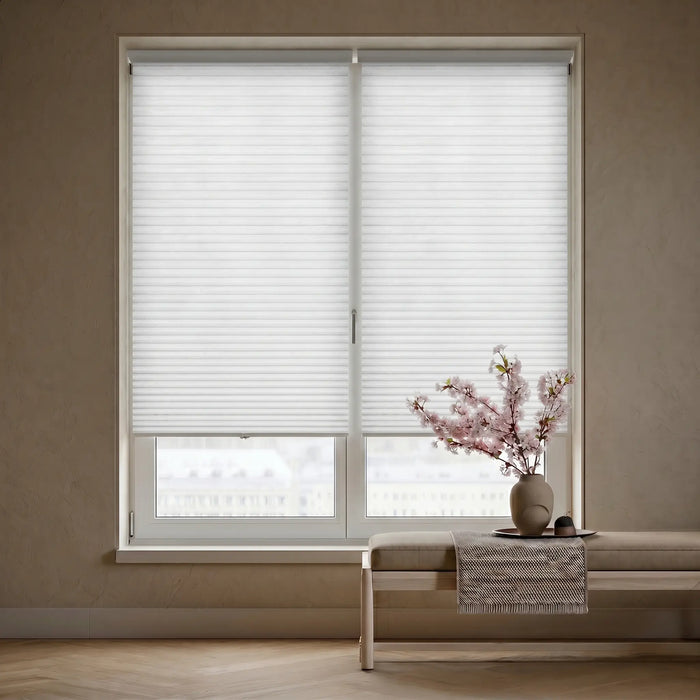
The face fabric can be sheer, light filtering, room darkening, or blackout, depending on how much light you want to stop. Behind that choice, the geometry stays similar: air sits inside the cells, and the fabric itself adds a layer of mass between your room and the glass.
How the Honeycomb Cell Works (Air-Trapping Explained)
Heat moves through windows in three main ways: conduction through the glass, radiation from sunlight, and air movement near the surface. A cellular shade does not change the glass itself. It adds a buffer of trapped, slow-moving air that helps insulate the opening by slowing heat transfer, so indoor heat is less likely to slip out in winter and less solar heat pours in during summer, compared with an uncovered window.
Picture each cell as a small, stiff air pocket. When the shade is lowered, those pockets line up between you and the window. The pleat structure keeps the fabric from collapsing flat, so you keep repeatable rows of insulation instead of a single thin sheet of cloth.
How Cell Size Affects Insulation Performance
Cell size is usually listed in fractions of an inch, such as three-eighths, nine-sixteenths, or three-quarters. Smaller cells tend to sit closer to the glass with a shorter profile when stacked, while larger cells create bigger air pockets and often pair with higher insulating values, though stack height when the shade is open grows with cell depth.
You do not have to memorize every spec. The practical takeaway is that cell size shifts the balance among R-value, how the shade looks from the side, and how much room you need at the top of the window when the shade is fully raised. Compare published stack height, span limits, and insulation notes for each pleat depth when you narrow options.
Why Multiple Cell Layers (Double and Triple) Improve Performance
A single-cell shade has one row of honeycomb channels. A double cell design stacks two layers of cells, often with a thin web between them. Triple-cell products add still another layer. More layers mean more trapped air and more breaks in the path heat has to travel, which usually raises insulation performance compared with a single layer of the same material.
That upgrade comes with trade-offs. Multi-layer shades can cost more, use a taller stack when raised, and may feel heavier to lift on very wide windows. The right choice depends on climate, budget, and how much you value year-round comfort at the glass.
Thermal Resistance and What It Means for Your Home
R-value describes how much a material resists heat flow. Higher R-value means better insulation. Window treatments publish smaller R-value contributions than wall insulation because they sit at the surface, not inside the framing. Still, a cellular shade can be one of the most effective soft treatments for improving comfort at the window because the cells hold air and limit drafts that pass across the glass.
Think of R-value here as a helpful comparison tool between shade types, not a promise that one product replaces attic insulation. It shines when you pair it with realistic expectations: you are plugging a weak spot at the glass, not rewriting your whole building envelope.
Why the Cell Shape Matters for Noise and Insulation
Soft, air-filled layers absorb some sound energy. A cellular shade can dull street noise and room echo more than a hard blind with exposed slats because fabric and trapped air dissipate vibration instead of reflecting every sound sharply back into the room.
Double cell constructions can add a little more mass and separation than a single cell, which sometimes helps dull midrange noise. None of this turns a standard residential shade into studio-grade soundproofing. If you need serious acoustic control, you still plan for glazing, wall construction, and dedicated acoustic products. For everyday living, it is fair to expect “quieter than metal or vinyl slats,” not silence.
How Cellular Shades Differ From Hard Blinds
A blind made of wood, faux wood, or aluminum uses tiltable slats to steer light. That design is great for precise steering and a classic look, but the air gap between slats is open whenever you want a view. A cellular shade trades those gaps for continuous fabric. You get fewer stray light streaks when the shade is down, and you get the honeycomb air buffer when you want energy efficiency at night.
Neither category wins every time. Hard blinds can be easier to dust between slats in some homes. Cellular fabric can need gentler cleaning because the cells are hollow. Your choice should start with how you use the room, then move to aesthetics.
What the Department of Energy Research Actually Shows About Energy Savings
The U.S. Department of Energy and efficiency programs have long pointed to insulated cellular shades as a way to reduce heat transfer at windows, especially when shades fit well and are used daily.
Published guidance emphasizes that window attachments can lower heat loss and solar heat gain compared with bare glass, with exact savings tied to climate, orientation, and how leaky the existing windows are. In short, well-fitted cellular shades are an energy-efficient window treatment when you use them as part of a sensible heating and cooling routine.
Use that information as a directional signal, not a personal utility bill guarantee. Your results depend on how often you lower the shade, whether you have side gaps, and what fuel prices look like in your area.
How Cellular Shades Reduce Heat Loss (Up to 40% in Tested Conditions)
Some controlled tests cited in industry and efficiency literature have measured up to roughly 40% less heat loss through a window assembly when high-performance cellular shades are deployed correctly versus an uncovered window in the same test setup. Those numbers come from specific products, tight fits, and lab-style conditions.
In a real house, you might see a smaller percentage, or you might see a noticeable comfort bump on the coldest nights even if the meter move looks modest. The lesson is simple: using the shade matters. A cellular shade left open all winter cannot help the way a lowered shade can.
When Energy Savings Are Most Significant
You tend to feel the biggest payoff when outdoor temperatures swing hard, when your windows are older or single-pane, when side gaps are sealed well, and when you actually lower shades at night. Mild climates still benefit from solar control in summer, but the dramatic winter savings story shows up most when the window was a weak point to begin with.
If your home is already wrapped in high-performance glazing and tight air sealing, shades play a finer tuning role. If you are fighting drafts and high heating bills, the same shades can feel like a smarter upgrade.
Cellular Shades and Noise Reduction
Sound absorption scales with soft mass and trapped air. Cellular shade fabric delivers both in a thin profile, which is why rooms feel a little less sharp when the shade is down. Single-layer cells still help. Double cell layers add material depth, which can nudge performance slightly for steady traffic hum or neighbor chatter.
Set expectations honestly: you will cut glare and some noise. You will not replace a sealed sound studio window. If noise is your top priority, combine shades with thicker glass and good weatherstripping.
Cellular Shades for Winter
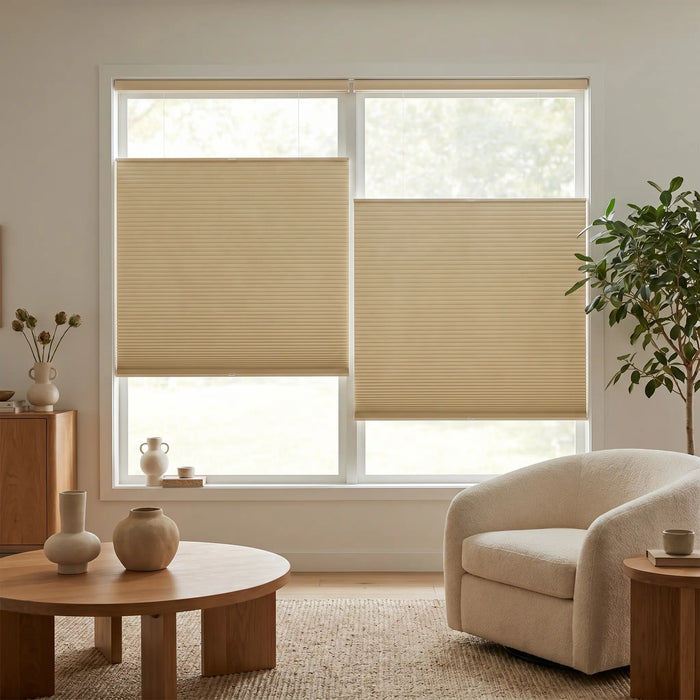
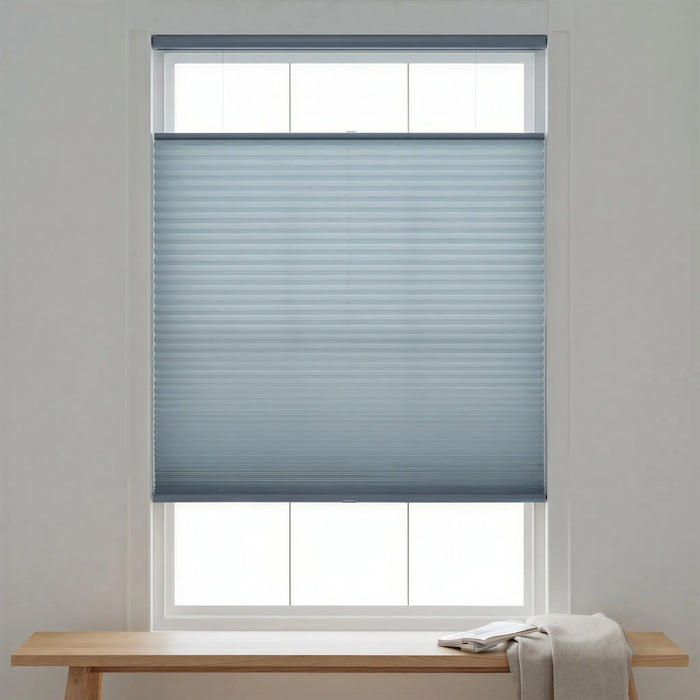
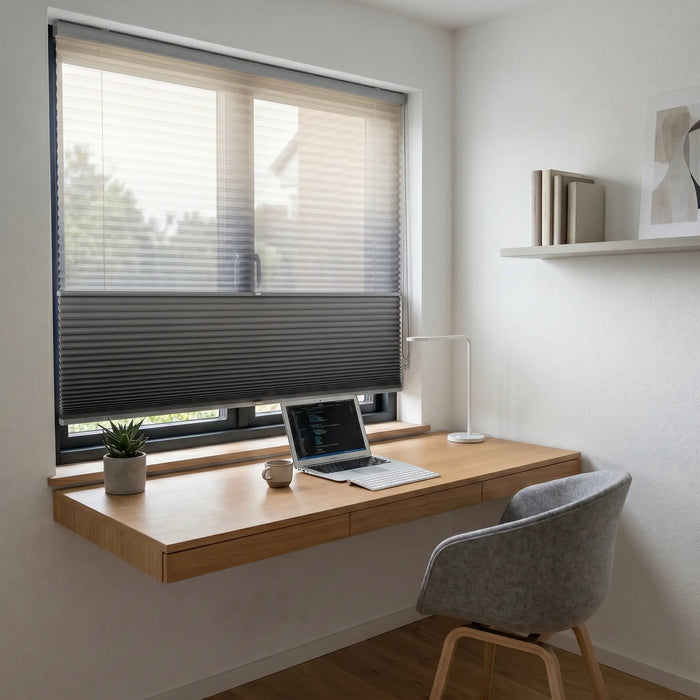
At night, keep cellular shades fully lowered on cold windows so the trapped air does its job while outdoor temperatures drop. During sunny winter days, you can raise shades or, with top-down bottom-up hardware, lower the top to admit solar warmth while keeping coverage lower on the wall for privacy.
If you need another layer, drapery or curtains in front of cellular shades still works. Fabric-on-fabric layering adds still air between treatments and can take the edge off the coldest glass.
Cellular Shades for Summer
Summer load comes mostly from solar heat gain. Lighter-colored fabrics reflect more visible light and some solar energy, which can help warm climates stay cooler when blinds face intense sun. Opacity still matters: sheer and light filtering fabrics cut glare but may admit more heat than room darkening or blackout cellular shades, which block more energy from entering.
Match the fabric to the room. A bedroom where you need dark sleep might steer toward blackout material. A living room that needs soft daylight might stay in light filtering and rely on operation timing to manage heat.
Cellular Shades for South-Facing Windows
South-facing glass collects a lot of low winter sun and a lot of high summer sun, depending on overhangs and latitude. A practical approach is seasonal habit: capture sun when you want free heat, then cover the glass when intense summer sun would overheat the space. Light control choices such as light filtering versus room darkening decide how much brightness stays in the room while you manage temperature.
If you share a street-facing office or living space, combine those choices with privacy needs. Sheer cells preserve daytime views with less fabric weight than heavy drapery, while darker linings add night privacy when indoor lights are on.
How to Raise and Lower Cellular Shades
Cordless models use a spring or tension system inside the headrail. You gently lift or pull the bottom rail to set height, and the shade holds where you stop. Cordless operation also removes dangling cords, which matters in homes with young children or pets.
Corded lifts use cords that run through the headrail and sometimes through cord locks. You guide height with pulls, and you should always use cord safety devices where cords remain exposed, or plan to upgrade to cordless or motorization when possible.
Top-down bottom-up setups add a second lift path so you can drop the top down, raise the bottom up, or both. That dual motion is useful when you want air movement at the top while keeping coverage across the lower sash.
You can motorize a shade so a small motor in the tube or rail moves it by remote, app, or smart-home rule. Motorization costs more upfront, but it helps wide windows, hard-to-reach glass, and anyone who wants schedules without touching the fabric daily.
Frequently Asked Questions
Do cellular shades block UV rays?
Yes. All fabric window treatment materials block some ultraviolet light. Blackout cellular shades and thicker, opaque fabrics typically block the most, with many blackout materials blocking up to about 99% of UV rays depending on the textile and how well the shade covers the opening. Light filtering fabrics still cut UV exposure compared with bare glass, but they are not the same as a full blackout lining.
Do cellular shades block light completely?
Light filtering cellular shades soften and diffuse sunlight. They are not built to make a room pitch black. Room darkening fabrics darken a space more fully for rest and screen glare. Blackout cellular shades are the right tool when you need near-total darkness, with many products blocking up to about 99% of light when fitted with minimal side gaps.
Summary
Cellular shades go by more than one name in stores and search results. When you are ready to pick fabric, cell size, and options for your own windows, browse cellular shades at Factory Direct Blinds and order samples before you commit.